
Skin Rashes: A Visual and Descriptive Guide to Common Types

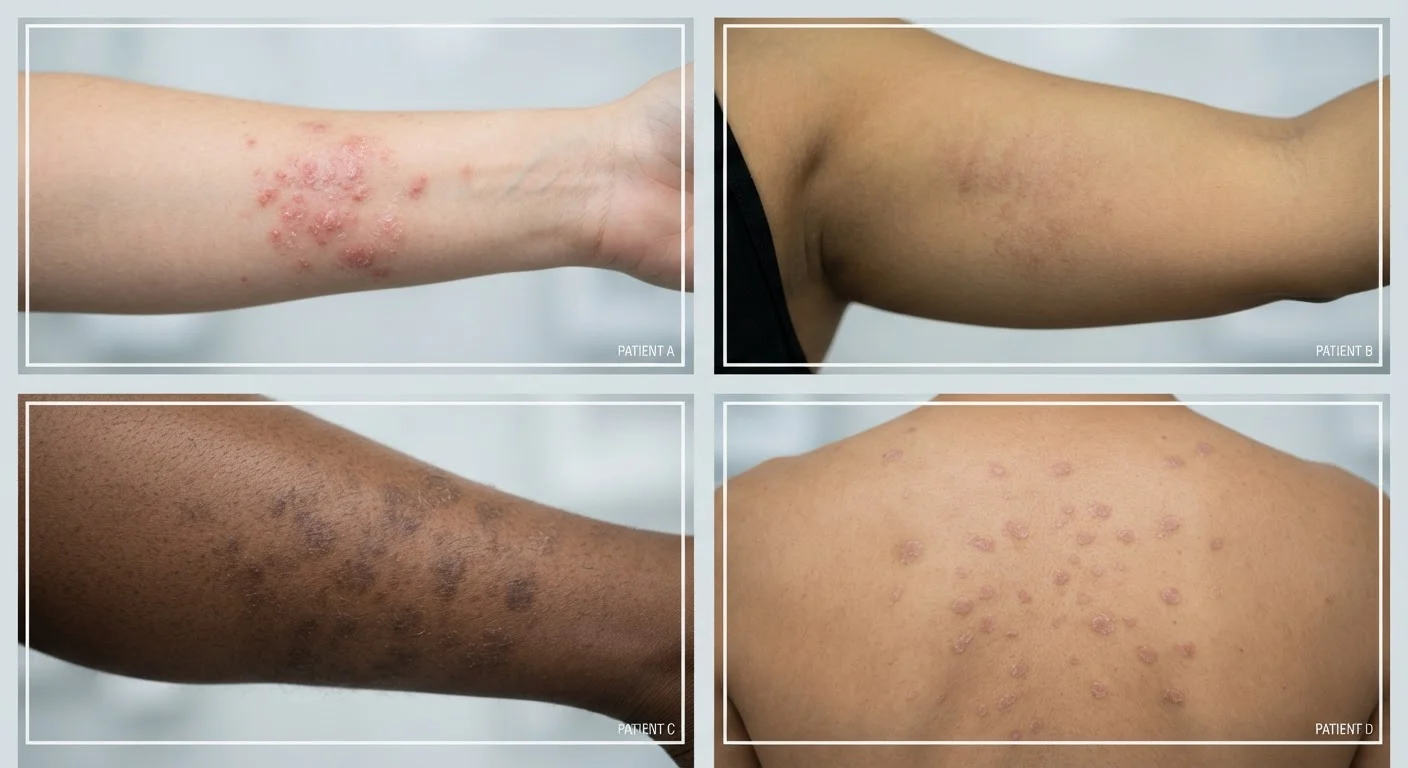
Photo: HerbHealWellness.com | Modern Guide To Wellness editorial
Why Rash Identification Matters
A rash is not a diagnosis — it is a symptom. The same visual pattern can result from an allergic reaction, a viral infection, an autoimmune condition, or direct skin irritation. Identifying a rash accurately requires considering its appearance, location on the body, timing, associated symptoms, and the person's medical history.
This guide describes the defining characteristics of common rash types so you can communicate more precisely with a healthcare provider. It is intended as a reference tool, not a substitute for clinical evaluation. If a rash is spreading rapidly, accompanied by difficulty breathing, facial swelling, or fever, seek emergency care immediately.
| Most common rash type in adults | Contact dermatitis (American Academy of Dermatology) |
| Shingles lifetime risk (US adults) | About 1 in 3 (CDC) |
| Eczema prevalence in the US | Affects ~31 million people (National Eczema Association) |
| Urticaria (hives) lifetime occurrence | Up to 20% of people experience at least once (American College of Allergy, Asthma & Immunology) |
| Psoriasis affected US population | ~8 million adults (National Psoriasis Foundation) |
Common Rash Types: Descriptions and Features
Understanding how clinicians categorize skin findings can help you describe what you see more accurately during a consultation.
Macule
A flat, discolored area of skin that is not raised or depressed. Freckles and some viral rashes appear as macules.
Papule
A small, raised, solid bump less than 1 centimeter in diameter. Acne lesions and some allergic rashes present as papules.
Vesicle
A small, fluid-filled blister under 1 centimeter. Chickenpox and contact dermatitis can produce vesicles.
Plaque
A raised, flat-topped lesion larger than 1 centimeter, often with a scaly surface. Psoriasis is the most recognized plaque-forming condition.
Wheal
A transient, raised, smooth swelling of the skin, typically associated with urticaria (hives). Wheals are caused by fluid leaking into the skin and usually resolve within hours.
Erythema
Redness of the skin caused by dilation of surface blood vessels. It can be a feature of many different rash types and underlying conditions.
Contact Dermatitis
Appears as red, itchy, sometimes blistered skin at the exact site of contact with an irritant or allergen. Common triggers include latex, nickel, poison ivy, and certain soaps. The borders of the rash often follow the shape of whatever touched the skin.
Atopic Dermatitis (Eczema)
A chronic, inflammatory condition that causes dry, scaly, intensely itchy patches. It typically appears in skin folds — the inner elbows, behind the knees, and around the neck — and is more common in people with a personal or family history of asthma or allergies.
Urticaria (Hives)
Raised, smooth welts called wheals that appear suddenly, are intensely itchy, and can migrate — meaning they resolve in one spot and reappear in another within hours. Individual lesions rarely last more than 24 hours. Triggers include medications, foods, infections, and sometimes unknown causes.
Psoriasis
Presents as thickened, well-defined plaques with a silvery-white scale, most commonly on the elbows, knees, scalp, and lower back. It results from an accelerated skin cell cycle driven by immune system activity and is a chronic condition with periodic flares.
Ringworm (Tinea Corporis)
Despite the name, this is a fungal — not parasitic — infection. It forms a ring-shaped, scaly, slightly raised border with clearer skin in the center. It spreads through direct contact and is contagious.
Rosacea
A chronic condition causing persistent redness, visible blood vessels, and sometimes small pus-filled bumps on the central face — cheeks, nose, forehead, and chin. It is frequently mistaken for acne but does not involve clogged pores.
Shingles (Herpes Zoster)
Caused by reactivation of the varicella-zoster virus (the chickenpox virus), shingles produces a painful, blistering rash that follows a single nerve pathway, typically wrapping around one side of the torso or appearing on one side of the face. Pain often precedes the rash by several days. Antiviral treatment is most effective when started early — consult a clinician promptly.
When to See a Clinician
Rashes Can Look Different on Darker Skin Tones
Most mild rashes that appear after an obvious trigger — a new soap, a plant contact, or mild sun exposure — can be monitored at home for a short period. However, certain features warrant prompt medical evaluation:
- Rash accompanied by fever, joint pain, or fatigue
- Rapid spreading across large areas of the body
- Blistering, open sores, or skin that feels painful to touch
- Rash near the eyes, mouth, or genitals
- No identifiable cause and no improvement after a week
- Signs of infection: warmth, pus, increasing redness
Children, pregnant individuals, and people who are immunocompromised should consult a healthcare provider sooner rather than later, as rashes in these groups may require faster assessment. A dermatologist or primary care physician can perform a proper examination and, when needed, a skin biopsy or patch test to determine the cause.
American Academy of Dermatology (AAD) Rash Guide
The AAD provides illustrated descriptions of common skin conditions, including guidance on identifying warning signs and finding a board-certified dermatologist.
CDC Shingles Information Page
The Centers for Disease Control and Prevention offers detailed, up-to-date information on shingles symptoms, transmission, vaccination, and when to seek care.
National Eczema Association Patient Resources
A US-based nonprofit providing evidence-based education, a provider finder tool, and peer support resources for people managing eczema and atopic dermatitis.
This article is for general informational purposes only and does not constitute medical advice. Always consult a qualified healthcare professional for evaluation of any skin condition or health concern.
The content on this site is for informational purposes only and is not a substitute for professional advice. Always consult a qualified professional for guidance specific to your situation.