
Drug Safety Myths That Could Put You at Risk

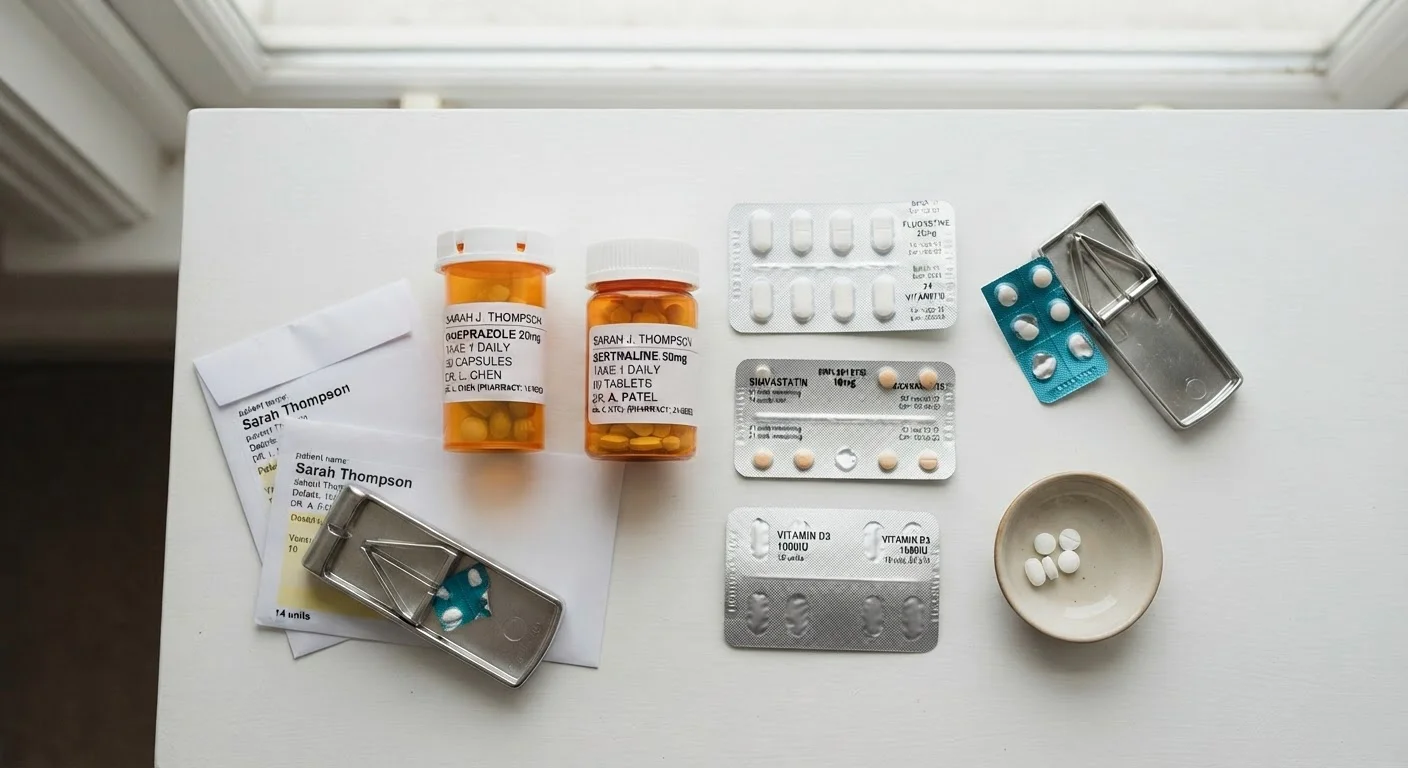
Photo: HerbHealWellness.com | Modern Guide To Wellness editorial
Key Takeaways
- Natural or herbal products can interact with prescription drugs and cause serious harm.
- Splitting or skipping doses without guidance can change how a drug works in your body.
- Expired medications may be less effective or, in rare cases, chemically altered.
- Taking someone else's prescription — even for the same symptom — carries significant risks.
- Always consult a pharmacist or healthcare provider before changing how you take any medication.
Why Drug Safety Myths Persist
Medication myths rarely come from nowhere. Many begin as partial truths, outdated guidance, or understandable logic applied in the wrong context. The result is a gap between what people believe about their medications and what the evidence supports — a gap that can quietly cause real harm.
This article addresses six of the most common and consequential misconceptions about drug safety. Understanding them isn't about memorizing rules — it's about knowing which questions to ask your pharmacist or prescriber before acting on assumptions.
1 in 3
Adults taking five or more medications daily
U.S. CDC data indicate that polypharmacy — the use of multiple medications — affects a substantial portion of older American adults, increasing interaction risk.
~125,000
U.S. deaths annually linked to medication non-adherence
According to estimates from the American College of Preventive Medicine, failure to take medications correctly is a leading cause of preventable death in the United States.
70%
Adults who don't tell doctors about supplements
Studies published in peer-reviewed journals have found that a majority of supplement users do not proactively disclose use to their healthcare providers, raising interaction risks.
The Myths — and What's Actually True
Each of the following myths reflects a belief that sounds reasonable on the surface. The corrections aren't meant to alarm, but to clarify. Drug safety is nuanced, and a pharmacist is your best resource when a situation doesn't feel straightforward.
Myth
If something is natural or herbal, it's safe to take alongside my prescription drugs.
Fact
Natural products can cause clinically significant drug interactions, just like synthetic medications.
St. John's Wort, for example, is well-documented to reduce the effectiveness of several medications including antidepressants, blood thinners, and birth control pills by speeding up how the liver breaks down those drugs. Grapefruit juice can do the opposite — blocking enzymes so that certain statins and calcium channel blockers build up to dangerously high levels. The word "natural" describes origin, not safety. Always tell your pharmacist or doctor about every supplement, herb, or botanical you take. For a deeper look at supplement pitfalls, see common nutrient intake mistakes.
Myth
Halving my dose will simply halve the risk of side effects.
Fact
Dose adjustments affect drug behavior in complex, non-linear ways that vary by medication.
Some medications — particularly extended-release formulations — should never be split because doing so releases the full dose at once, which can cause toxicity. Others depend on maintaining a minimum concentration in the bloodstream to work at all; a lower dose may provide no benefit while still carrying risks. Understanding a drug's half-life and how it affects dosing helps explain why timing and amount are carefully calculated. Dose changes should always be discussed with a prescriber.
Myth
Expired medications are just less effective — they're still safe to take.
Fact
Most drugs lose potency after expiration, but some undergo chemical changes that may be harmful.
The classic concern involves certain tetracycline antibiotics, which older studies linked to kidney damage when degraded — though modern formulations are thought to be more stable. More broadly, using expired medication risks inadequate treatment: an antibiotic that's lost half its potency may not clear an infection, contributing to resistance. Expired medications should be disposed of safely — not thrown in the trash or flushed unless specifically directed. Learn proper methods in our guide to disposing of unused medicines.
Myth
If my symptoms are the same as my friend's, their leftover prescription will work fine for me.
Fact
Prescriptions are individualized; the same symptom can have different causes requiring different treatments.
A person prescribed an antibiotic for a bacterial ear infection and someone with a viral one have the same symptom but completely different clinical situations. Beyond diagnosis, factors like kidney function, weight, allergies, and other medications all influence which drug and dose is appropriate. Taking someone else's prescription also means taking the wrong dose for your body. Our article on common antibiotic misconceptions explores this further.
Myth
If a drug was prescribed safely before, I can restart it whenever I need it again.
Fact
Your health situation changes over time, and a previously safe drug may now interact with new medications or conditions.
A medication that was appropriate two years ago may now interact with a drug added since then, or may be contraindicated due to a change in kidney or liver function. Drug-drug interactions are one of the most underappreciated medication risks — and they can emerge even when each drug was individually safe. See our explainer on how two safe medicines can become dangerous together for more detail. Always check with your provider or pharmacist before restarting any lapsed medication.
Myth
Storing medications in the bathroom medicine cabinet is perfectly fine.
Fact
Bathrooms are among the worst places to store medications due to heat and humidity.
Steam from showers and fluctuating temperatures can degrade medications faster than the expiration date accounts for. Tablets may soften, coatings may dissolve prematurely, and liquid medications can separate or grow bacteria. Cool, dry, dark locations — like a bedroom drawer or a high kitchen shelf away from the stove — are generally preferable. Our guide to storing medicines at home safely covers this in practical detail.
Never Adjust Doses Without Professional Guidance
If you take medications during pregnancy or manage medications for a child or elderly family member, the stakes of these myths are even higher. General-population safety guidance doesn't always translate to special populations — consult your provider directly. For pregnancy-specific context, see our overview of drug safety during pregnancy.
Sharing Prescriptions Is Dangerous and Illegal
This article is for general informational purposes only and is not a substitute for professional medical advice, diagnosis, or treatment. Always consult a qualified healthcare provider or pharmacist regarding your specific medications and health situation.
The content on this site is for informational purposes only and is not a substitute for professional advice. Always consult a qualified professional for guidance specific to your situation.