
How Vaccines Teach the Immune System Without Causing Infection

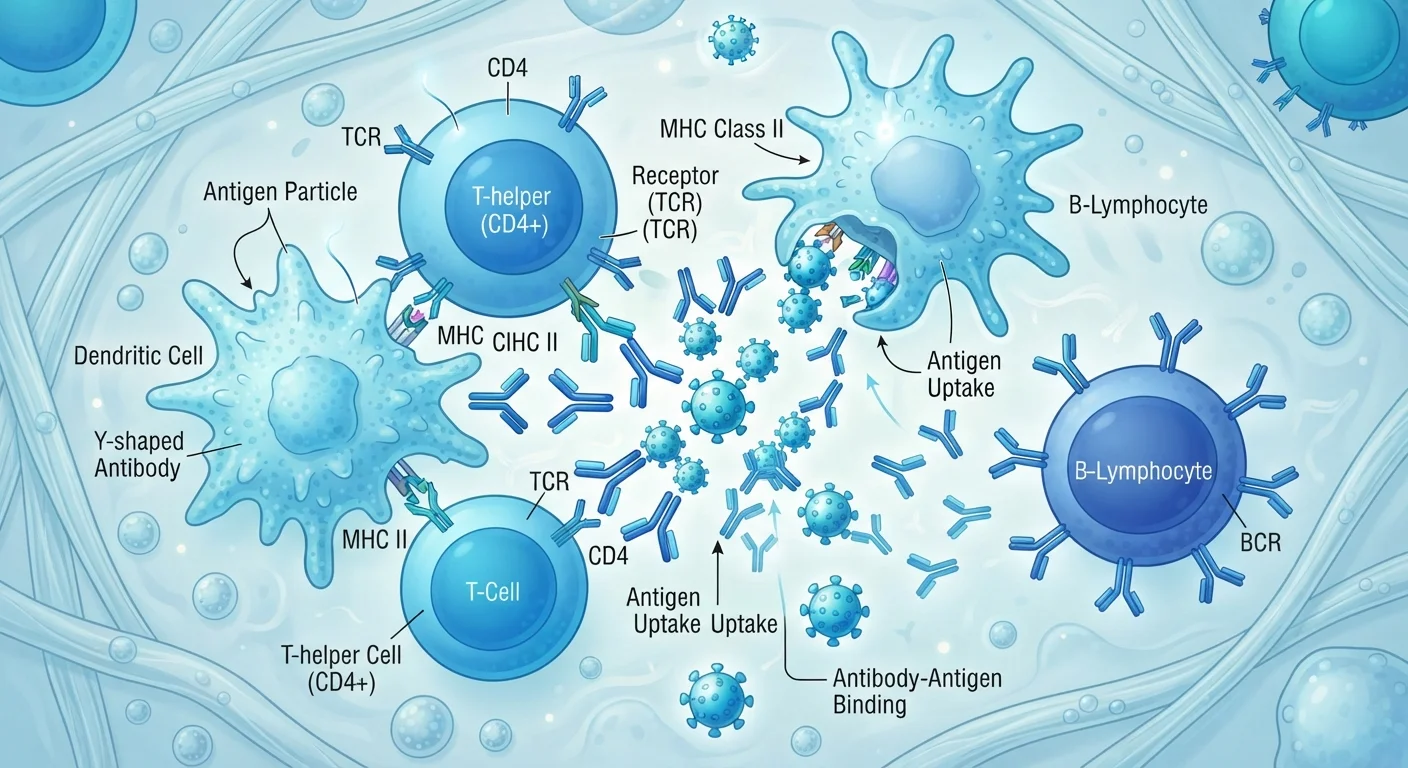
Photo: HerbHealWellness.com | Modern Guide To Wellness editorial
Key Takeaways
- Vaccines expose the immune system to harmless representations of a pathogen, not the disease itself.
- The immune system creates memory cells that allow a faster, stronger response to future infections.
- Different vaccine types — such as mRNA, live-attenuated, and subunit — use different methods to deliver the same basic lesson.
- Multiple doses or boosters are sometimes needed because immunity can fade over time.
- Vaccines protect both the individual and the broader community through herd immunity.
The Immune System's Learning Process
Your immune system is a sophisticated defense network that learns from experience. The first time it encounters a pathogen — such as a virus or bacterium — it takes time to figure out how to fight it. That delay is what makes you feel sick. But once your immune system has fought off an invader, it keeps a record of it through specialized cells called memory cells. The next time that same pathogen appears, your body can respond faster and more forcefully, often stopping the infection before you even notice symptoms.
Vaccines harness this natural learning process. Rather than waiting for you to get sick, a vaccine introduces your immune system to something that resembles the pathogen — without the danger of a real infection. Your body mounts a response, builds memory, and is ready if the real threat ever arrives.
Vaccine Responses Vary by Individual
What Vaccines Actually Introduce to the Body
Vaccines don't contain full, active pathogens capable of causing disease. Instead, they deliver one of several carefully designed signals that the immune system can learn from:
- Weakened (live-attenuated) pathogens: A modified version of a virus or bacterium that is too weakened to cause disease but strong enough to trigger a robust immune response. The measles-mumps-rubella (MMR) vaccine uses this approach.
- Inactivated pathogens: A killed version of the pathogen that the immune system can still recognize. The flu shot (injectable form) is one example.
- Subunit vaccines: Only specific proteins from the pathogen's surface — called antigens — are included. There's no genetic material from the pathogen at all.
- mRNA vaccines: These carry temporary genetic instructions that tell your own cells to produce a harmless fragment of the pathogen (such as a surface protein). Your immune system then reacts to that fragment. The mRNA breaks down within days and never enters the cell nucleus.
Regardless of the delivery method, all of these approaches accomplish the same goal: giving the immune system a controlled preview of a threat.
2–3 weeks
Time for full immunity to develop post-vaccination
According to the CDC, most vaccines take about two to three weeks after the final dose for the body to build full protection.
95%+
Efficacy of measles vaccine against infection
The CDC reports that two doses of the MMR vaccine are about 97% effective at preventing measles, one of the highest efficacy rates for any vaccine.
92–95%
Herd immunity threshold needed for measles
Because measles is highly contagious, public health authorities estimate that 92–95% of a population must be immune to prevent sustained transmission.
What Happens Inside the Body After Vaccination
Once a vaccine is administered, the immune system goes to work in a predictable sequence:
- Recognition: Immune cells called dendritic cells detect the foreign material introduced by the vaccine and alert the broader immune system.
- Activation: B cells and T cells are recruited. B cells begin producing antibodies — proteins designed to neutralize the specific antigen. T cells help coordinate the attack and can directly destroy infected cells.
- Memory formation: After the initial response winds down, a subset of B and T cells become long-lived memory cells. These persist in the body for years, sometimes decades.
- Future protection: If you're later exposed to the real pathogen, memory cells recognize it immediately, triggering a rapid immune response that typically prevents serious illness.
Mild side effects like arm soreness, fatigue, or a low-grade fever are common after vaccination. These are signs that the immune system is actively engaging with the vaccine — not signs of disease.
Track Your Vaccination Records
Why Vaccines Protect More Than Just the Individual
When enough people in a community are immune — either through vaccination or prior infection — it becomes harder for a pathogen to find new hosts. This is called herd immunity (or community immunity). It provides indirect protection to people who cannot be vaccinated themselves, such as newborns, people undergoing chemotherapy, or those with certain immune conditions.
The threshold for herd immunity varies by disease. Highly contagious illnesses like measles require a very high percentage of the population to be immune before community-level protection kicks in. Less contagious diseases require a lower threshold.
Understanding how vaccines work at the individual level makes it easier to appreciate why vaccination rates matter at the population level. Each person who is vaccinated adds another barrier between a pathogen and those who are most vulnerable.
This article is for general informational and educational purposes only and is not a substitute for professional medical advice. Always consult a qualified healthcare provider about your vaccination needs and health history.
Frequently Asked Questions
The content on this site is for informational purposes only and is not a substitute for professional advice. Always consult a qualified professional for guidance specific to your situation.