
Kidney Stones Are More Common in Men — Here's the Biology Behind It

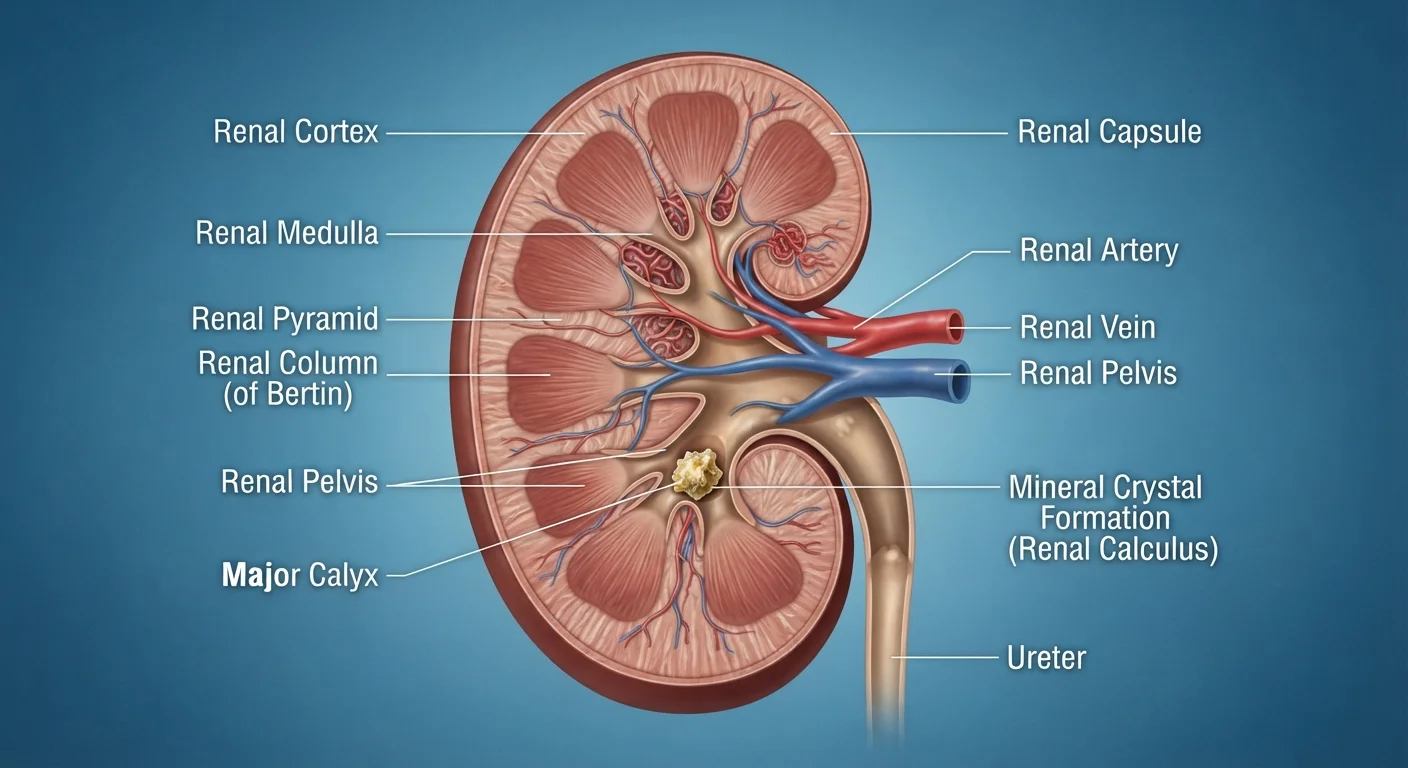
Photo: HerbHealWellness.com | Modern Guide To Wellness editorial
Key Takeaways
- Men develop kidney stones at about twice the rate of women, largely due to hormonal and dietary differences.
- Testosterone promotes higher urinary calcium and uric acid excretion, increasing stone risk.
- Estrogen in women raises urinary citrate, a natural compound that inhibits stone formation.
- Diet choices common among men — high protein, high sodium — further elevate risk.
- Dehydration is the single most modifiable risk factor for kidney stone formation.
- Recurrent stones warrant evaluation by a urologist and targeted dietary or medical management.
The Male Disadvantage: Hormones at the Root
When researchers look at lifetime kidney stone risk, men consistently come out worse. Epidemiological data suggests men face approximately twice the lifetime risk compared to women. That disparity isn't random — it traces directly to hormonal biology.
Testosterone increases the urinary excretion of calcium and uric acid, two primary building blocks of the most common stone types. Higher circulating testosterone also appears to reduce levels of urinary citrate, a compound that naturally binds calcium and prevents crystals from clumping together.
Estrogen, by contrast, actively promotes citrate excretion. Women of reproductive age therefore carry a biochemical buffer against stone formation that men simply lack. This protective effect diminishes after menopause, which is one reason postmenopausal women see their stone risk rise — converging closer to male rates.
“The protective role of estrogen on urinary citrate excretion is one of the clearest examples of how sex hormones shape kidney stone risk — and it helps explain why the male-to-female incidence ratio has persisted across decades of research.”
— Dr. David Goldfarb, Nephrologist and kidney stone researcher, NYU Grossman School of Medicine
This hormonal dynamic explains a significant portion of the sex gap, but it's far from the whole story.
Diet, Body Composition, and Lifestyle Amplifiers
Biology sets the stage, but daily habits often determine whether a stone actually forms. Several patterns that skew toward men compound hormonal risk.
~2x
Men's lifetime kidney stone risk vs. women
Consistent across multiple large epidemiological studies, including data reviewed by the National Kidney Foundation.
80%
Stones composed of calcium oxalate
Calcium oxalate is the predominant stone type in the US, according to urological research literature.
50%
Recurrence rate within 5–10 years
Studies estimate roughly half of first-time stone formers will develop another stone without intervention to address underlying causes.
- Animal protein intake: High consumption of red meat and poultry raises urinary uric acid and reduces urinary pH, creating conditions favorable for both uric acid stones and calcium oxalate stones. Men in the US consume more animal protein on average than women.
- Sodium: A high-sodium diet increases urinary calcium excretion. Processed foods, fast food, and high-sodium condiments — staples of many men's diets — directly elevate stone-forming potential.
- Dehydration: Greater average muscle mass means men produce more metabolic waste that must be cleared by the kidneys. If fluid intake doesn't keep pace — common in physically demanding jobs or outdoor work — urine becomes concentrated and stone-forming salts are more likely to crystallize.
Men who also live with conditions such as gout — itself more common in men before age 60 — face additional risk, since elevated uric acid fuels a distinct stone variety. See our overview of gout in men for context on shared metabolic risk factors.
Practical Steps to Lower Your Risk
Recognizing Symptoms and Knowing When to Act
Kidney stones are notorious for producing sudden, severe pain — typically felt as intense cramping in the back or side, below the ribs, often radiating toward the groin or lower abdomen. This is sometimes called renal colic. Other common symptoms include:
- Pink, red, or brown urine (blood in urine)
- Nausea and vomiting
- Frequent or painful urination
- Cloudy or foul-smelling urine
Small stones sometimes pass on their own with adequate hydration and pain management under medical guidance. Larger stones may require intervention — options include shock wave therapy to break up stones or minimally invasive procedures performed by a urologist.
Fever or chills paired with flank pain is a medical emergency, as it may indicate a urinary tract infection that has extended to the kidney (pyelonephritis). Do not delay care in that scenario.
Men who tend to put off medical attention — a documented pattern explored in our piece on why men avoid medical care — risk allowing a manageable stone to become a complicated one.
This article is for informational purposes only and is not a substitute for professional medical advice, diagnosis, or treatment. Always consult a qualified healthcare provider with questions about your health.
Frequently Asked Questions
The content on this site is for informational purposes only and is not a substitute for professional advice. Always consult a qualified professional for guidance specific to your situation.