
Skin Cancer and Men: The Case for Annual Skin Checks

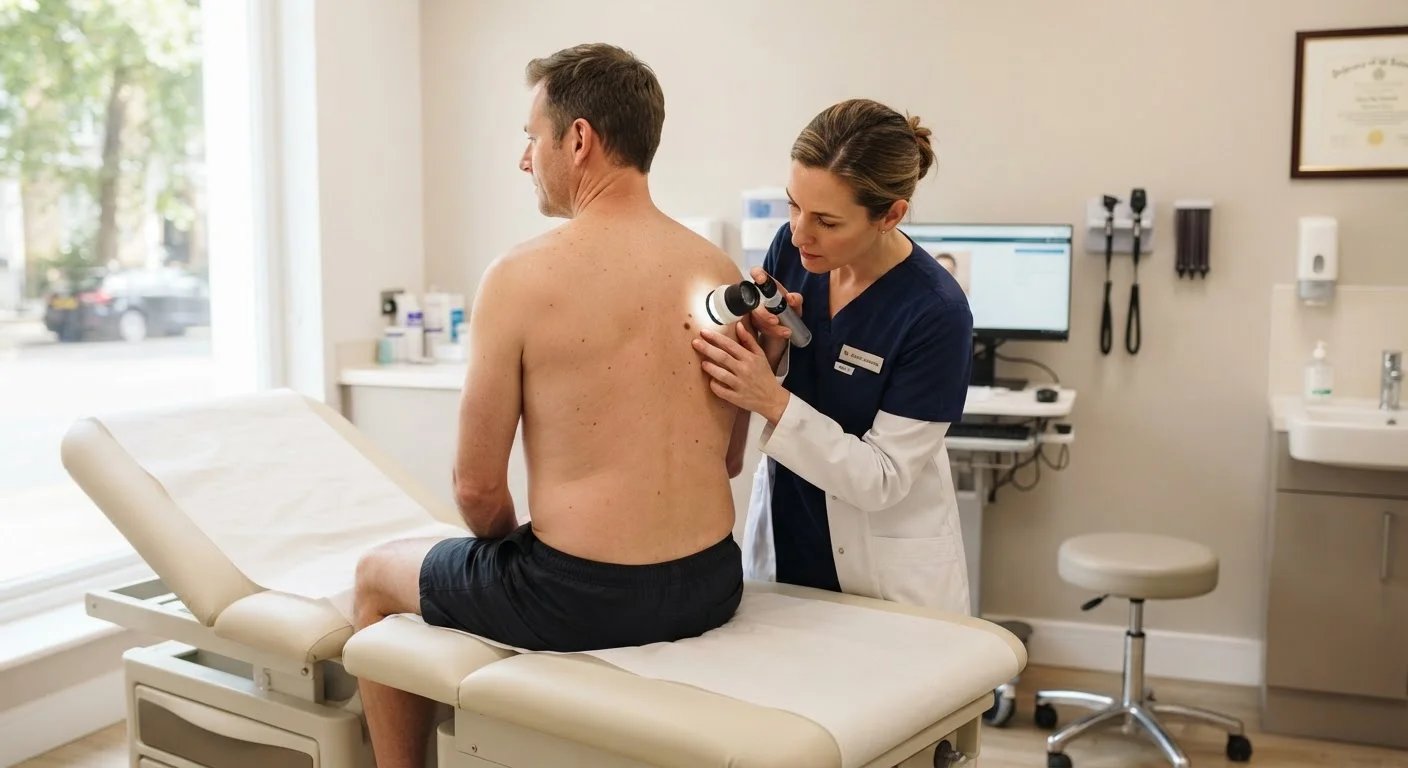
Photo: HerbHealWellness.com | Modern Guide To Wellness editorial
Key Takeaways
- Men develop melanoma at higher rates than women and are more likely to be diagnosed at a later, more dangerous stage.
- A full-body skin check by a dermatologist is non-invasive and typically takes under 30 minutes.
- The ABCDEs of melanoma (Asymmetry, Border, Color, Diameter, Evolving) are the key warning signs to watch for.
- Annual checks are especially important for men with fair skin, a history of sunburn, or significant outdoor exposure.
- Men tend to underuse dermatology services — proactive scheduling can meaningfully close that gap.
Why Men Face a Higher Skin Cancer Risk
Skin cancer is the most commonly diagnosed cancer in the United States, and men bear a disproportionate share of that burden. According to the American Cancer Society, men are significantly more likely than women to develop and die from melanoma — the most dangerous form of skin cancer. Yet men are consistently less likely to schedule dermatology appointments or perform regular self-examinations.
Several factors contribute to this gap. Men on average accumulate more occupational and recreational sun exposure over a lifetime. They are also less likely to use sunscreen regularly or wear protective clothing. Biologically, men's skin tends to be thicker, which may mask some surface changes — but that does not reduce underlying risk.
The consequences show up in the data: melanoma in men is more likely to be caught at a later stage, when treatment is more complex and outcomes are less predictable. The case for regular skin screening isn't about alarm — it's about giving yourself the same advantage that early detection provides in any cancer: more options and better odds. See our full guide to men's health screenings by age for how this fits into broader preventive care.
~1.5x
Higher melanoma death rate in men vs. women
The American Cancer Society reports that men die from melanoma at approximately 1.5 times the rate of women, largely due to later-stage diagnosis.
1 in 27
Lifetime melanoma risk for American men
The American Cancer Society estimates that roughly 1 in 27 men in the US will be diagnosed with melanoma during their lifetime.
98%
5-year survival rate for localized melanoma
When melanoma is detected while still confined to the skin (localized stage), the 5-year relative survival rate is approximately 98%, according to the National Cancer Institute's SEER database.
What Happens During a Skin Check
Many men avoid the dermatologist simply because they don't know what to expect. The exam is straightforward and non-invasive. You'll undress to your underwear and a dermatologist will systematically examine your skin from the scalp to the soles of your feet — including areas you'd never inspect yourself, like the back of the ears, the nape of the neck, and the lower back.
Dermatologists use a tool called a dermoscope — a handheld magnifying device with polarized light — to examine moles and lesions in greater detail. This allows them to assess features invisible to the naked eye, such as the structure and pigment distribution within a lesion.
If something looks unusual, the doctor may take a photo to monitor it over time or proceed directly to a biopsy — removing a small tissue sample under local anesthesia for lab analysis. Most biopsies are quick, minimally uncomfortable, and done in-office. A normal screening, with no concerns, typically takes 15 to 30 minutes.
Make the Most of Your Appointment
The ABCDEs and What to Watch For Between Visits
Annual dermatology visits are most effective when paired with regular self-examination at home. Dermatologists recommend using the ABCDE framework as a guide:
- Asymmetry: One half of a mole doesn't match the other.
- Border: Edges are ragged, notched, or blurred rather than smooth and defined.
- Color: Multiple shades — brown, black, red, white, or blue — within a single lesion.
- Diameter: Larger than about 6 millimeters (roughly the size of a pencil eraser), though melanomas can be smaller.
- Evolving: Any change in size, shape, color, or a new symptom such as bleeding or itching.
In men, melanomas occur most frequently on the back, chest, and scalp — areas that are often difficult to self-inspect. Using a hand mirror or asking a partner to check these zones periodically improves the chance of spotting a change early. Any lesion that doesn't heal within a few weeks also warrants a professional evaluation.
“Men are much less likely than women to go to the dermatologist, even when they have suspicious moles. That reluctance has a real cost — we consistently see men presenting with thicker, more advanced melanomas that are harder to treat.”
— A board-certified dermatologist, Clinical dermatologist specializing in skin cancer detection and prevention
For context on where skin cancer fits within the broader landscape of conditions that disproportionately affect men, visit the Men's Common Conditions hub.
Who Should Prioritize Annual Skin Checks
While any adult can develop skin cancer, certain factors raise risk meaningfully:
Men with any of these risk factors should not wait for a symptom to prompt a visit. The whole point of screening is to catch changes before they become symptomatic. If you're preparing for an upcoming checkup and want to make the most of the appointment, our pre-appointment checklist for men walks through what to bring and what to flag. You may also want to review recommended screening ages and intervals to understand when and how often to get checked across different health domains.
This article is for general informational and educational purposes only and is not a substitute for professional medical advice, diagnosis, or treatment. Always consult a qualified healthcare provider about symptoms, screenings, or concerns specific to your health.
Frequently Asked Questions
The content on this site is for informational purposes only and is not a substitute for professional advice. Always consult a qualified professional for guidance specific to your situation.