
Vitamin K1 and K2: Same Letter, Very Different Roles

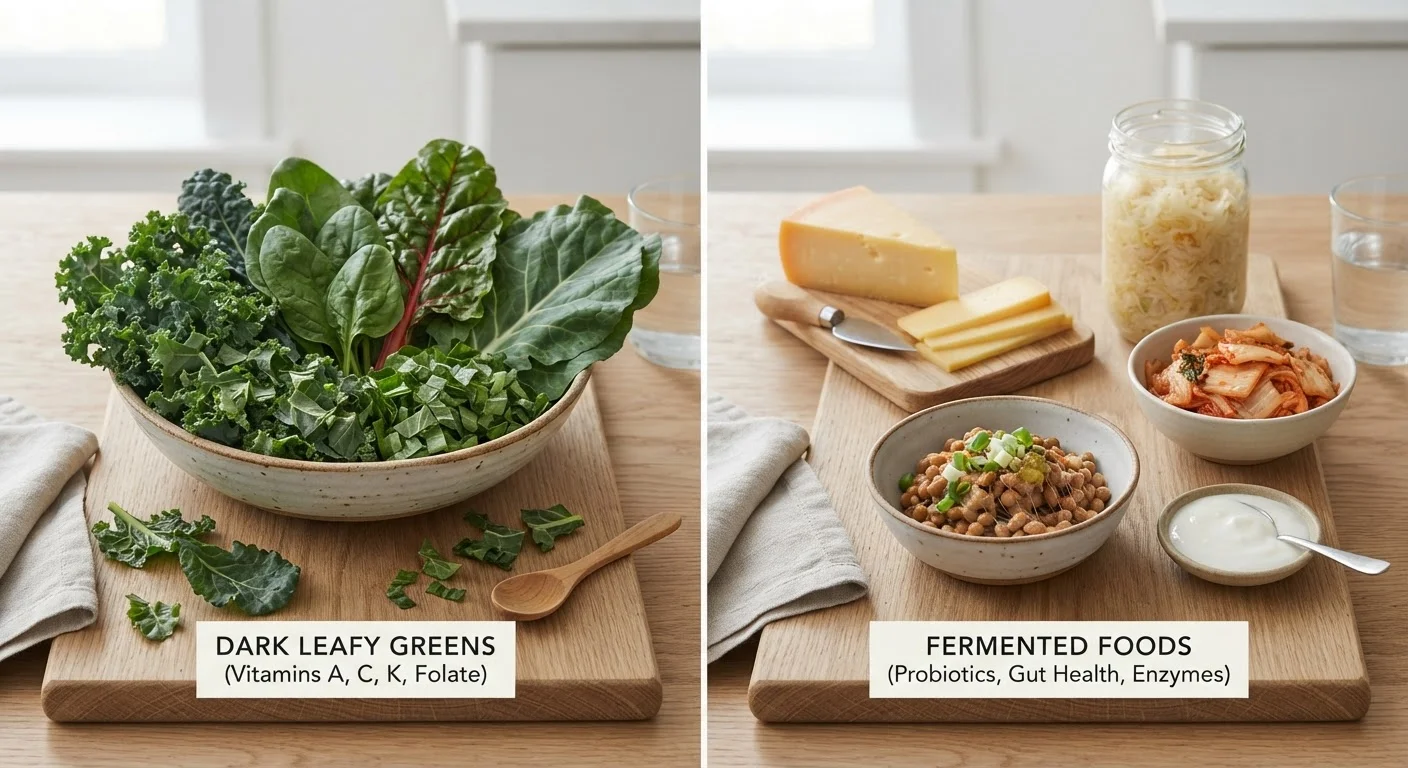
Photo: HerbHealWellness.com | Modern Guide To Wellness editorial
Key Takeaways
- K1 and K2 are both fat-soluble vitamins but differ significantly in their primary roles and food sources.
- K1 (phylloquinone) is the dominant form in most Western diets, concentrated in leafy green vegetables.
- K2 (menaquinone) activates proteins that regulate where calcium is deposited in the body.
- Both forms activate clotting factors, but K2's longer molecular chain allows it to reach tissues beyond the liver.
- Fermented foods like natto and aged cheeses are among the richest dietary sources of K2.
- People on anticoagulant medications should consult their healthcare provider before changing vitamin K intake.
Two Forms, One Letter — Understanding the Distinction
Vitamin K is a single nutrient category that encompasses two chemically distinct compounds: phylloquinone (K1) and menaquinone (K2). While both are fat-soluble and share a core molecular structure, differences in their side chains — and therefore their behavior in the body — mean they are not interchangeable in function. As part of the broader family of essential micronutrients (see what vitamins actually do in the body), vitamin K illustrates how a single letter can mask important biological complexity.
K1 is the predominant form in most American diets, primarily because it is synthesized by plants and found in high concentrations in dark leafy greens. K2, by contrast, exists in multiple subtypes (designated MK-4 through MK-13) and is produced through bacterial fermentation — both in certain foods and within the human gut, though gut-produced K2 appears to have limited bioavailability.
| Criterion | Vitamin K1 (Phylloquinone) | Vitamin K2 (Menaquinone) |
|---|---|---|
| Primary role | Blood coagulation | Calcium regulation in bone and arteries |
| Main dietary sources | Leafy greens (spinach, kale, broccoli) | Natto, aged cheese, egg yolks, liver |
| Primary site of action | Liver | Bone, arterial wall, soft tissue |
| Duration in circulation | Short (rapidly cleared) | Longer (especially MK-7 subtype) |
| Key proteins activated | Clotting factors II, VII, IX, X | Osteocalcin, Matrix Gla Protein |
| Prevalence in Western diets | High | Relatively low |
What Each Form Does in the Body
Both K1 and K2 serve as cofactors for an enzyme called gamma-glutamyl carboxylase, which activates a family of proteins known as Gla proteins. This activation is essential to several physiological processes, but the two forms differ in where they carry out this work.
K1 is rapidly taken up by the liver, where it activates clotting factors II, VII, IX, and X — proteins central to the coagulation cascade that prevents excessive bleeding. The liver clears K1 efficiently, so relatively little circulates to other tissues.
K2, particularly longer-chain subtypes like MK-7, remains in circulation longer and reaches extrahepatic tissues — including bone and the arterial wall. There, it activates two critical proteins:
- Osteocalcin — a protein secreted by bone-building cells (osteoblasts) that, when activated by K2, helps bind calcium into the bone matrix.
- Matrix Gla Protein (MGP) — found in arterial walls and cartilage, MGP inhibits abnormal calcium deposition in soft tissues when properly carboxylated by K2.
This is why K2 is of particular interest in bone health research and why it is sometimes discussed alongside vitamin D and calcium. Vitamin D and calcium work together to support bone density, and K2 plays a supporting role in ensuring calcium is deposited where it is needed most.
~90%
Share of dietary vitamin K from K1 in Western diets
Research estimates suggest phylloquinone accounts for the large majority of vitamin K intake in typical American and European dietary patterns.
MK-7
Longest-circulating K2 subtype
Studies indicate MK-7 has a half-life of approximately 3 days in plasma, compared to hours for K1, allowing broader tissue distribution.
Dietary Sources and Practical Considerations
Getting adequate K1 is relatively straightforward on a varied diet. One cup of cooked spinach or kale can provide several times the daily adequate intake. K2 is less uniformly distributed in the food supply:
A Note on Anticoagulant Medications
- MK-4 (short-chain K2): Found in animal products including egg yolks, butter, and chicken liver. Absorbed quickly but cleared rapidly.
- MK-7 (long-chain K2): Concentrated in natto (fermented soybeans), a staple of Japanese cuisine. Also present in smaller amounts in aged cheeses and fermented dairy.
Because K2 is fat-soluble, consuming it with dietary fat improves absorption — a consideration relevant to both food choices and any supplemental form. People following restrictive diets or those with fat malabsorption conditions may have reduced vitamin K status overall and should discuss their needs with a registered dietitian or healthcare provider.
This article is for general informational purposes only and does not constitute medical advice. Always consult a qualified healthcare professional before making changes to your diet, especially if you take medications or manage a chronic health condition.
The content on this site is for informational purposes only and is not a substitute for professional advice. Always consult a qualified professional for guidance specific to your situation.