
Pericoronitis: When a Partially Erupted Tooth Becomes a Problem

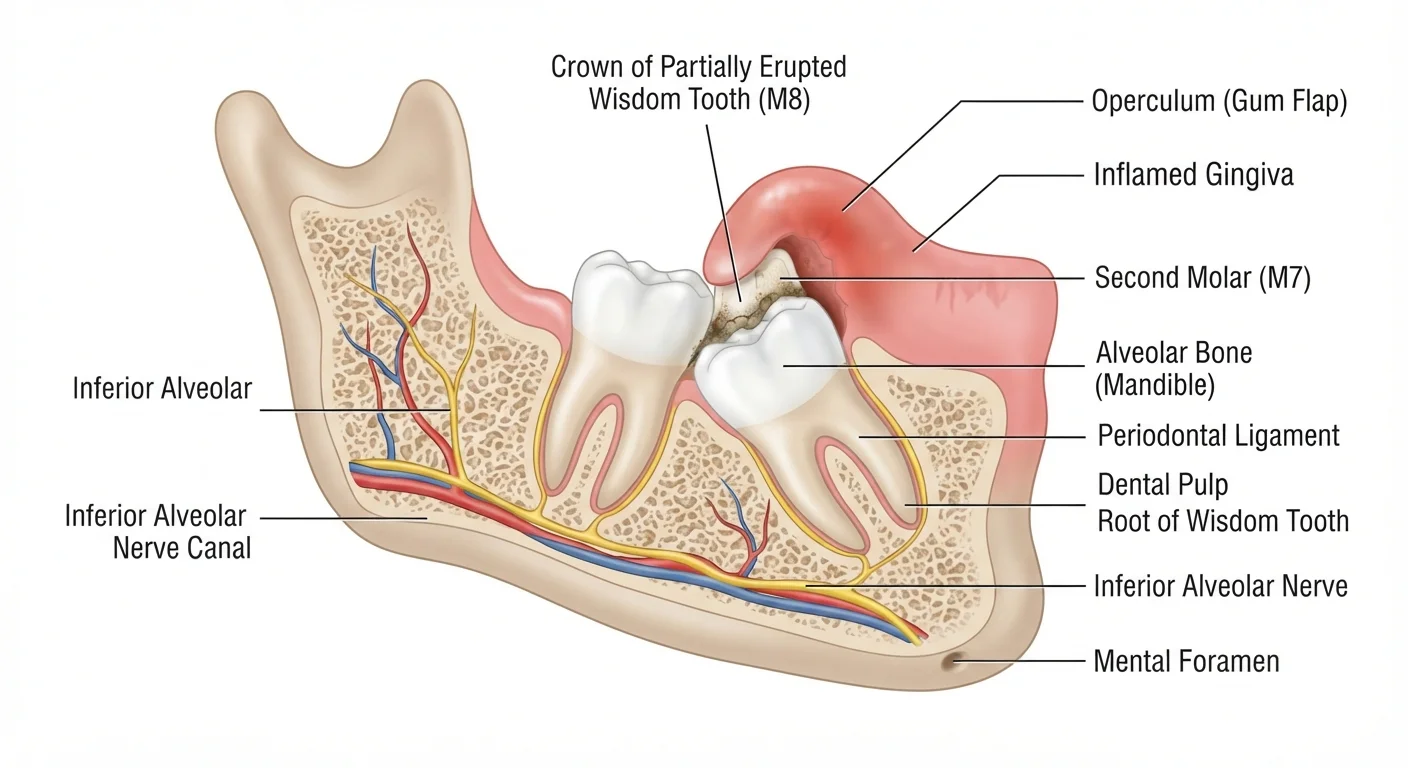
Photo: HerbHealWellness.com | Modern Guide To Wellness editorial
Key Takeaways
- Pericoronitis develops when bacteria become trapped under gum tissue overlying a partially erupted tooth.
- Lower wisdom teeth are the most common site, typically affecting people between ages 17 and 25.
- Symptoms include localized pain, swelling, difficulty opening the mouth, and sometimes a bad taste.
- Mild cases may be managed with improved oral hygiene, but a dentist should evaluate the condition.
- Recurring or severe pericoronitis often leads dentists to recommend extraction of the affected tooth.
- Prompt dental evaluation is important to prevent the infection from spreading to surrounding tissues.
What Causes Pericoronitis?
Pericoronitis develops because of a straightforward anatomical problem. When a wisdom tooth erupts only partway through the gum, a pocket-like flap of tissue — called the operculum — forms over the crown of the tooth. This flap acts as a natural trap for food particles, plaque, and bacteria. Because the area is difficult to clean with a toothbrush or floss, bacteria multiply beneath the flap and trigger an inflammatory response in the surrounding gum tissue.
Several factors can increase the likelihood of this occurring:
- Insufficient jaw space: When there is not enough room for the wisdom tooth to fully emerge and assume an upright position, it remains partially covered by gum tissue indefinitely.
- Tooth angulation: Teeth that are tilted or impacted are less likely to erupt completely, prolonging exposure to the operculum.
- Poor oral hygiene: Inadequate brushing at the back of the mouth allows bacterial populations to build up faster in the gum pocket.
- Systemic factors: Stress, illness, or fatigue may temporarily impair immune defenses, making an existing low-grade situation flare into an acute episode.
Not All Wisdom Tooth Pain Is Pericoronitis
Recognizing the Symptoms
Symptoms of pericoronitis range from mild and nagging to severe and functionally limiting. Recognizing them early can help readers seek care before the condition worsens.
Common Symptoms
- Pain and tenderness at the back of the mouth, often described as throbbing or aching. Pain may radiate to the ear, jaw, or throat.
- Swollen, reddened gum tissue around the affected tooth, sometimes with visible pus or fluid discharge.
- Difficulty opening the mouth fully (trismus), caused by inflammation and muscle involvement.
- Bad taste or odor resulting from bacterial activity and fluid beneath the gum flap.
- Difficulty chewing or swallowing in more pronounced cases.
Possible Signs of a More Serious Infection
In some cases, bacteria may spread beyond the local gum tissue into deeper spaces of the jaw or neck. Warning signs that warrant urgent care include visible facial swelling, fever, chills, or difficulty breathing or swallowing. These symptoms may indicate a spreading infection requiring prompt medical attention.
17–25
Age range most affected by pericoronitis
Third molars typically attempt eruption during late adolescence and early adulthood, aligning with peak pericoronitis incidence reported in dental literature.
~90%
Pericoronitis cases involving lower wisdom teeth
The lower third molars are overwhelmingly the most common site, due to their later and often incomplete eruption pattern compared to upper wisdom teeth.
30%
Adults who retain at least one impacted wisdom tooth
Studies estimate that a substantial proportion of adults have at least one third molar that does not fully erupt, creating ongoing structural risk for pericoronitis.
How Dentists Diagnose and Manage Pericoronitis
A dentist will typically diagnose pericoronitis through a clinical examination and your description of symptoms. X-rays are commonly taken to assess the position of the wisdom tooth, how much space is available, and whether the root development suggests the tooth could still erupt fully.
Management depends on the severity of the episode and the likelihood of recurrence:
- Irrigation and debridement: The dentist gently cleans beneath the gum flap to remove trapped debris and bacteria, which often provides significant immediate relief.
- Improved home hygiene: Careful brushing around the area and rinsing with a chlorhexidine mouthwash or warm salt water may be recommended to reduce bacterial load.
- Antibiotics: If there are signs of spreading infection or systemic involvement (such as fever), a dentist may prescribe antibiotics. Antibiotics alone, however, do not address the underlying structural cause.
- Operculectomy: In select cases where the tooth is expected to fully erupt, the gum flap itself may be surgically removed to eliminate the pocket.
- Extraction: When there is insufficient space, the tooth is poorly positioned, or episodes recur, extraction of the wisdom tooth is the definitive solution to prevent further episodes.
“Pericoronitis is one of the most common reasons young adults present with acute dental pain. The good news is that once the underlying cause is addressed — whether that's thorough cleaning, removal of the tissue flap, or extraction — the problem is highly manageable.”
— American Dental Association, Professional dental organization representing U.S. dentists and setting clinical standards
This article provides general health information and is not a substitute for professional dental or medical advice. If you are experiencing symptoms, consult a licensed dentist or healthcare provider.
Frequently Asked Questions
The content on this site is for informational purposes only and is not a substitute for professional advice. Always consult a qualified professional for guidance specific to your situation.