
Eye Conditions That Are Often Mistaken for One Another

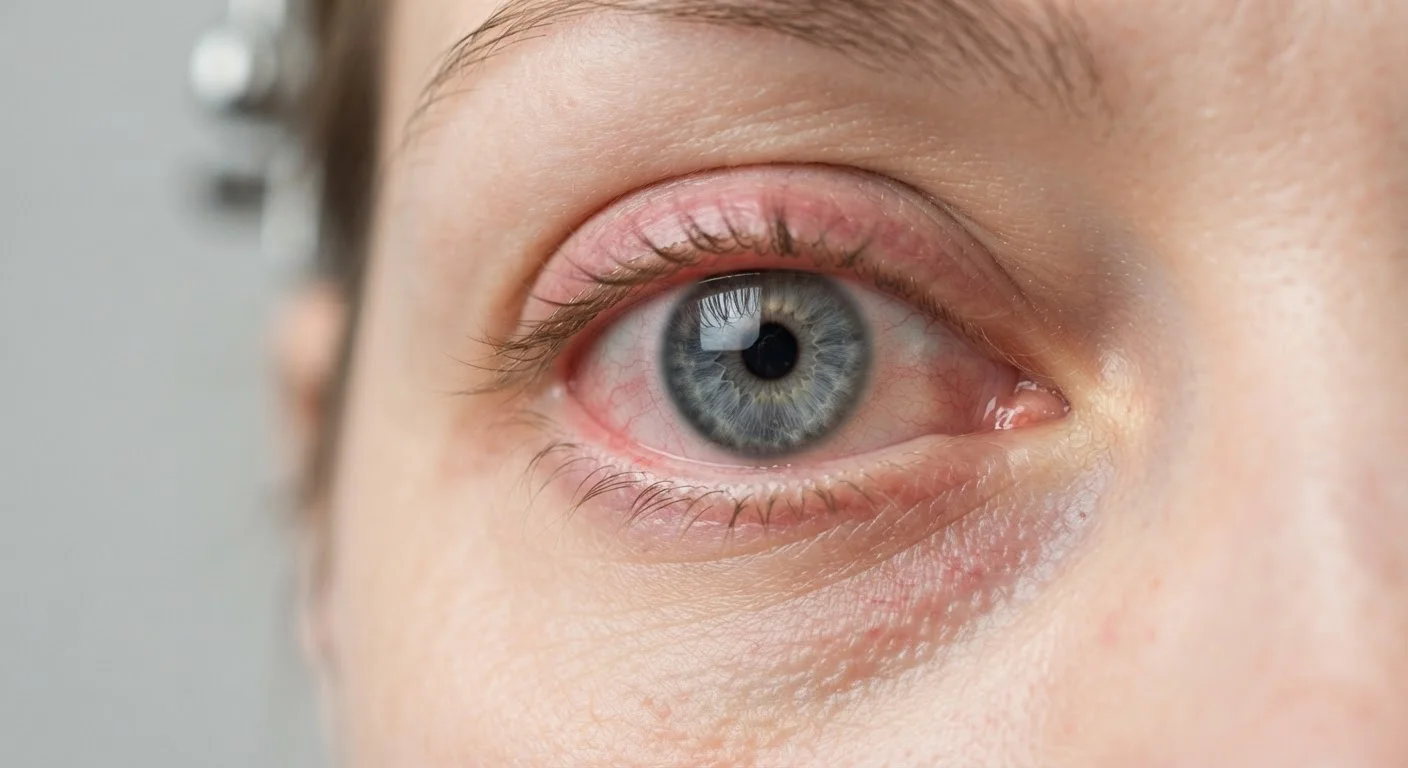
Photo: HerbHealWellness.com | Modern Guide To Wellness editorial
Key Takeaways
- Styes and chalazia look similar but have different causes and treatment approaches.
- Blepharitis and dry eye frequently occur together, complicating self-diagnosis.
- Floaters are common, but sudden increases in their number can signal a serious retinal event.
- A qualified eye care professional is essential for distinguishing conditions that share symptoms.
- Pink eye has three distinct forms — bacterial, viral, and allergic — each managed differently.
Why Confusion Happens — and Why It Matters
The eye is a small structure, yet it hosts a surprising variety of conditions that can produce nearly identical symptoms: redness, irritation, blurred vision, or a visible bump on the lid. Without a clinical examination, even attentive patients struggle to tell these problems apart — and misidentifying one can mean pursuing the wrong care strategy, or delaying treatment for something more serious.
The pairs and groups below represent the most commonly confused eye conditions seen in clinical practice. Understanding what sets each one apart won't replace a professional diagnosis, but it can help you describe your symptoms more precisely and recognize when prompt attention is warranted. For symptoms that appear suddenly or worsen quickly, see our guide to warning signs between eye exams.
Stye vs. Chalazion
Both produce a bump on the eyelid, but their origins differ meaningfully. A stye (hordeolum) is an acute bacterial infection of an oil gland or hair follicle at the lid margin. It is typically tender, red, and may come to a visible point, similar to a pimple. A chalazion, by contrast, is a chronic, non-infectious blockage of a meibomian gland deeper in the lid. It tends to be firmer, less painful, and positioned away from the lid edge.
The distinction matters because styes often respond to warm compresses within days and may occasionally require antibiotics, while a persistent chalazion may need an in-office steroid injection or minor drainage procedure if it does not resolve on its own.
A stye is a bacterial infection; a chalazion is a blocked gland — each responds to different care.
Blepharitis vs. Dry Eye
Blepharitis is chronic inflammation of the eyelid margins, often caused by bacterial overgrowth or dysfunction of the meibomian oil glands. Dry eye disease occurs when the tear film is insufficient in quantity or quality to keep the ocular surface comfortable. The symptoms — burning, grittiness, morning crusting, and intermittent blurred vision — overlap substantially, and the two conditions frequently occur together.
Key differentiators include lid margin appearance (blepharitis typically shows redness, scaling, or crusting at the lash roots) and tear film testing performed during an eye exam. Dry eye and eye allergies are themselves often confused, adding another layer of complexity.
Blepharitis and dry eye share nearly identical symptoms and often occur simultaneously.
Bacterial vs. Viral vs. Allergic Conjunctivitis
All three forms of conjunctivitis (commonly called pink eye) cause redness and eye discomfort, but their causes and management differ entirely. Bacterial conjunctivitis typically produces thick, yellow-green discharge and may affect one or both eyes. Viral conjunctivitis — the most common form — usually presents with watery discharge, often alongside a cold or upper respiratory symptoms. Allergic conjunctivitis brings intense itching, tearing, and a clear discharge, frequently affecting both eyes simultaneously.
This distinction is clinically important: bacterial forms may warrant antibiotic drops, viral forms resolve on their own, and allergic forms are managed with antihistamines or mast-cell stabilizers. Our detailed conjunctivitis comparison breaks down each type further.
Pink eye is not a single condition — its bacterial, viral, and allergic forms each require different management.
Floaters vs. Signs of Retinal Emergency
Small dark specks or strings drifting across your vision are almost always benign vitreous floaters — clumps of collagen within the eye's gel-like vitreous that cast shadows on the retina. They are extremely common, particularly after age 50 or in people who are nearsighted.
However, a sudden shower of new floaters, especially accompanied by flashes of light or a dark curtain spreading across peripheral vision, may indicate a posterior vitreous detachment or, more urgently, a retinal tear or detachment. These symptoms require same-day evaluation by an eye care provider. The gradual appearance of a few floaters over years is almost never alarming; a dramatic, sudden change always warrants prompt attention.
A sudden flood of new floaters with flashes of light warrants same-day evaluation — do not wait.
Myopia vs. Early Presbyopia in Young Adults
Myopia (nearsightedness) causes distant objects to appear blurry while close vision remains clear. Presbyopia — the age-related stiffening of the eye's lens — produces the opposite: difficulty focusing on near objects. Young adults in their late 30s or early 40s sometimes mistake the first signs of presbyopia for worsening myopia, leading them to request stronger distance glasses when they actually need reading correction.
An updated refraction during a comprehensive eye exam distinguishes these quickly. People who already wear myopia correction may notice that removing their glasses improves their near vision — a tell-tale early sign of presbyopia. Common misconceptions about glasses and vision correction are explored in our vision correction myths article.
Removing glasses to read more comfortably can be an early signal of presbyopia, not worsening myopia.
Amblyopia vs. Strabismus
Strabismus is a misalignment of the eyes — one eye may turn inward, outward, up, or down — and is often visible to observers. Amblyopia (commonly called lazy eye) is reduced vision in one eye that develops when the brain begins to suppress input from that eye, often as a consequence of strabismus, but also from uncorrected refractive imbalance or a physical obstruction like a drooping lid.
Amblyopia can be present without any obvious eye turn, making it easy to miss, particularly in children. Because the visual system is still developing through early childhood, early detection is critical. Parents concerned about their child's eye alignment or visual behavior should consult a pediatric eye specialist promptly. See our parent's reference on children's vision problems for more detail on these and related conditions.
Amblyopia can exist without a visible eye turn, making routine pediatric vision screening essential.
Getting the Right Diagnosis
Symptom overlap is the rule rather than the exception in eye care. Several of the conditions above — dry eye and blepharitis, for instance — can coexist, making the diagnostic picture even more complex. Self-diagnosis using symptom checklists alone carries real risk, particularly when a condition like angle-closure glaucoma or retinal detachment can masquerade as something far more routine.
Describe Your Symptoms Precisely
If you are unsure about what you are experiencing, the most reliable step is a comprehensive eye examination by a licensed optometrist or ophthalmologist. They can distinguish conditions that look alike and recommend a care pathway appropriate for your specific situation. This article is for general informational purposes and is not a substitute for professional medical evaluation.
This article is for informational purposes only and does not constitute medical advice. Always consult a qualified eye care professional regarding any symptoms or concerns about your vision or eye health.
The content on this site is for informational purposes only and is not a substitute for professional advice. Always consult a qualified professional for guidance specific to your situation.