
The Incubation Period Explained: Why Symptoms Don't Always Show Up Right Away

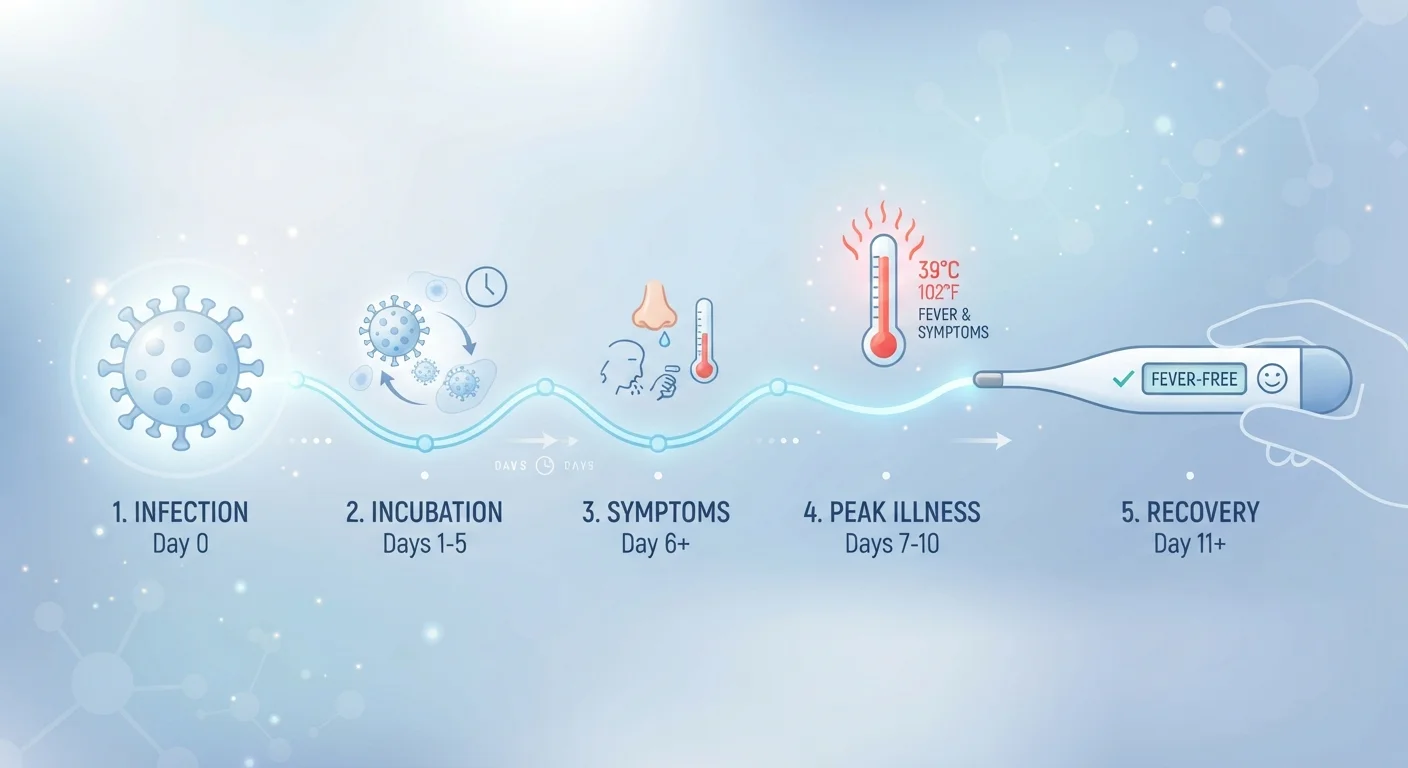
Photo: HerbHealWellness.com | Modern Guide To Wellness editorial
Key Takeaways
- The incubation period is the time between exposure to a pathogen and the onset of symptoms.
- Different diseases have widely different incubation periods, ranging from hours to weeks.
- During some incubation periods, a person can be contagious before they feel any symptoms.
- Quarantine and isolation guidelines are designed around typical incubation period ranges.
- Knowing an incubation period helps individuals and health professionals assess exposure risk.
What Happens Inside the Body During Incubation
When a pathogen enters the body, it doesn't immediately trigger illness. Instead, it begins a period of replication — multiplying quietly within cells or tissues while the immune system begins mounting a response. Symptoms emerge only once the pathogen reaches a sufficient load or the immune response becomes robust enough to produce noticeable effects like fever, inflammation, or fatigue.
This biological lag is why a person can feel completely fine for days after exposure. Their body is engaged in an invisible battle. The duration of that battle — the incubation period — depends heavily on the type of pathogen, how quickly it replicates, and how efficiently the immune system detects it.
Incubation Period vs. Latent Period
Why Incubation Periods Vary So Widely
Different pathogens behave in fundamentally different ways. A norovirus, responsible for stomach bugs, can cause symptoms in as little as 12 hours. The influenza virus typically takes one to four days. SARS-CoV-2 has a widely documented range of two to fourteen days, with most cases emerging around five days post-exposure. At the far end of the spectrum, the rabies virus — which travels along nerve pathways rather than through the bloodstream — can have an incubation period measured in weeks or even months.
The site of infection, the dose of pathogen received, and the route of entry all affect timing. A higher initial viral load, for example, can shorten the incubation period. So can a compromised immune system, which may allow the pathogen to replicate more quickly.
1–4 days
Typical influenza incubation period
According to the CDC, most people with influenza develop symptoms within one to four days of exposure.
2–14 days
COVID-19 incubation range
The CDC and WHO have documented an incubation range of two to fourteen days for SARS-CoV-2, with a median around five days.
Up to months
Rabies virus incubation period
The WHO notes that rabies has one of the longest known incubation periods of any common virus, occasionally extending beyond several months.
Incubation, Contagion, and the Gap That Drives Spread
One of the most consequential aspects of incubation periods is their relationship to contagion. For many respiratory illnesses, a person becomes infectious before symptoms develop — sometimes 24 to 48 hours before they feel sick. This presymptomatic transmission window is one of the primary reasons respiratory diseases spread so effectively in communities.
This distinction matters for public health decision-making. Understanding which illnesses spread before symptoms appear helps explain why blanket symptom-checking alone isn't always sufficient to contain outbreaks. It also underscores why exposure history — not just how you feel — matters when assessing risk.
“The interval between exposure and symptoms is one of the most important parameters in understanding how an infectious disease will behave in a population.”
— Marc Lipsitch, Epidemiologist and professor of epidemiology at Harvard T.H. Chan School of Public Health
Practical Implications: Quarantine, Testing, and Exposure Windows
Public health guidelines around quarantine and isolation are directly tied to incubation period data. When authorities recommend that exposed individuals isolate for a set number of days, that window is calibrated to the upper range of the expected incubation period for that disease. Waiting out that window helps ensure that if infection took hold, symptoms or a positive test would emerge before the person resumes contact with others.
Testing timing is also shaped by incubation biology. Testing too soon after exposure — before the pathogen has replicated to detectable levels — can produce false-negative results, even in people who are genuinely infected. This is why healthcare providers often advise waiting several days after a known exposure before testing, or repeat-testing if symptoms develop later.
Understanding the concept of the incubation period is also foundational for grasping how outbreaks scale and how authorities classify them. How outbreaks, epidemics, and pandemics are classified by health agencies depends in part on transmission dynamics rooted in these biological windows.
This article is for informational purposes only and is not a substitute for professional medical advice, diagnosis, or treatment. Always consult a qualified healthcare provider with questions about any medical condition or exposure.
Frequently Asked Questions
The content on this site is for informational purposes only and is not a substitute for professional advice. Always consult a qualified professional for guidance specific to your situation.