
Continuous Passive Motion Machines: Recovery After Joint Surgery

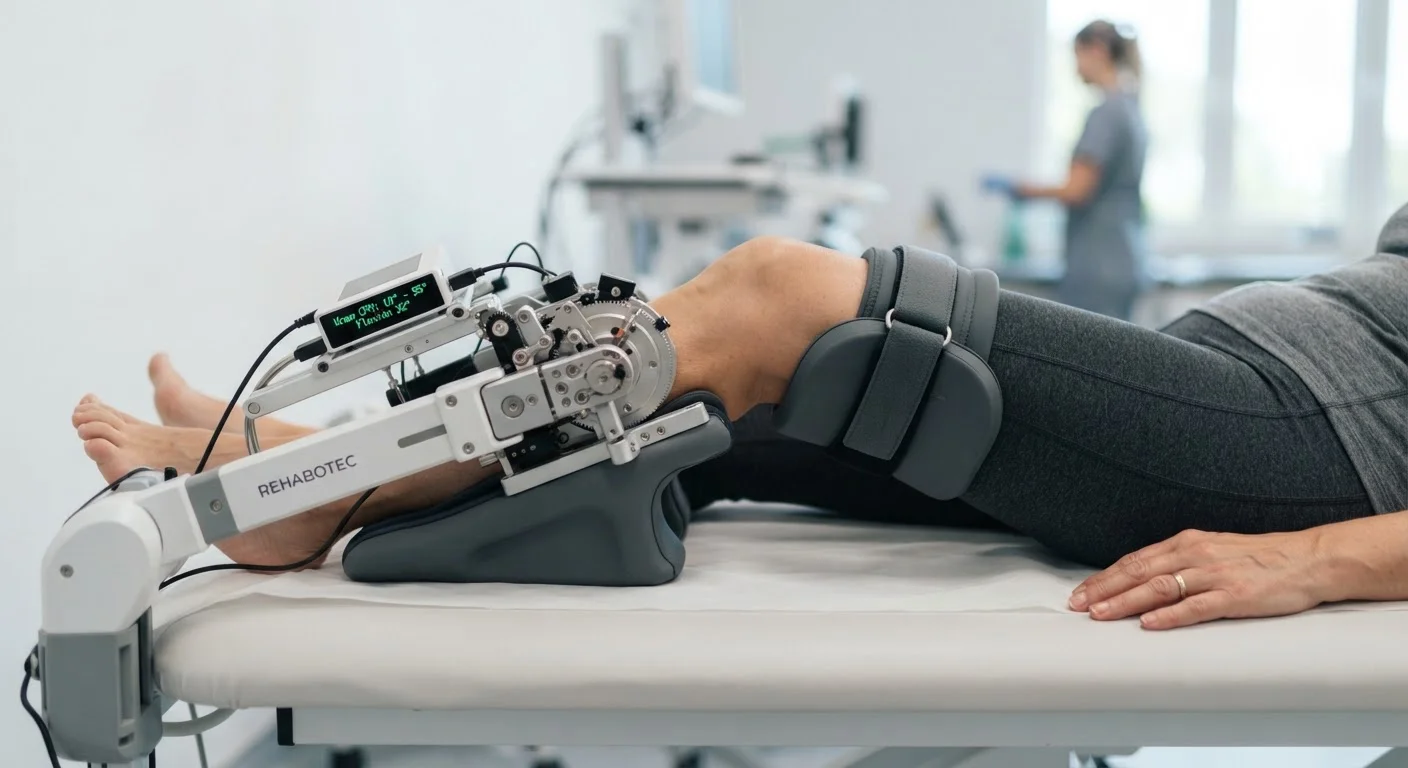
Photo: HerbHealWellness.com | Modern Guide To Wellness editorial
Key Takeaways
- CPM machines move a joint passively — the patient's muscles do not actively contract during use.
- They are most commonly used after knee replacement or ligament reconstruction surgery.
- Settings such as range of motion and speed are prescribed by a clinician, not self-selected.
- CPM therapy is typically one component of a broader rehabilitation program.
- Always follow your surgeon's or physical therapist's specific instructions for device use.
What Is a CPM Machine and How Does It Work?
A continuous passive motion machine is a motorized device designed to move a joint through a prescribed arc of motion repeatedly and rhythmically. The patient rests a limb — most often the leg — in a padded trough or cradle attached to the device. A motor then drives the joint through a bending (flexion) and straightening (extension) cycle at an adjustable speed and range.
The key distinction from active exercise is that the patient contributes no muscular effort. This makes CPM therapy particularly valuable in the immediate post-operative period, when pain, swelling, and surgical trauma make voluntary movement difficult or contraindicated.
Settings on a CPM machine include the degree of flexion and extension, the speed of movement, and the duration of the session. These parameters are set by a physical therapist or surgeon based on the patient's specific procedure, healing stage, and tolerance — they are not self-selected by the patient.
CPM Is Passive — Not Exercise
Clinical Applications: When Is CPM Used?
CPM machines are most frequently prescribed after:
- Total or partial knee replacement — to maintain joint mobility while the new implant heals
- Anterior cruciate ligament (ACL) reconstruction — to encourage controlled early movement of the repaired ligament
- Knee cartilage repair procedures — where passive motion supports cartilage cell nutrition without applying load
- Certain shoulder, elbow, and hip surgeries — though evidence varies and clinical protocols differ widely
The theoretical basis for CPM use draws on research suggesting that synovial fluid — the joint's natural lubricant — circulates more effectively with movement, delivering nutrients to cartilage that lacks its own blood supply. Early controlled motion may also reduce the formation of fibrous scar tissue that can limit long-term flexibility.
~700,000
Total knee replacements performed annually in the U.S.
According to the American Academy of Orthopaedic Surgeons, knee replacement is one of the most common joint procedures in the United States, making post-operative rehabilitation tools like CPM widely relevant.
0°–120°
Typical CPM flexion range over a recovery course
Clinical protocols generally start CPM at low flexion angles and progress toward 90–120 degrees of knee bend over days to weeks, depending on the patient's surgical procedure and healing status.
What to Expect During CPM Therapy
Patients using a CPM machine typically begin with a small range of motion — sometimes as little as 30–40 degrees of flexion — which is gradually increased over days or weeks as tolerated. Sessions may last anywhere from one to several hours, and the device may be used multiple times daily depending on the care plan.
The experience is generally described as a slow, repetitive rocking sensation. Some patients report mild aching or pressure, particularly as the range increases. Sharp or escalating pain is a signal to stop the device and contact a care provider.
CPM therapy does not replace active rehabilitation. Physical therapy exercises — which build strength, balance, and coordination — remain central to recovery. CPM is one tool within a broader program that may also include pain management, weight-bearing progressions, and other modalities. For patients recovering from procedures involving circulation concerns, clinicians may also consider adjunct therapies such as pneumatic compression therapy to support venous return and reduce the risk of blood clots.
Communicate Discomfort to Your Care Team
Safety Considerations and Limitations
CPM machines are generally considered safe when used under clinical supervision with correct settings. However, they are not appropriate for all patients or all surgeries. Contraindications may include certain fractures, infection, vascular compromise, or situations where joint immobilization is required for healing.
The evidence base for CPM therapy has evolved. Some systematic reviews suggest meaningful short-term benefits for range of motion and swelling reduction following total knee replacement, while others indicate that the long-term advantages over standard physiotherapy may be modest. Clinical guidelines vary by institution and procedure, and recommendations continue to be refined as new research emerges.
Patients should never adjust the device settings independently, use the device longer than prescribed, or apply the machine to an unsupported limb position. Any changes to the rehabilitation plan should go through the supervising clinician.
This article is for general informational and educational purposes only. It does not constitute medical advice, diagnosis, or treatment. Always consult a qualified healthcare professional regarding any medical condition, post-surgical care plan, or use of therapeutic devices.
Frequently Asked Questions
The content on this site is for informational purposes only and is not a substitute for professional advice. Always consult a qualified professional for guidance specific to your situation.