
Traction Therapy for Spinal Conditions: Mechanisms and Clinical Context

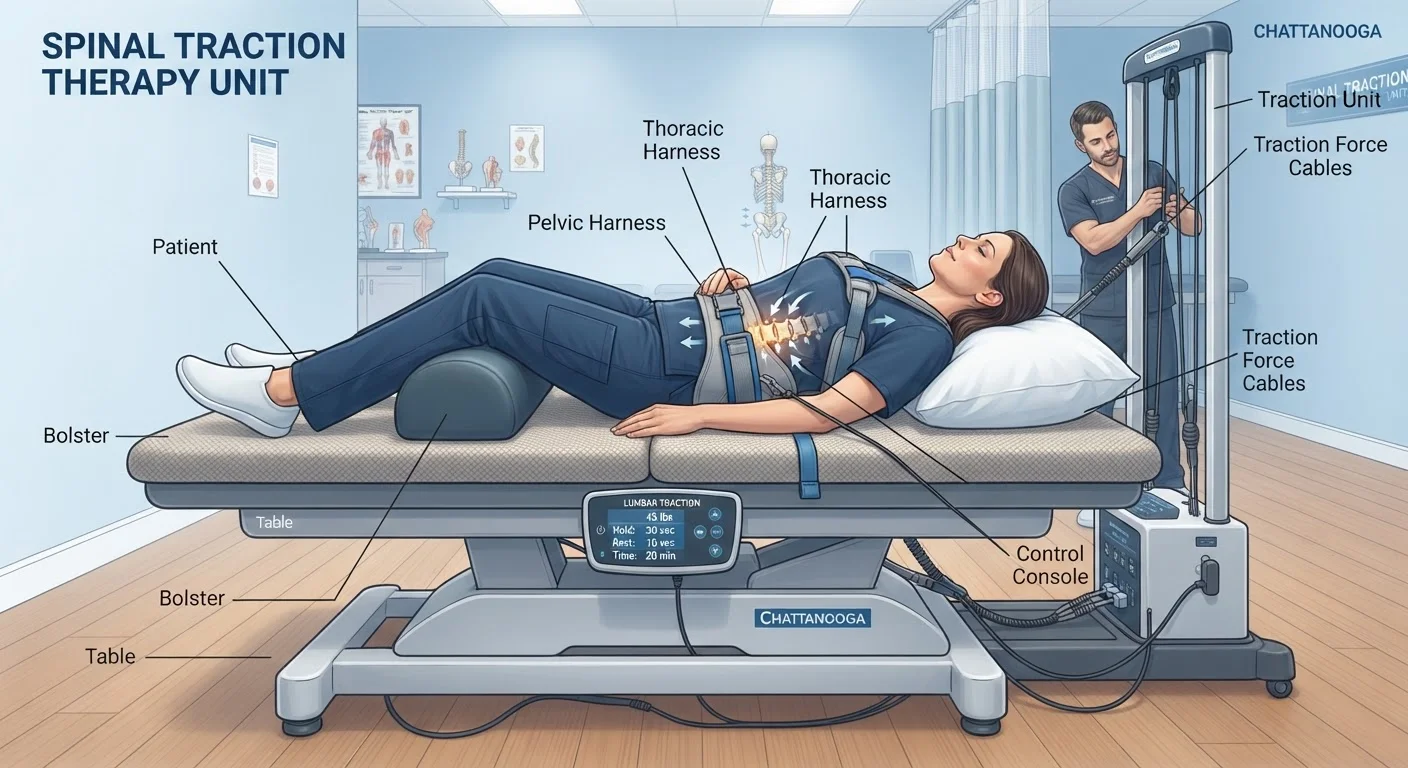
Photo: HerbHealWellness.com | Modern Guide To Wellness editorial
Key Takeaways
- Traction therapy applies a controlled pull to the spine to decompress discs and reduce nerve pressure.
- It is delivered mechanically, manually, or through gravity-based devices depending on clinical goals.
- Common applications include herniated discs, radiculopathy, and degenerative disc disease.
- Evidence for traction is mixed; it is generally used as part of a broader treatment plan, not in isolation.
- A healthcare provider should assess whether traction is appropriate before it is used.
How Traction Works on the Spine
The spine is a stacked column of vertebrae separated by intervertebral discs — gel-like cushions that absorb shock and allow movement. When a disc herniates, degenerates, or when surrounding joints become inflamed, the resulting pressure on nearby nerve roots can cause localized or radiating pain.
Traction therapy addresses this by applying a longitudinal pulling force along the spine's axis. This mechanical distraction increases the space between vertebrae, which can reduce intradiscal pressure, widen the intervertebral foramen (the openings through which nerve roots exit), and temporarily relieve compressive load on irritated structures. Some clinicians also theorize that traction promotes fluid exchange within discs, supporting tissue hydration.
Understanding the full range of therapeutic equipment used in clinical settings can help patients navigate their care. See how therapeutic devices work in clinical practice for broader context.
~80%
Adults experiencing back pain at some point
The National Institute of Neurological Disorders and Stroke estimates that approximately 80% of adults experience low back pain during their lifetime, making spinal conditions one of the most common reasons for clinical intervention.
10–30 min
Typical mechanical traction session length
Clinical protocols for mechanical lumbar or cervical traction generally range from 10 to 30 minutes per session, with force levels and duration individualized by the treating clinician.
Up to 50%
Body weight applied in lumbar traction
Research guidelines suggest that effective lumbar distraction often requires traction force equivalent to roughly 25–50% of body weight to produce measurable intradiscal pressure changes, though individual protocols vary.
Types of Traction Therapy
Traction is not a single technique — it encompasses several delivery methods suited to different clinical situations.
- Mechanical (motorized) traction: A motorized table or harness system applies a calibrated pulling force. Force, duration, and pattern (continuous or intermittent) are programmable, allowing precise, reproducible sessions. This is common in physical therapy and rehabilitation clinics.
- Manual traction: A physical therapist or chiropractor uses their hands to apply a gentle pulling force directly to the patient's head, neck, or pelvis. This allows real-time adjustment based on patient response and is often combined with mobilization techniques.
- Positional traction: The patient is placed in a specific posture using pillows or wedges to passively unload certain spinal segments through gravity and positioning alone.
- Inversion therapy: Gravity-assisted devices tilt the body inverted or partially inverted to decompress the lumbar spine. While popular in consumer settings, clinical evidence for inversion therapy remains limited, and it carries risks for individuals with certain cardiovascular or musculoskeletal conditions.
Ask About the Treatment Plan Before Starting
What the Evidence Says
The research landscape for traction therapy is nuanced. Systematic reviews and clinical guidelines offer mixed conclusions depending on the condition, delivery method, and outcome measured.
For lumbar radiculopathy (pain radiating down the leg due to nerve compression), some evidence suggests that mechanical traction may provide short-term symptom relief when combined with other physical therapy interventions. For neck pain with radicular symptoms, cervical traction shows moderate support in clinical literature, particularly when delivered as part of a structured rehabilitation program.
However, traction used as a standalone treatment — without exercise, manual therapy, or patient education — has weaker support for durable outcomes. The American College of Physicians and similar bodies generally frame traction as an adjunct within a multimodal care approach rather than a first-line or stand-alone intervention.
“Traction is most effective when it is integrated into a comprehensive rehabilitation strategy. Applying mechanical force to the spine in isolation, without addressing the surrounding musculature and movement patterns, is unlikely to produce lasting functional improvement.”
— Physical Therapy Clinical Practice Guidelines Panel, Clinical guideline authoring body for spinal rehabilitation protocols
Patients should also be aware that individual response varies considerably. Factors such as duration of symptoms, patient age, disc integrity, and overall spine health all influence how well someone may respond to traction.
Clinical Considerations and Safety
Traction therapy is not appropriate for everyone. Contraindications — conditions where traction should not be used — include spinal instability, acute fractures, osteoporosis, active spinal infection or tumor, inflammatory arthritis in a flare, and pregnancy. Individuals with certain cardiovascular conditions may also be excluded, particularly from inversion-based approaches.
When traction is appropriate, sessions should be supervised or prescribed by a licensed clinician — typically a physical therapist, physiatrist, or chiropractor — who evaluates the patient's full clinical picture. The treating provider will determine the target force (usually expressed as a proportion of body weight), mode (continuous vs. intermittent), duration, and frequency of sessions.
Traction Is Not a One-Size-Fits-All Treatment
After a traction session, mild soreness or temporary discomfort can occur as spinal structures readjust. Patients should report any worsening pain, increased numbness, or new neurological symptoms — such as weakness or loss of bladder or bowel control — to their provider immediately, as these may indicate an adverse response requiring reassessment.
This article is for informational purposes only and does not constitute medical advice. Always consult a qualified healthcare provider before beginning any therapeutic treatment, including traction therapy.
Frequently Asked Questions
The content on this site is for informational purposes only and is not a substitute for professional advice. Always consult a qualified professional for guidance specific to your situation.