
Keeping a Personal Medication Record: A Safety Practice That Can Save Lives

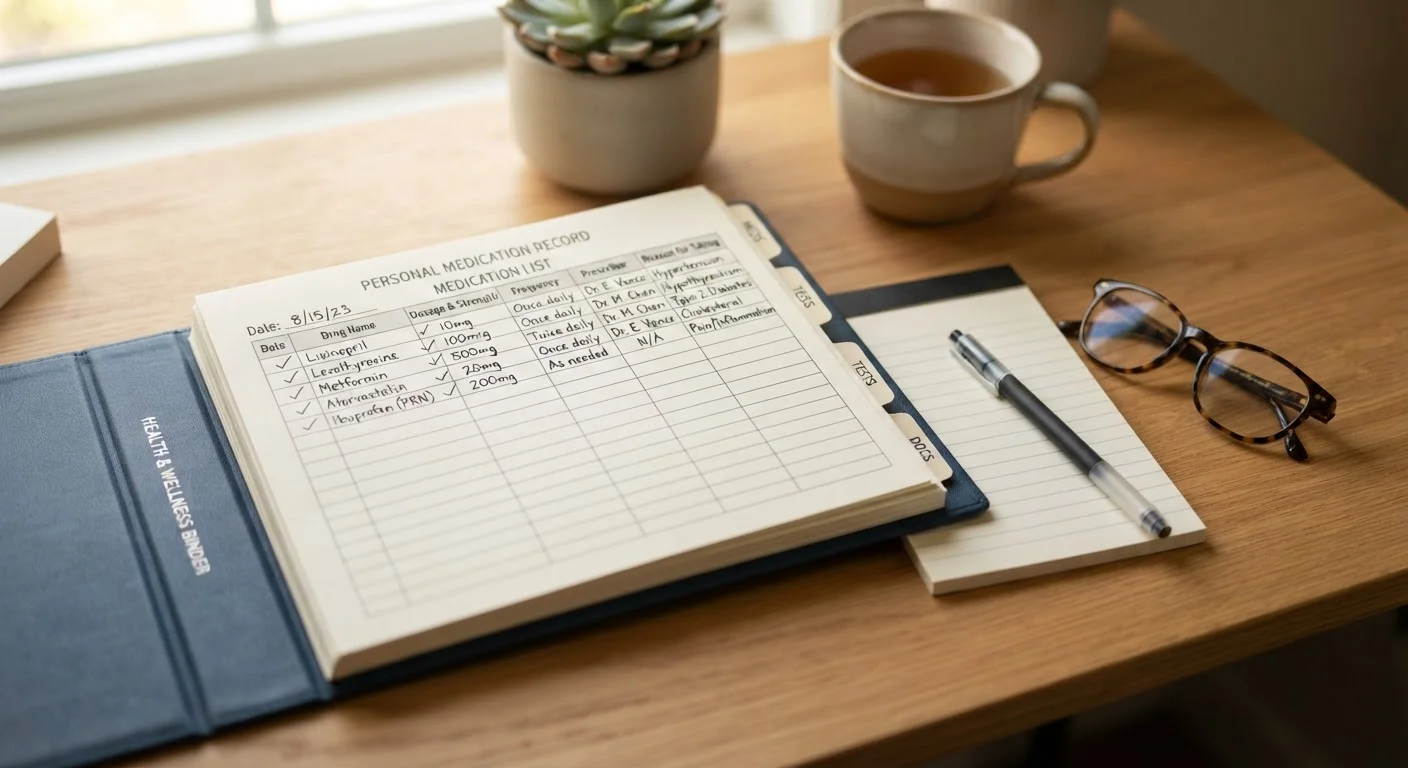
Photo: HerbHealWellness.com | Modern Guide To Wellness editorial
Key Takeaways
- A complete medication list prevents dangerous drug interactions across all your healthcare providers.
- Include every prescription, over-the-counter drug, vitamin, and supplement on your record.
- Update your list whenever a medication is added, changed, or stopped.
- Bring your record to every medical appointment, pharmacy visit, and emergency room visit.
- Store a digital backup so your list is accessible even when you don't have the physical copy.
Why a Medication Record Is a Safety Tool, Not Just Paperwork
Drug interactions are among the most preventable causes of medication-related harm. They happen when one drug alters how another works — sometimes dangerously. The problem is that no single provider always sees the full picture. Your cardiologist may not know what your dermatologist prescribed last month. Your pharmacist can only screen for interactions among the prescriptions in their system.
A personal medication record closes that gap. By carrying a complete, current list to every appointment, urgent care visit, or pharmacy counter, you give every clinician the information they need to make safe decisions about your care.
See why your full medication list matters at every pharmacy visit for more on how drug interactions develop and why providers need complete information.
What to Include on Your Medication Record
A useful record goes beyond just prescription drug names. The following categories should all be covered:
- Prescription medications — drug name (brand and generic), dose, how often you take it, and the prescribing provider's name
- Over-the-counter (OTC) drugs — including pain relievers, antacids, antihistamines, and sleep aids
- Vitamins and supplements — fish oil, magnesium, herbal products, and similar items can interact with prescription drugs
- Allergies and reactions — list the drug name and describe what happened (rash, swelling, difficulty breathing)
- Medical conditions — a brief list helps providers interpret why each medication is prescribed
When you pick up a new prescription, confirm all instructions before leaving the pharmacy counter — then add the medication to your record that same day.
Best Practices for Keeping Your Record Current and Accessible
A medication list is only useful if it reflects your current regimen and can be found when it's needed most.
Consistency matters more than format. Whether you use a phone notes app, a printed card in your wallet, or a dedicated health binder, the goal is the same: accuracy and availability. If you manage medications for a family member — a child, an elderly parent, or someone with a chronic condition — maintaining their record is just as important. Consult their healthcare provider about the best way to coordinate that information.
Before starting any new medication, review your full list and bring it to the conversation. Questions to ask your pharmacist before starting a new medication offers a practical checklist to guide that discussion.
This article provides general health information for educational purposes and is not a substitute for professional medical advice. Always consult a qualified healthcare provider or pharmacist for guidance specific to your situation.
The content on this site is for informational purposes only and is not a substitute for professional advice. Always consult a qualified professional for guidance specific to your situation.