
Repeat Prescriptions: Habits That Keep Your Treatment on Track

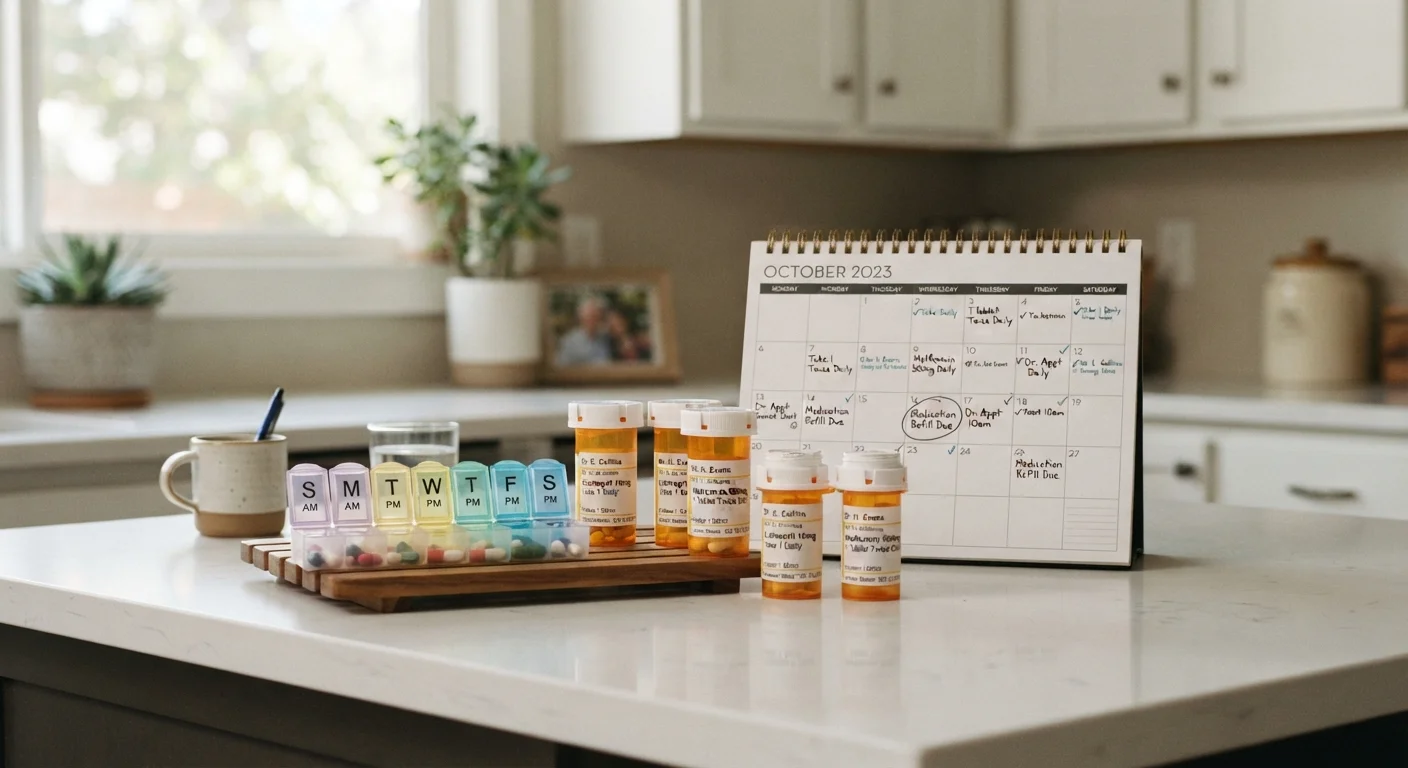
Photo: HerbHealWellness.com | Modern Guide To Wellness editorial
Key Takeaways
- Reordering too late is one of the most common and avoidable causes of treatment gaps.
- Most pharmacies and clinics offer tools — including apps and automated reminders — to simplify repeat requests.
- Keeping a personal medication record supports safer, more coordinated care across providers.
- Always confirm your supply before holidays, travel, or any planned disruption to your routine.
Why Repeat Prescription Management Matters
For anyone managing a long-term condition — whether that's high blood pressure, thyroid disease, asthma, or another chronic diagnosis — repeat prescriptions are the backbone of continuity. Miss a refill, and even a day or two without medication can have real consequences depending on what you take.
Yet running low on a regular medication is surprisingly common. It often isn't carelessness — it's the absence of a system. Most people handle refills reactively, noticing the problem when the pill bottle is nearly empty. The habits below shift that from reactive to proactive, reducing the chance that a pharmacy queue or a busy prescriber stands between you and your next dose.
If your treatment has gone off track before, understand the common patterns that derail chronic illness management — many are more predictable than they seem.
Set a reorder trigger, not a reorder date
Rather than trying to remember a fixed date, use a quantity as your prompt. A common guideline is to request your next repeat when you have roughly a 7–10 day supply remaining. This buffer absorbs pharmacy processing times, prescriber sign-off delays, and any unexpected stock issues.
Count your tablets or check your inhaler dose counter at the same time each week — Sunday evening works well for many people — and reorder the moment you cross your threshold. The buffer, not the calendar, does the work.
Reorder when you have 7–10 days left, not when the bottle is empty.
Use your pharmacy's repeat service or app
Many pharmacies now offer managed repeat services, where your prescription is stored electronically and can be requested online, by phone, or through a dedicated app. Some services will send you a reminder when a repeat is due, removing the need to track it yourself.
Ask your pharmacist or GP practice whether an electronic repeat dispensing (eRD) arrangement is appropriate for your medication. Under this system, your prescriber authorises several months of repeats at once, and the pharmacy issues each batch at the right interval without you needing to contact the surgery each time.
Electronic repeat dispensing can remove the need to contact your prescriber every cycle.
Keep an up-to-date personal medication record
A written or digital list of all your current medications — including doses, frequencies, and prescribing clinicians — does more than help you manage refills. It's a safety tool that helps any healthcare professional you see catch potential interactions or duplications.
Update this record whenever a medication is added, stopped, or changed. A personal medication record can help every provider you see catch dangerous interactions — and it takes only a few minutes to maintain.
An accurate medication list protects you wherever you receive care.
Plan ahead for travel and holidays
Public holidays, vacations, and travel abroad are among the most common triggers for unplanned medication gaps. Pharmacies and surgeries may be closed or harder to reach, and carrying adequate supply is not always straightforward across borders.
Before any trip, check how much medication you'll need for the full duration — plus a few extra days as a precaution — and request a supply well in advance. For international travel, carry medications in their original labelled containers and bring a copy of your prescription or a letter from your prescriber.
Request travel supplies well before departure — not the day before you leave.
Store medicines correctly to preserve their effectiveness
Even when your supply is plentiful, poor storage can silently degrade medication before you take it. Heat, humidity, and direct light all affect the stability of many drugs, including some that are commonly prescribed for long-term conditions.
The bathroom cabinet — a popular choice — is actually one of the worst spots due to steam. A cool, dry, dark location out of children's reach is preferable for most medications. For specific guidance, review practical advice on storing medicines at home safely.
Correct storage protects both the safety and effectiveness of your medication.
Pair your refill routine with an existing daily habit
Habit stacking — attaching a new behaviour to one you already perform reliably — is one of the most effective ways to make routine tasks automatic. Link your weekly medication count to something you already do: making your morning coffee, reviewing your calendar, or charging your phone.
The same principle applies to actually taking your medications. Practical strategies for building a medication routine that sticks can help reduce missed doses, which is one of the most common reasons long-term treatments underperform.
Attaching your refill check to an existing habit makes it nearly effortless over time.
Build a System That Works for You
No single approach suits everyone. The goal is to find a combination of these habits that fits your life and requires minimal willpower to maintain. A reliable refill routine eventually becomes invisible — it simply runs in the background while your treatment stays on track.
Talk to your pharmacist proactively
Before you leave the pharmacy, it's also worth confirming dosage instructions and checking for any changes to your supply. Our guide on what to confirm at the pharmacy counter covers the key steps.
This article is for general informational purposes only and does not constitute medical advice. Always consult your prescriber or pharmacist for guidance on managing your specific medications.
The content on this site is for informational purposes only and is not a substitute for professional advice. Always consult a qualified professional for guidance specific to your situation.