
Hernia Types Men Encounter Most — and What Makes Each One Different

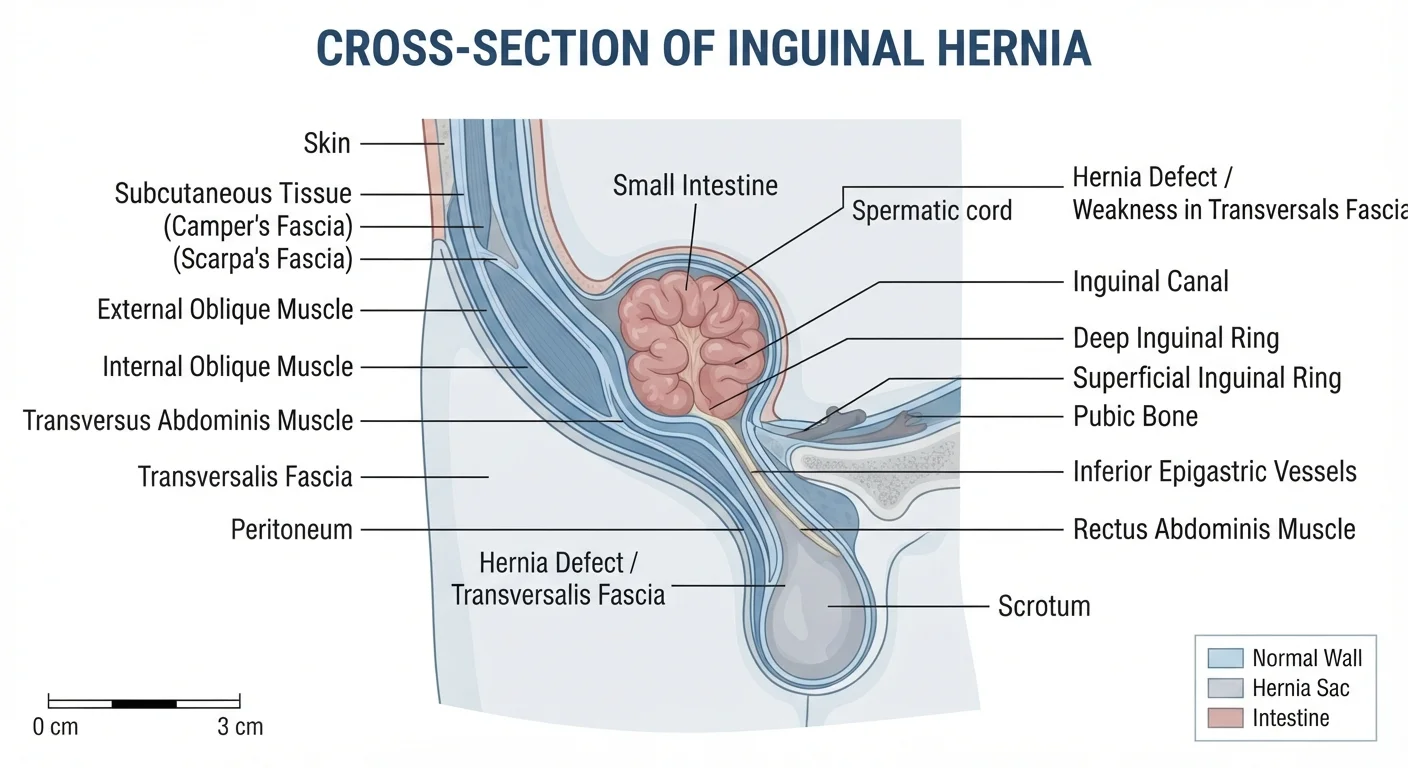
Photo: HerbHealWellness.com | Modern Guide To Wellness editorial
Key Takeaways
- Inguinal hernias account for the vast majority of hernias in men, due to anatomical differences in the groin.
- Different hernia types are defined primarily by location — groin, navel, upper abdomen, or a prior surgical site.
- Many hernias cause a visible bulge and discomfort, but some remain asymptomatic for years.
- Strangulation — when blood supply to herniated tissue is cut off — is a medical emergency requiring immediate care.
- A clinician's physical examination remains the primary diagnostic method for most hernias.
Why Hernias Are Predominantly a Men's Health Issue
A hernia occurs when an internal organ or fatty tissue pushes through a weak point in the surrounding muscle or connective tissue wall. While hernias can affect anyone, men are diagnosed with them at substantially higher rates — particularly in the groin region. This disparity is largely anatomical: the inguinal canal, a passage in the lower abdominal wall through which the spermatic cord travels, creates an inherent structural vulnerability that has no direct equivalent in women's anatomy.
Men are also more likely to perform physical labor or heavy lifting over extended periods, which raises intra-abdominal pressure repeatedly over time. Combined with natural weakening of connective tissue with age, these factors make hernias one of the more common surgical conditions men will encounter in their lifetime. Just as certain cardiovascular risks are distinctly elevated in men, hernia risk reflects biology and behavior working in tandem.
~27%
Lifetime risk of inguinal hernia in men
Population studies estimate roughly 1 in 4 men will develop an inguinal hernia during their lifetime, compared to approximately 3% of women.
700,000+
Hernia repairs performed annually in the US
Hernia repair is among the most commonly performed general surgical procedures in the United States each year.
The Most Common Hernia Types Men Face
Each hernia type is defined by where it develops. Understanding the location clarifies the likely symptoms and general clinical approach.
| Inguinal | Femoral | Umbilical | Epigastric | Incisional | |
|---|---|---|---|---|---|
| Location | Lower groin / inguinal canal | Upper inner thigh | Around the navel | Midline, above navel | Along prior surgical scar |
| Prevalence in men | Very common | Uncommon | Moderate | Less common | Depends on surgical history |
| Typical presentation | Groin bulge, pressure | Small lump, thigh ache | Navel bulge, mild pain | Small midline lump | Bulge at scar site |
| Incarceration risk | Moderate | Higher than inguinal | Moderate | Low | Moderate to high |
| Common contributing factors | Anatomy, heavy lifting, age | Anatomy, age | Obesity, lifting, ascites | Connective tissue weakness | Prior surgery, obesity |
| General repair urgency | Elective or watchful wait | Prompt repair advised | Elective | Elective | Typically elective |
Inguinal Hernia
The most prevalent type by far. Tissue — usually a portion of the small intestine or fatty omentum — protrudes through the inguinal canal in the lower groin. Men may notice a bulge on one or both sides of the pubic bone that becomes more visible when standing, coughing, or straining. A dull ache or pressure in the groin is common; sharp pain suggests possible complication.
Femoral Hernia
Located just below the inguinal ligament, in the upper inner thigh. Femoral hernias are far more common in women, but men do develop them. They tend to be smaller and less obvious than inguinal hernias, which can delay diagnosis. Importantly, femoral hernias carry a higher risk of incarceration — becoming trapped and unable to be pushed back in — than inguinal hernias.
Umbilical Hernia
Tissue pushes through a weak spot near the navel. In men, umbilical hernias often develop in adulthood linked to obesity, ascites (fluid accumulation in the abdomen), or repeated heavy lifting. A soft, round bulge at or near the belly button is the hallmark sign.
Epigastric Hernia
These develop in the midline of the abdomen, between the navel and the lower chest (the epigastric region). They typically involve small amounts of fatty tissue rather than bowel, and may produce localized tenderness or a small palpable lump. Many are discovered incidentally.
Incisional Hernia
Any previous abdominal surgery creates a potential weak point in the abdominal wall. Incisional hernias can develop months or even years after the original procedure, particularly if wound healing was complicated by infection, obesity, or physical strain during recovery. They tend to be larger and more complex to repair than primary hernias.
Symptoms and Warning Signs to Know
Most hernias share a core set of signs: a visible or palpable bulge, local discomfort that worsens with activity or prolonged standing, and relief when lying down. However, not all hernias are immediately obvious. Some men live with an asymptomatic hernia for years before it is detected during a routine physical examination.
Strangulation Is a Surgical Emergency
Pain that becomes sudden, severe, or constant — especially if accompanied by nausea, vomiting, or an inability to push the bulge back in — signals possible strangulation, where blood supply to the herniated tissue is compromised. This is a surgical emergency. Men experiencing these symptoms should seek emergency care without delay.
Note that conditions causing groin or abdominal discomfort can overlap. Kidney stones, which are also more common in men, can produce referred pain in similar regions, underscoring the importance of a proper clinical evaluation rather than self-diagnosis.
Diagnosis, Monitoring, and Surgical Repair
A physical examination — typically performed while the patient stands and coughs to increase intra-abdominal pressure — remains the primary diagnostic tool for most hernias. Imaging such as ultrasound or CT scan may be ordered when the diagnosis is unclear or to characterize a complex hernia before surgery.
Not every hernia requires immediate repair. For men with small, asymptomatic inguinal hernias, a strategy of watchful waiting may be appropriate, with surgery scheduled if symptoms develop or worsen. However, femoral hernias are generally repaired promptly given their higher complication risk.
Talk to Your Doctor Before Symptoms Worsen
Surgical repair — performed either open or laparoscopically — reinforces the weakened area, often with a synthetic mesh. Recovery time and approach depend on the hernia's size, location, and the patient's overall health. Decisions about timing and technique are best made in consultation with a general or hernia surgeon. Men managing other metabolic conditions, such as those described in our overview of type 2 diabetes complications in men, should discuss how those conditions may affect surgical risk and wound healing.
This article is for general health information and educational purposes only, and is not a substitute for professional medical advice, diagnosis, or treatment. Always consult a qualified healthcare provider with questions about any medical condition.
The content on this site is for informational purposes only and is not a substitute for professional advice. Always consult a qualified professional for guidance specific to your situation.