
Hydration and Diet: How Fluid Intake Fits Into Healthy Eating

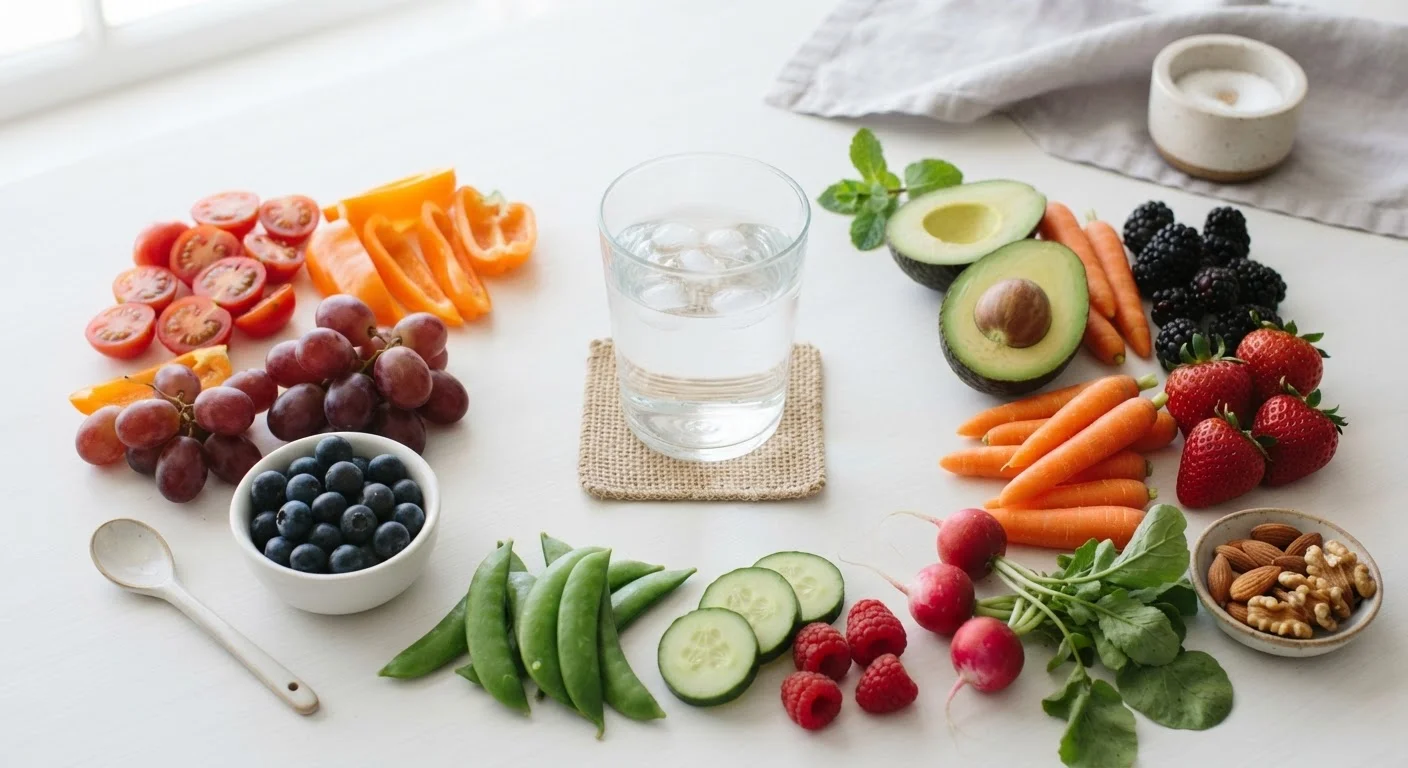
Photo: HerbHealWellness.com | Modern Guide To Wellness editorial
Key Takeaways
- Water is classified as an essential nutrient because the body cannot function without it.
- Mild dehydration can impair digestion, concentration, and energy levels before thirst signals appear.
- Many whole foods — fruits, vegetables, soups — contribute meaningfully to daily fluid intake.
- Fluid needs vary based on body size, activity level, climate, and diet composition.
- Staying hydrated supports the absorption of water-soluble vitamins and aids kidney function.
Why Water Qualifies as a Nutrient
Most discussions about healthy eating focus on macronutrients — carbohydrates, proteins, and fats — or on vitamins and minerals. Water rarely gets the same attention, yet it is classified as an essential nutrient by nutrition scientists because the body cannot produce enough of it through metabolism alone and cannot survive without a continuous supply.
Water performs functions that no other nutrient can replicate. It regulates body temperature through sweat, carries oxygen and nutrients to cells, cushions joints, and acts as the primary medium for nearly every biochemical reaction in the body. Without adequate fluid, those reactions slow — and you feel it.
Hydration and Nutrient Absorption Are Linked
Understanding how individual nutrients interact with the foods you eat offers important context for hydration. Our article on nutrient absorption explains how water-soluble vitamins, in particular, depend on proper hydration to be transported and used effectively.
How Hydration Connects to Digestion and Energy
Fluid intake directly shapes how efficiently your digestive system works. Saliva — which is mostly water — begins the breakdown of carbohydrates the moment food enters your mouth. Further down the digestive tract, water helps dissolve nutrients so they can be absorbed through the intestinal lining and delivered into the bloodstream.
Adequate hydration also keeps stool soft and supports regular bowel movements, reducing the likelihood of constipation. Conversely, insufficient fluid intake is one of the most common dietary factors associated with constipation in otherwise healthy adults.
Energy levels are closely tied to hydration status as well. Even mild dehydration — as little as 1–2% of body water — has been associated in research with reduced cognitive performance, increased perceived effort during physical tasks, and mood changes. These effects can occur before a person consciously feels thirsty, making regular fluid intake throughout the day important rather than reactive.
~20%
Daily water from solid food
The Institute of Medicine estimates approximately 20% of total daily water intake comes from moisture in food rather than beverages.
1–2%
Dehydration level affecting cognition
Research published in nutrition and sports science literature links a body water deficit as small as 1–2% to measurable reductions in cognitive performance and mood.
90%+
Water content in top hydrating foods
Foods such as cucumber, lettuce, and watermelon are composed of more than 90% water by weight, according to USDA food composition data.
Fluid Sources Beyond the Water Glass
Total daily fluid intake comes from two sources: beverages and food. Plain water is the most straightforward way to hydrate, but a balanced diet contributes meaningfully. Cucumbers, lettuce, celery, tomatoes, strawberries, and watermelon are all composed of more than 90% water by weight. Cooked oatmeal, soups, yogurt, and legumes also add measurable fluid to the day's intake.
This is one reason that diet composition and meal timing matter for hydration as well as energy. A diet high in whole fruits and vegetables naturally provides more fluid than one dominated by dry, processed foods — offering a compounding benefit to overall health.
Make Hydration Automatic, Not Reactive
Beverages such as milk, herbal tea, and 100% fruit juice also contribute to fluid intake, though they carry additional calories or nutrients to account for in the broader dietary picture. Beverages with high sugar content are generally not recommended as primary hydration sources.
Practical Guidance for Staying Hydrated
Fluid needs are not one-size-fits-all. Body size, activity level, ambient temperature, and the composition of your diet all influence how much water you need each day. People who exercise regularly, live in hot climates, or eat high-sodium diets generally require more fluids. Pregnant and breastfeeding individuals also have increased needs — consulting a healthcare provider is especially important in these cases.
A practical and widely used self-check for hydration is urine color: pale yellow generally indicates adequate hydration, while dark yellow or amber suggests you may need more fluids. This is a rough guide, not a diagnostic tool, and certain vitamins or medications can affect urine color independent of hydration status.
Building consistent habits — such as drinking a glass of water with each meal, carrying a reusable water bottle, or choosing water-rich snacks — is more sustainable than trying to catch up at the end of the day. Hydration is not a separate concern from eating well; it is a fundamental part of it.
This article is for general informational and educational purposes only and is not a substitute for professional medical or dietary advice. Consult a qualified healthcare provider before making significant changes to your diet or fluid intake, especially if you have an underlying health condition.
Frequently Asked Questions
The content on this site is for informational purposes only and is not a substitute for professional advice. Always consult a qualified professional for guidance specific to your situation.