
Nutrient Absorption: Why Eating the Right Foods Isn't Always Enough

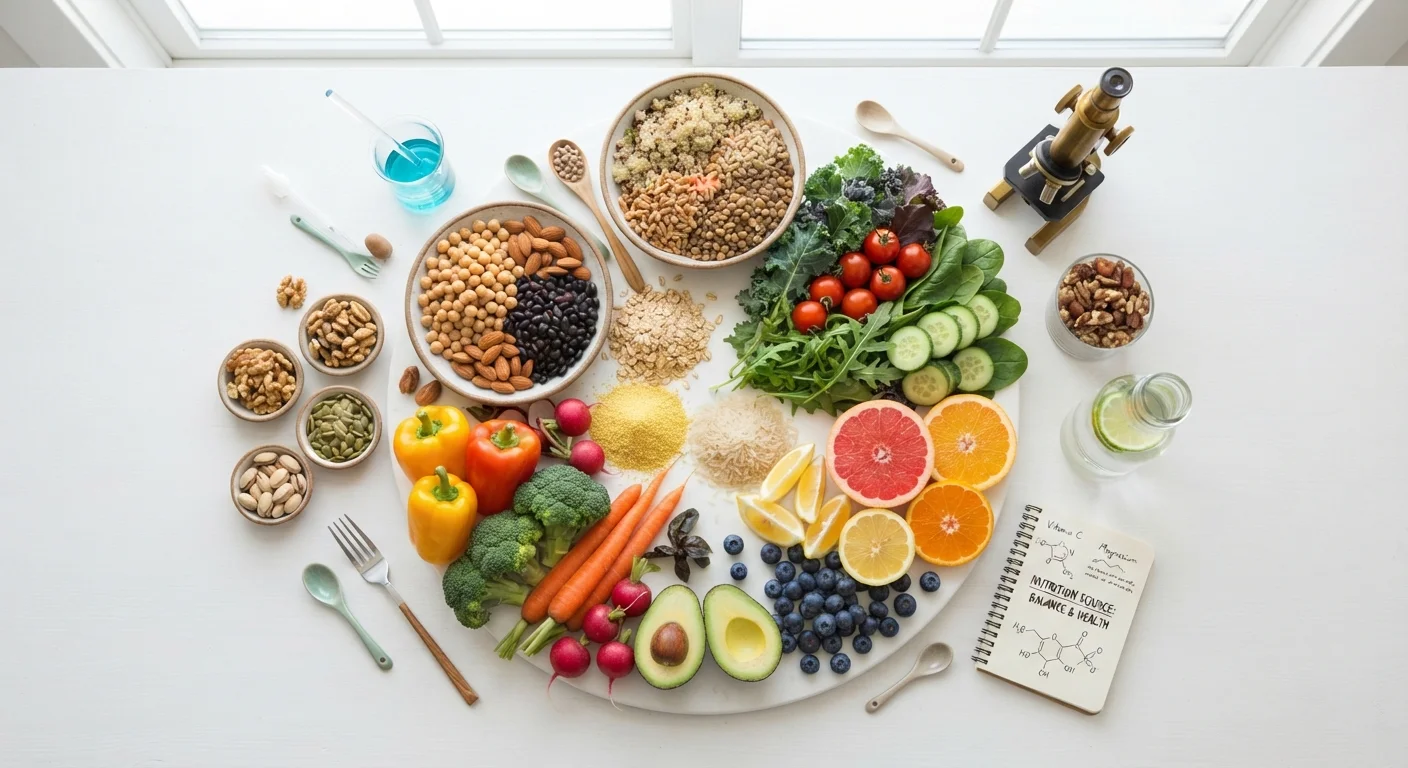
Photo: HerbHealWellness.com | Modern Guide To Wellness editorial
Key Takeaways
- Bioavailability determines how much of a nutrient your body can actually use after eating.
- Food pairings — such as fat with fat-soluble vitamins — can meaningfully improve absorption.
- Gut health, digestive enzyme activity, and the microbiome all influence how nutrients are processed.
- Cooking methods and food preparation alter the nutrient content and accessibility of many foods.
- Certain compounds in foods can block absorption of specific nutrients eaten at the same meal.
- Individual factors like age, medications, and health conditions affect each person's absorption capacity.
The Gap Between Nutrient Intake and Nutrient Use
Most nutrition guidance focuses on what to eat — more vegetables, adequate protein, whole grains. Rarely discussed is the equally important question of how much of those nutrients your body actually captures and uses. The answer depends on a concept called bioavailability: the fraction of an ingested nutrient that enters circulation in an active, usable form.
Nutrition labels report total nutrient content in a food, not how much your body will absorb. Two people can eat identical meals and end up with meaningfully different amounts of a given vitamin or mineral in their bloodstream. Understanding the mechanisms behind this gap is a practical step toward better nutritional outcomes.
~33%
Average iron absorption from plant sources
Research published in nutritional science literature indicates non-heme iron from plant foods is absorbed at roughly 2–20%, compared to 15–35% for heme iron from animal sources.
Up to 65%
Boost in beta-carotene absorption with fat
Studies have shown that adding fat to a meal containing beta-carotene-rich vegetables can increase carotenoid absorption by a substantial margin compared to fat-free preparation.
~40%
Of US adults may have low vitamin D status
According to data from the National Health and Nutrition Examination Survey (NHANES), a significant portion of U.S. adults have vitamin D levels below recommended thresholds, partly due to absorption factors.
What Affects How Nutrients Are Absorbed
Absorption is shaped by a combination of dietary, physiological, and lifestyle factors:
- Food matrix: Nutrients exist within complex food structures. Chewing, cooking, and digestive enzymes must dismantle that structure to release them. Nutrients tightly bound within plant cell walls — as is common with many minerals — may be less accessible than those in animal foods.
- Nutrient interactions: Some nutrients compete for the same transport proteins. High-dose calcium supplements, for example, can reduce iron absorption when taken simultaneously. Other pairings enhance each other — vitamin C reliably boosts non-heme (plant-based) iron uptake.
- Fat-soluble vitamins: Vitamins A, D, E, and K require dietary fat to be absorbed at all. Eating a salad rich in these nutrients with a fat-free dressing can significantly reduce how much you absorb. See how fat-soluble and water-soluble vitamins differ for a deeper look at this distinction.
- Antinutrients: Certain plant compounds — phytates in whole grains, oxalates in spinach, tannins in tea — can bind minerals and reduce their absorption. Soaking, fermenting, or cooking these foods can reduce antinutrient levels considerably.
Simple Pairings That Improve Absorption
The Gut's Central Role
Your intestinal lining is the primary site of nutrient absorption, and its condition matters enormously. The small intestine's surface is covered in tiny finger-like projections called villi and microvilli, which dramatically increase the absorptive surface area. Damage to this lining — from chronic inflammation, autoimmune conditions like celiac disease, or prolonged antibiotic use — can reduce absorptive capacity significantly.
The gut microbiome also contributes to absorption. Beneficial bacteria help produce certain vitamins (such as vitamin K and some B vitamins) and assist in breaking down compounds that would otherwise remain inaccessible. A diverse, balanced microbiome supports absorptive efficiency. Dietary fibre plays a key role here — it feeds beneficial bacteria and supports the mucosal integrity of the gut lining.
Age is another important variable. As people age, gastric acid production tends to decline, which can impair the absorption of nutrients like vitamin B12 and calcium. Certain medications — including proton pump inhibitors and metformin — are also associated with changes in specific nutrient absorption. Anyone managing a chronic condition or taking regular medications should discuss nutritional considerations with a qualified healthcare provider.
Cooking, Processing, and Food Form
How food is prepared meaningfully alters what your body absorbs from it. Heat breaks down cell walls and denaturing enzymes, making some nutrients more available — the lycopene in cooked tomatoes is a well-documented example. On the other hand, boiling vegetables can leach water-soluble vitamins like vitamin C and folate into the cooking water, which is then discarded.
The form of a nutrient also matters. Heme iron from animal sources is absorbed at a higher rate than non-heme iron from plants. Nutrients in whole foods often come packaged with co-factors — other vitamins, minerals, and phytonutrients — that assist in their absorption and metabolism. This is one of several reasons why whole foods and supplements compare differently when it comes to nutritional benefit.
Practical steps can make a real difference: steaming instead of boiling, pairing iron-rich lentils with a squeeze of lemon juice, or adding a small amount of olive oil to a vitamin-rich salad are all grounded in established nutritional science. Equally, common mistakes in nutrient intake — such as over-relying on a single food source or ignoring competitive interactions — can quietly undermine an otherwise thoughtful diet.
This article is for general informational purposes only and does not constitute medical or nutritional advice. Consult a qualified healthcare provider before making changes to your diet, especially if you have a medical condition or are taking medications.
Frequently Asked Questions
The content on this site is for informational purposes only and is not a substitute for professional advice. Always consult a qualified professional for guidance specific to your situation.