
Sugar in Your Diet: Natural, Added, and What the Difference Means

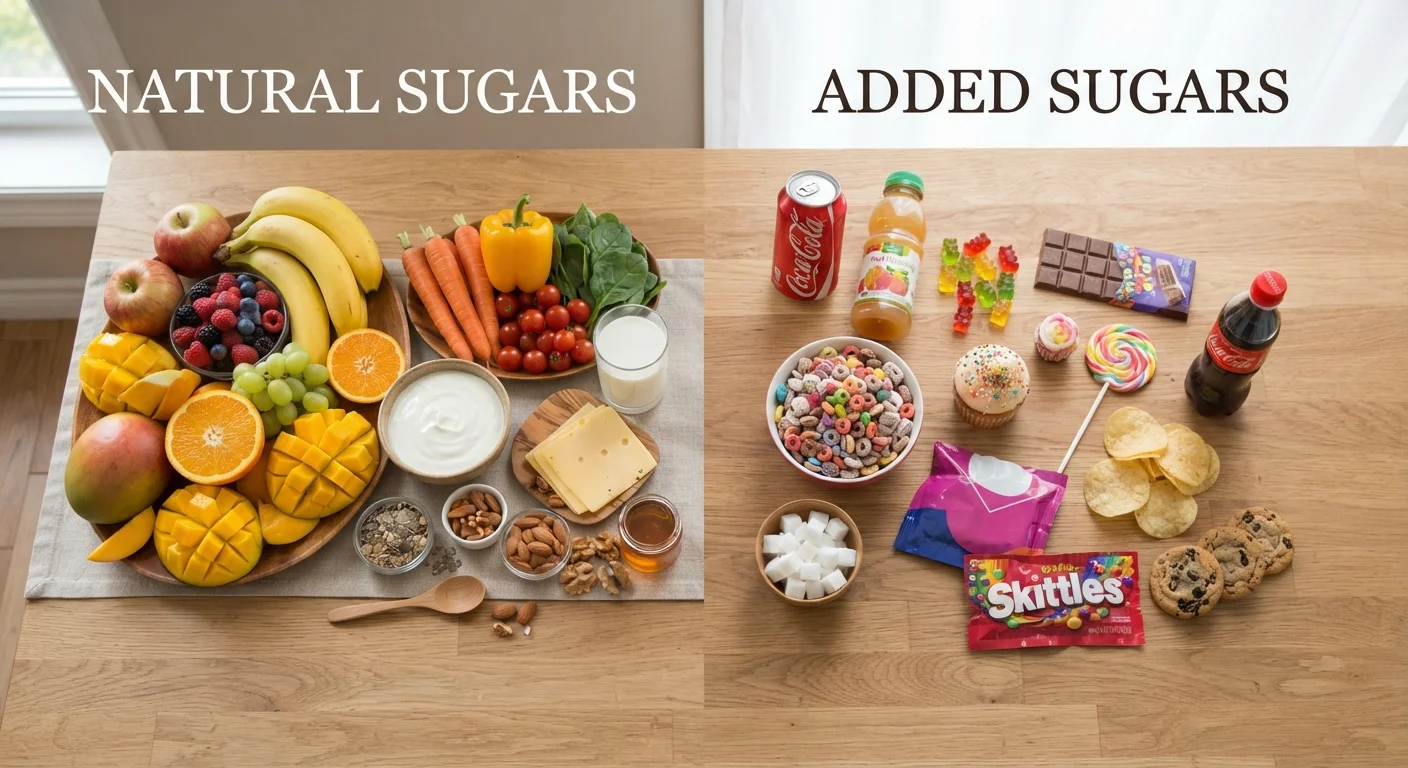
Photo: HerbHealWellness.com | Modern Guide To Wellness editorial
Key Takeaways
- Natural sugars come packaged with fiber, vitamins, and minerals that moderate their absorption.
- Added sugars supply calories with little or no accompanying nutritional value.
- The 2020–2025 Dietary Guidelines for Americans recommend limiting added sugars to less than 10% of daily calories.
- Fruit juice can contain as much sugar as soda, yet lacks the fiber found in whole fruit.
- Reading the Nutrition Facts label's Added Sugars line is the most reliable way to track intake.
- Reducing added sugar intake is linked in research to improved metabolic and cardiovascular health markers.
What Makes a Sugar "Natural" or "Added"?
The terms natural sugar and added sugar describe origin and context, not chemical formula. Sucrose, glucose, and fructose appear in both categories — what differs is where they come from and what travels alongside them in the food.
Natural sugars are those present in a food before any processing occurs. Lactose in milk, fructose in an apple, and glucose in a carrot all qualify. These sugars are embedded in a matrix of fiber, water, protein, vitamins, and minerals. That matrix slows digestion, blunts blood-sugar spikes, and delivers genuine nutritional value alongside the energy.
Added sugars are introduced during cooking, manufacturing, or preparation. They include table sugar (sucrose), high-fructose corn syrup, honey, maple syrup, agave, fruit juice concentrates, and dozens of other caloric sweeteners. A bowl of plain oats contains only natural sugars; a flavored instant oat packet may contain 12 or more grams of added sugar. The oat itself hasn't changed — the addition has.
"No Added Sugar" Doesn't Mean Sugar-Free
Why the Distinction Matters Nutritionally
Nutritional scientists draw the line between natural and added sugars because the surrounding food matrix changes how the body handles sugar. Consider two roughly equal-sugar sources: a medium apple and a 12-ounce can of a sugar-sweetened soft drink.
- The apple delivers about 19 grams of sugar alongside roughly 4.5 grams of dietary fiber, vitamin C, and potassium.
- The soft drink delivers 39 grams of sugar with essentially zero fiber, vitamins, or minerals.
The fiber in the apple slows gastric emptying and moderates glucose absorption. The soft drink's sugar enters the bloodstream rapidly with no nutritional offset. Over time and at scale, high added-sugar intake is linked in epidemiological research to increased risk of weight gain, type 2 diabetes, and cardiovascular disease — associations that are not consistently observed for whole-fruit consumption.
This is also why fruit juice occupies a nuanced middle ground. Orange juice retains vitamins but loses most of the fiber found in a whole orange, causing its naturally occurring sugars to behave more like added sugars once consumed. Understanding how processing affects food structure helps explain why whole fruit generally outperforms its juiced equivalent nutritionally.
17 tsp
Average daily added sugar consumed by US adults
The CDC estimates Americans consume roughly 17 teaspoons of added sugar daily, nearly double the American Heart Association's recommended maximum.
<10%
Recommended added sugar limit as share of daily calories
The 2020–2025 Dietary Guidelines for Americans advise that added sugars comprise less than 10% of total daily caloric intake.
39 g
Added sugar in a typical 12-oz sugar-sweetened beverage
Sugar-sweetened beverages are the single largest source of added sugar in the American diet, according to the National Cancer Institute.
Reading Labels and Reducing Added Sugar Intake
Since 2020, the FDA has required most packaged food manufacturers to list Added Sugars as a separate sub-line on the Nutrition Facts panel. This makes it straightforward to distinguish a yogurt sweetened with fruit from one sweetened with cane sugar, even when total sugar counts look similar.
Practical strategies for managing added sugar intake include:
- Prioritize whole foods. Fresh fruit, plain dairy, and unprocessed vegetables contain no added sugars by definition.
- Compare labels within categories. Two brands of pasta sauce or granola can differ by 8–10 grams of added sugar per serving.
- Watch for hidden sources. Condiments, salad dressings, bread, and flavored beverages — including sports drinks and flavored waters — are common contributors.
- Adjust gradually. Reducing added sugar intake incrementally allows taste preferences to shift without feeling restrictive.
Use the 5% / 20% Rule on Labels
This article is for general informational purposes only and does not constitute medical or dietary advice. Speak with a registered dietitian or qualified healthcare provider for guidance tailored to your individual health needs.
Frequently Asked Questions
The content on this site is for informational purposes only and is not a substitute for professional advice. Always consult a qualified professional for guidance specific to your situation.