
Whole Foods vs Processed Foods: Understanding the Real Difference

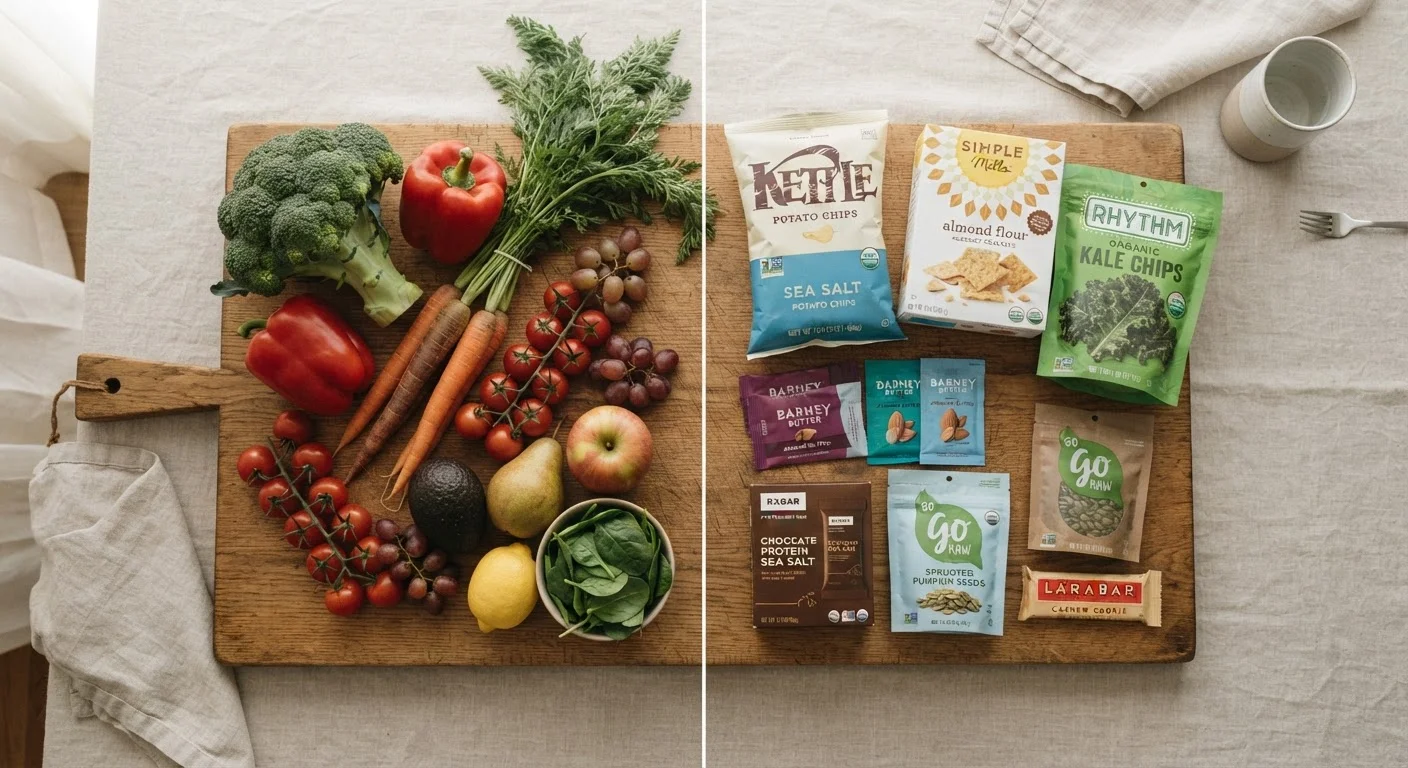
Photo: HerbHealWellness.com | Modern Guide To Wellness editorial
Key Takeaways
- "Processed" is a spectrum — canned beans and cheese puffs are not nutritionally equivalent.
- Ultra-processed foods are linked to higher intakes of added sugar, sodium, and refined fats.
- Whole foods retain fiber, vitamins, minerals, and phytonutrients lost during heavy processing.
- The NOVA classification system offers a practical four-tier framework for evaluating food processing levels.
- Minimally processed whole foods form the basis of most evidence-backed dietary guidelines.
What Does 'Processing' Actually Mean?
The word processed covers everything from washed salad greens to neon-orange cheese crackers — which is exactly why the term confuses so many people. Processing refers to any deliberate change made to a food after it is harvested or raised: washing, cutting, fermenting, canning, freezing, milling, or adding preservatives all count.
Nutrition researchers have found it useful to sort foods into tiers based on the extent and purpose of processing, rather than treating it as a binary. The most widely cited framework is NOVA, developed by researchers at the University of São Paulo, which groups foods into four categories:
- Unprocessed or minimally processed foods — fresh or frozen fruits, vegetables, plain meats, eggs, plain nuts, and legumes.
- Processed culinary ingredients — oils, butter, flour, sugar, and salt used in home cooking.
- Processed foods — products made by adding salt, sugar, or oil to Group 1 foods, such as canned tomatoes, salted nuts, or aged cheese.
- Ultra-processed foods (UPF) — industrially formulated products containing additives, colorings, emulsifiers, and flavor enhancers not typically used in home kitchens: soft drinks, packaged snack cakes, instant noodles, and many fast-food items.
Understanding where a food sits in this framework is more useful than asking simply "is it processed?" See the diet labels glossary for plain-language definitions of related nutritional terms.
| Criterion | Whole / Minimally Processed Foods | Ultra-Processed Foods |
|---|---|---|
| Fiber content | Naturally intact; supports digestion | Often removed or negligible |
| Added sugars | Absent or trace amounts | Frequently high |
| Sodium levels | Naturally low | Often elevated for palatability |
| Micronutrient density | High — vitamins and minerals preserved | Lower; sometimes fortified artificially |
| Phytonutrients | Present in fruits, vegetables, whole grains | Largely absent after processing |
| Ingredient list length | Short — 1 to 5 recognizable ingredients | Long — additives, emulsifiers, flavors |
| Shelf life | Short to moderate | Extended via preservatives |
| Satiety effect | Higher due to intact food structure | Lower — engineered for overconsumption |
Nutritional Trade-Offs at Each Level
Heavy processing typically reduces nutritional quality in three overlapping ways: it removes beneficial components, adds undesirable ones, and alters the food's physical structure.
What Gets Lost
Fiber is frequently stripped when grains are refined. A whole wheat kernel retains the bran and germ — delivering B vitamins, iron, and fiber. White flour retains mostly starch. Similarly, fruit juice removes the fiber matrix that slows sugar absorption, even when no sugar is added. Phytonutrients — plant compounds linked to reduced oxidative stress — also degrade under high heat and extended shelf-processing.
For a deeper look at how nutrients survive or disappear in different food forms, see what research suggests about getting vitamins from food versus supplements.
What Gets Added
Ultra-processed foods frequently contain elevated levels of added sugar, sodium, and saturated or trans fats. These additions improve palatability and shelf life but, at the quantities typical in Western diets, are associated with higher risks of cardiovascular disease, type 2 diabetes, and obesity according to multiple large observational studies. The distinction between natural and added sugars is particularly relevant here, since ultra-processed products are the primary vehicle for added sugars in the US diet.
57%
Share of US calories from ultra-processed foods
A study published in BMJ Open (Martínez Steele et al.) found ultra-processed foods accounted for more than half of daily energy intake in US adults.
90%
Of added sugar intake from ultra-processed sources
Research using NHANES data found that ultra-processed foods contributed approximately 90% of added sugar consumed by US adults.
4-tier
NOVA food classification levels
The NOVA framework, developed at the University of São Paulo, categorizes foods by degree and purpose of processing rather than nutrient content alone.
Structure Matters Too
Processing can change food's physical form — turning whole almonds into almond flour, for example — which affects how quickly the gut absorbs nutrients and how the brain registers fullness. Research suggests that the intact cell structure of minimally processed foods promotes satiety more effectively than the same calories from highly refined equivalents.
Practical Ways to Navigate the Spectrum
The goal is not to eliminate all processing from your diet — that would exclude nutritious staples like plain yogurt, canned beans, and frozen peas. Instead, evidence-backed dietary guidance suggests anchoring meals in whole or minimally processed foods while using more heavily processed options as occasional supplements rather than dietary foundations.
Concrete strategies that align with current nutrition science include:
- Read ingredient lists, not just nutrition panels. A short list of recognizable ingredients generally signals lower processing. A long list featuring emulsifiers, artificial colors, and added sugars signals ultra-processing.
- Prioritize whole grains over refined grains — oats, brown rice, quinoa, and whole-wheat bread over white bread and pastries.
- Use minimally processed convenience foods strategically. Canned sardines, plain frozen edamame, and no-added-sugar nut butters can anchor a quick, nutritious meal without compromising quality significantly.
- Vary protein sources across processing levels. A mix of whole eggs, legumes, and plain-cooked fish provides better overall nutrition than relying on processed deli meats or packaged protein bars. Comparing protein sources offers a fuller breakdown.
Not All Convenience Foods Are Equal
Dietary patterns matter more than individual foods. If most of your meals are built around vegetables, whole grains, legumes, and quality proteins — as explored in plant-based and vegetarian eating frameworks — occasional ultra-processed foods are unlikely to undermine overall health.
This article is for general informational purposes only and does not constitute medical or dietary advice. Consult a registered dietitian or qualified healthcare professional before making significant changes to your diet, especially if you have an existing health condition.
The content on this site is for informational purposes only and is not a substitute for professional advice. Always consult a qualified professional for guidance specific to your situation.