
What Does a Balanced Plate Actually Look Like?

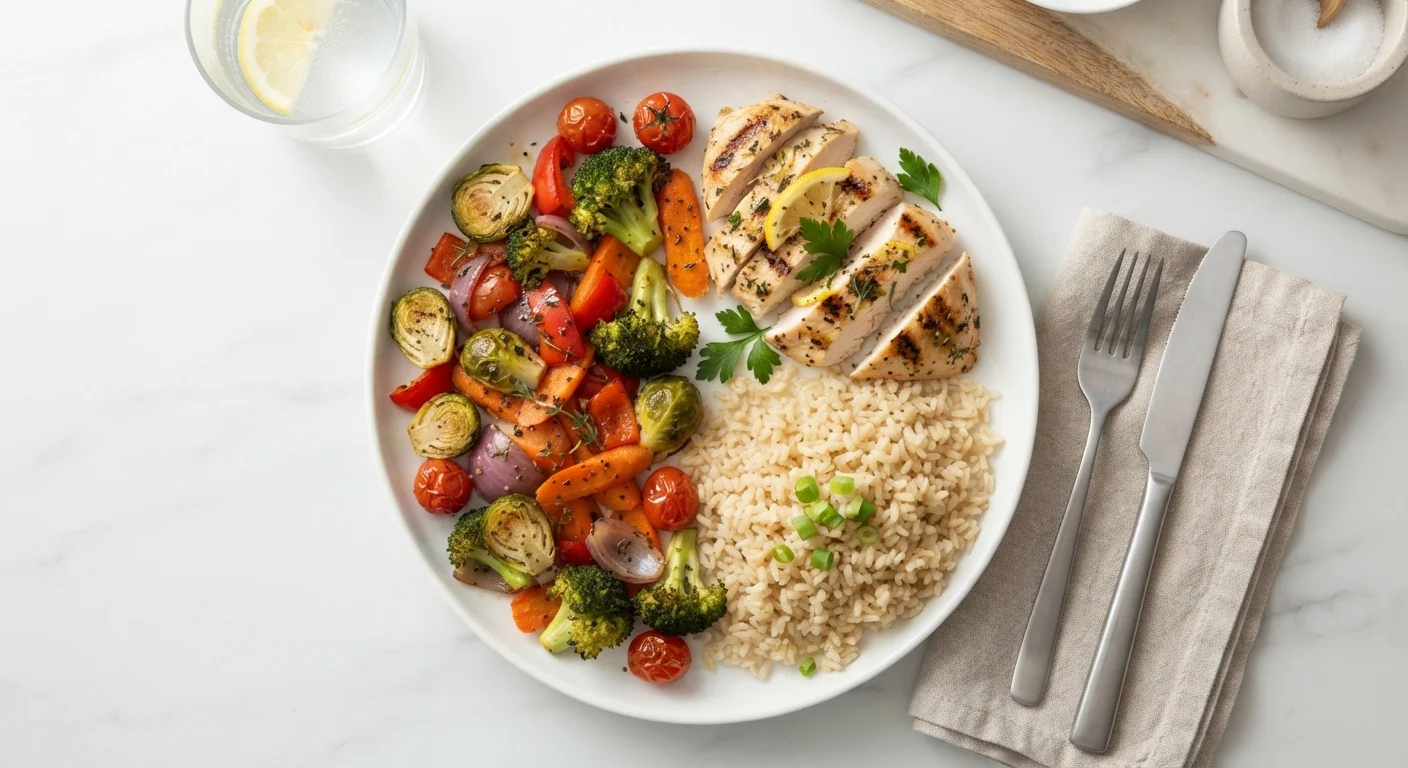
Photo: HerbHealWellness.com | Modern Guide To Wellness editorial
Key Takeaways
- Half your plate should consist of non-starchy vegetables and, optionally, fruit.
- One quarter of the plate should come from lean or plant-based protein sources.
- One quarter should be whole grains or other complex carbohydrates.
- Healthy fats — such as olive oil or avocado — complement the plate but aren't a separate section.
- Portion size and food quality matter as much as the category each food falls into.
- No single meal needs to be perfect; balance across the day and week is more realistic and sustainable.
The Simple Logic Behind Plate Proportions
Most people know they should "eat healthy," but translating that into an actual meal can feel vague. The balanced plate model cuts through that ambiguity by making food choices visual and proportional rather than numerical. Instead of tracking grams or calories at every meal, you use the plate itself as a built-in guide.
The framework is grounded in mainstream dietary science. Both the USDA's MyPlate guidelines and Harvard's Healthy Eating Plate — one of the most-cited visual nutrition tools — recommend structuring meals around four broad categories: vegetables, protein, whole grains, and healthy fats. Proportions, not perfection, are the operative concept.
If you're new to thinking systematically about what you eat, this foundational nutrition overview covers the core concepts clearly.
~90%
Americans not meeting vegetable intake recommendations
According to the CDC's analysis of national dietary data, the vast majority of U.S. adults fall short of federal vegetable intake guidelines.
50%
Plate proportion recommended for vegetables and fruit
Both the USDA MyPlate and Harvard's Healthy Eating Plate recommend filling half the plate with produce at most meals.
3x
More fiber in whole grains versus refined grains
Whole grains retain the bran and germ layers, delivering significantly more fiber and micronutrients than their refined counterparts, per USDA nutrient data.
Breaking Down Each Section of the Plate
Half the Plate: Vegetables (and Some Fruit)
Non-starchy vegetables — leafy greens, broccoli, peppers, zucchini, tomatoes — should occupy roughly half the plate. They deliver fiber, vitamins, minerals, and antioxidants at relatively low caloric density, which helps with satiety. Fruit can also fill part of this half, though vegetables tend to be lower in natural sugars.
One Quarter: Quality Protein
Protein supports muscle maintenance, immune function, and satiety. Good sources include poultry, fish, eggs, legumes, tofu, and low-fat dairy. Lean options are generally preferred because they provide protein without excess saturated fat. Plant-based proteins like lentils and chickpeas do double duty, also contributing fiber and complex carbohydrates.
One Quarter: Whole Grains or Starchy Vegetables
Brown rice, quinoa, whole-wheat bread, oats, sweet potatoes, and similar foods provide sustained energy through complex carbohydrates and additional fiber. Refined grains — white rice, white bread — are digested more quickly and offer fewer micronutrients, so whole-grain versions are generally recommended when available and appropriate.
The Role of Healthy Fats
Fats don't occupy a separate plate section, but they matter. Small amounts of olive oil, avocado, nuts, or seeds support fat-soluble vitamin absorption and cardiovascular health. They add flavor and help you feel full without requiring large quantities.
Use Your Hand as a Portion Anchor
Why Proportions Matter More Than Perfection
The balanced plate is a mental model, not a rigid prescription. Some meals will skew toward more protein; others will be heavier on vegetables. What matters is the pattern across meals and days, not any single eating occasion.
Portion size is a related but separate variable. A plate technically balanced in proportions can still deliver too many or too few calories if the overall volume is off. For a deeper look at how perception distorts our sense of how much we're eating, see the science behind portion sizes.
Food quality also shapes outcomes within each category. A protein quarter filled with processed deli meat differs nutritionally from one filled with grilled salmon. Similarly, a grain quarter of refined white pasta sits differently in the body than one of farro or barley. Choosing less-processed options within each section improves nutrient density without requiring a complete dietary overhaul.
Understanding how meal composition interacts with your energy levels throughout the day is equally important — nutrition for everyday energy explains the relationship between food choices and sustained focus and stamina.
This article is for general informational purposes only and is not a substitute for personalized medical or nutritional advice. Consult a qualified healthcare professional or registered dietitian for guidance specific to your health needs.
Frequently Asked Questions
The content on this site is for informational purposes only and is not a substitute for professional advice. Always consult a qualified professional for guidance specific to your situation.