
Signs Your Body May Not Be Getting Enough Iron

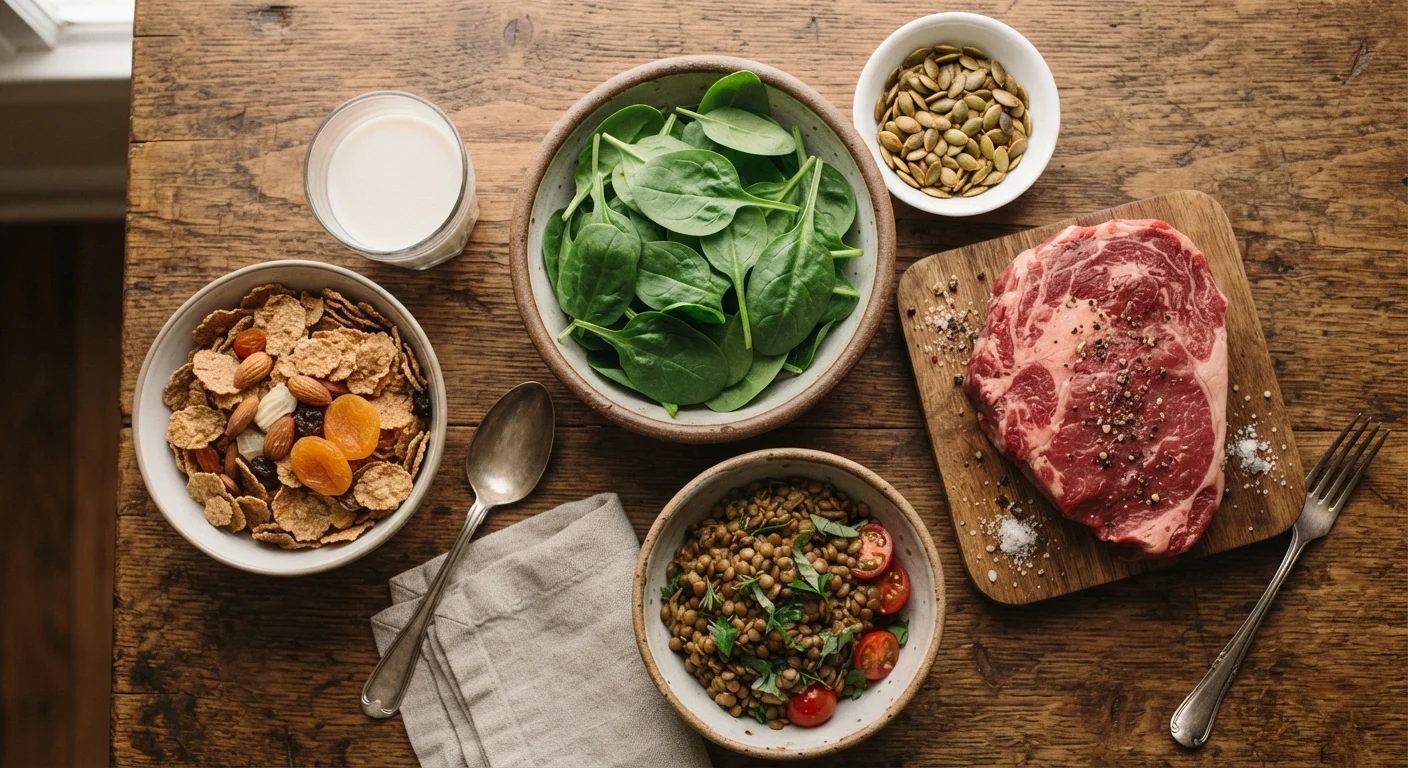
Photo: HerbHealWellness.com | Modern Guide To Wellness editorial
Why Iron Matters in Your Body
Iron is an essential mineral that plays a central role in producing hemoglobin — the protein in red blood cells that carries oxygen from your lungs to every tissue in your body. Without adequate iron, that transport system becomes compromised, and the effects ripple outward into nearly every organ system.
Your body cannot manufacture iron on its own, which means dietary intake is your only reliable source. When intake consistently falls short of what the body uses or loses, iron stores are gradually depleted, eventually leading to iron-deficiency anemia — the most common nutritional deficiency worldwide, according to the World Health Organization.
Recognizing the early signals of low iron can help you take action before the deficiency becomes severe. Many of the signs listed below are also associated with other conditions, which is why professional evaluation is always the right next step. See our symptom overview hub for broader context on everyday warning signs.
| Primary role of iron | Oxygen transport via hemoglobin in red blood cells |
| Most common nutritional deficiency | Iron deficiency (worldwide) (World Health Organization) |
| Recommended daily intake (adult women 19–50) | 18 mg per day (National Institutes of Health, Office of Dietary Supplements) |
| Recommended daily intake (adult men 19+) | 8 mg per day (National Institutes of Health, Office of Dietary Supplements) |
| Diagnosed via | Blood tests (complete blood count, serum ferritin, transferrin saturation) |
| Key dietary sources | Red meat, poultry, fish, lentils, tofu, spinach, fortified cereals |
Common Signs of Iron Deficiency
Iron deficiency tends to develop gradually, and its symptoms often overlap with general fatigue or stress — making it easy to dismiss. The following are well-documented signals that clinicians associate with low iron or iron-deficiency anemia.
Persistent Fatigue and Low Energy
This is the most frequently reported symptom. When hemoglobin levels fall, muscles and tissues receive less oxygen, leaving you feeling exhausted even after adequate sleep. This isn't ordinary tiredness — it can be debilitating and disproportionate to your activity level. This kind of fatigue overlaps with other conditions too; learn how clinicians distinguish fatigue linked to low testosterone from other causes.
Pale or Sallow Skin
Hemoglobin gives blood its red color, which in turn lends skin its healthy tone. Reduced hemoglobin can make skin, the inside of the lower eyelids, or the gums appear noticeably paler. A clinician can confirm this during a basic physical examination.
Shortness of Breath
Climbing stairs or carrying groceries may leave you unusually breathless when iron is low, because the heart and lungs must work harder to compensate for reduced oxygen delivery. This symptom deserves prompt evaluation — see when breathlessness during everyday activities warrants concern.
Brittle Nails and Hair Loss
Nails may become thin, spoon-shaped (koilonychia), or prone to breaking. Diffuse hair shedding is also reported by people with iron deficiency, though hair loss has multiple causes and should always be evaluated by a professional.
Unusual Cravings (Pica)
Some individuals with iron deficiency develop cravings for non-food substances like ice, clay, or dirt — a phenomenon known as pica. Craving ice specifically (pagophagia) is a recognized clinical clue. Report this symptom to your doctor.
Oral Symptoms
A sore, swollen, or unusually smooth tongue (glossitis) and mouth sores can accompany iron deficiency. These oral manifestations are worth noting — unusual mouth signs can sometimes indicate a systemic problem that a dentist or physician should assess.
Hemoglobin
A protein in red blood cells that binds to oxygen and transports it from the lungs to tissues throughout the body. Low hemoglobin levels are a hallmark of iron-deficiency anemia.
Iron-deficiency anemia
A condition in which iron stores are too low to support adequate red blood cell production, resulting in reduced oxygen delivery to the body's tissues.
Heme iron
A form of dietary iron found in animal-based foods such as red meat, poultry, and fish. It is absorbed more readily by the body than non-heme iron.
Non-heme iron
A form of dietary iron found in plant foods such as legumes, tofu, spinach, and fortified grains. Absorption is influenced by other dietary factors, including vitamin C intake.
Pica
An unusual craving for non-food substances such as ice, clay, or starch. It is sometimes associated with iron deficiency and warrants clinical evaluation.
Koilonychia
A nail abnormality in which nails become thin and concave, sometimes described as spoon-shaped. It is a recognized clinical sign of chronic iron deficiency.
Who Is at Greater Risk?
Iron deficiency does not affect everyone equally. Certain groups face higher risk due to increased physiological demand, reduced absorption, or chronic blood loss:
- Women of reproductive age — menstrual blood loss raises iron needs substantially.
- Pregnant individuals — blood volume expands and fetal development demands more iron. Consult a healthcare provider before making any dietary or supplement changes during pregnancy.
- Infants and young children — rapid growth increases requirements beyond what breast milk or standard diet may supply.
- People following plant-based diets — plant foods contain non-heme iron, which the body absorbs less efficiently than the heme iron found in animal products.
- Individuals with gastrointestinal conditions — conditions such as celiac disease or Crohn's disease can impair iron absorption even when dietary intake is adequate.
If you belong to one of these groups and recognize several of the symptoms above, consider which subtle symptoms shouldn't be brushed aside and speak with a clinician promptly.
~30%
Share of global anemia cases linked to iron deficiency
According to the World Health Organization, iron deficiency is the leading cause of anemia globally, accounting for roughly 30% of all anemia cases.
2x
Higher iron requirement during pregnancy
The NIH Office of Dietary Supplements notes that iron needs roughly double during pregnancy to support fetal development and expanded maternal blood volume.
14–18%
Heme iron absorption rate from food
Research indicates heme iron from animal sources is absorbed at approximately 14–18%, compared to 5–12% for non-heme iron from plant sources, depending on dietary context.
This article is for informational purposes only and is not a substitute for professional medical advice, diagnosis, or treatment. If you are experiencing symptoms of iron deficiency, consult a qualified healthcare provider.
The content on this site is for informational purposes only and is not a substitute for professional advice. Always consult a qualified professional for guidance specific to your situation.