
Why Vitamin and Mineral Needs Shift Across Life Stages

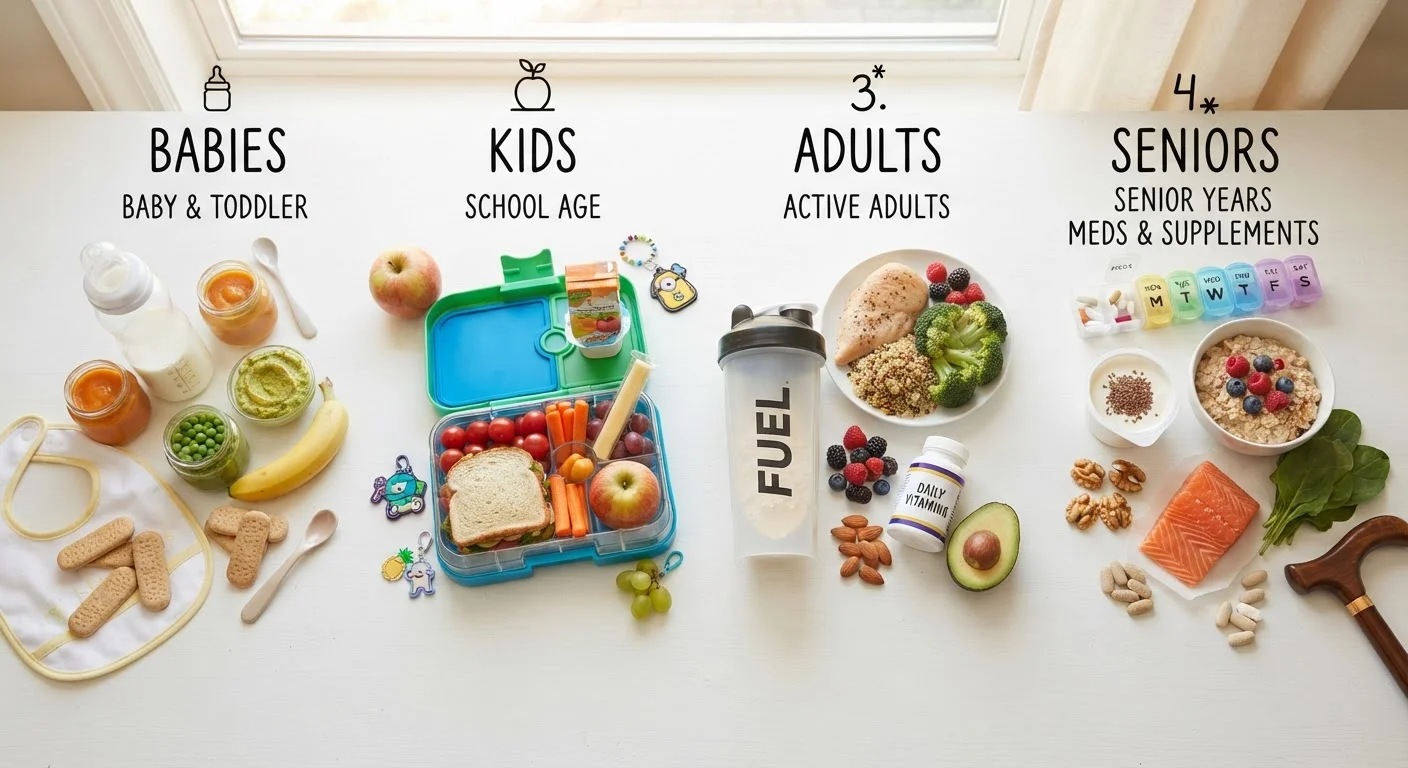
Photo: HerbHealWellness.com | Modern Guide To Wellness editorial
Key Takeaways
- Growth, hormonal changes, and aging each drive distinct shifts in vitamin and mineral needs.
- Infancy and adolescence are periods of especially high micronutrient demand per unit of body weight.
- Pregnancy and breastfeeding significantly increase needs for folate, iron, calcium, and iodine.
- Older adults often absorb certain nutrients less efficiently, raising the risk of deficiency even with adequate intake.
- Dietary patterns, not just supplements, are the most reliable way to meet evolving micronutrient needs.
- A healthcare provider can help identify life-stage-specific gaps through dietary review or lab testing.
What Drives Micronutrient Needs to Change
The body's demand for vitamins and minerals is not static — it fluctuates in direct response to biological processes happening at each stage of life. Three primary forces drive these shifts: growth and tissue formation, hormonal and reproductive changes, and age-related changes in absorption and metabolism.
During periods of rapid cell proliferation — fetal development, infancy, and adolescence — the body draws heavily on specific micronutrients to build bone, neural tissue, red blood cells, and immune infrastructure. During reproductive years, sex hormones influence how nutrients are stored and used, and pregnancy or breastfeeding can dramatically amplify needs. In older adulthood, the gastrointestinal tract becomes less efficient, and certain physiological systems that once conserved nutrients begin to decline.
Understanding these drivers helps explain why blanket advice — "eat more vegetables" — is necessary but insufficient. The specific micronutrients that deserve attention genuinely depend on where someone is in their life.
Dietary Reference Intakes Explained
Infancy Through Adolescence: Building the Foundation
No life stage places higher relative demands on micronutrient supply than early childhood. Infants require adequate vitamin D and calcium for skeletal mineralization, iron to support oxygen transport in a rapidly expanding blood volume, and iodine for thyroid-driven brain development. Because breast milk alone may not supply sufficient vitamin D, the American Academy of Pediatrics recommends a supplement for breastfed infants — a conversation best had with a pediatrician.
As children enter school age, iron, zinc, and B vitamins become especially important for cognitive development and immune competence. Then adolescence arrives with its own surge in demand: growing bones need more calcium and vitamin D, rapidly increasing muscle mass requires more magnesium and phosphorus, and menstruating adolescents face a substantially higher iron requirement than their male peers.
1,300 mg
Daily calcium RDA for adolescents aged 9–18
According to the National Academies of Sciences, Engineering, and Medicine, this is higher than the adult RDA of 1,000 mg, reflecting peak bone-building demands during adolescence.
27 mg
Iron RDA during pregnancy
The NIH Office of Dietary Supplements reports this figure, nearly double the 14–15 mg recommended for non-pregnant women of the same age group.
40%
Older adults potentially low in vitamin D
Research published in nutritional epidemiology literature suggests a substantial proportion of adults over 65 have insufficient vitamin D levels, driven by reduced synthesis and absorption efficiency.
Just as health monitoring tools shift across the lifespan — as explored in our guide on health monitoring devices across the lifespan — so do the nutritional priorities that support the body being monitored.
Adulthood: Reproductive Years and Peak Demand
In early and middle adulthood, micronutrient needs stabilize relative to the swings of childhood and adolescence, but significant demands remain — especially around reproduction. Folate is the canonical example: adequate intake in the weeks surrounding conception is essential for fetal neural tube development, which is why folic acid supplementation is recommended for anyone who could become pregnant, regardless of current plans.
Pregnancy amplifies needs across the board. Iron requirements nearly double to support expanded blood volume and fetal development. Calcium and vitamin D protect maternal bone mass while the fetus builds its skeleton. Choline, often overlooked, is critical for fetal brain development. Iodine needs increase substantially to support fetal thyroid function.
Planning a Pregnancy? Start Folate Early
Breastfeeding continues these elevated demands, adding vitamin A and additional iodine to the priority list. For non-pregnant adults, maintaining adequate vitamin B12, magnesium, and potassium supports cardiovascular and neurological health — nutrients frequently under-consumed in typical Western diets.
Preventive care priorities also evolve alongside nutrition needs. Our overview of preventive care by decade provides useful context for how health management should evolve through adulthood.
Older Adulthood: Absorption, Bone, and Cognitive Health
After roughly age 50, physiological changes begin to erode the body's ability to extract and utilize certain nutrients efficiently. Vitamin B12 absorption declines as the stomach produces less hydrochloric acid and intrinsic factor — both essential for B12 uptake. The NIH Office of Dietary Supplements notes that older adults are advised to obtain B12 primarily through fortified foods or supplements, since these forms bypass the absorption bottleneck.
Vitamin D synthesis in the skin drops markedly, and kidney conversion of vitamin D to its active form also becomes less efficient — both of which reduce the body's capacity to maintain adequate levels. Meanwhile, calcium needs remain high (and may increase for women post-menopause) to slow the rate of bone density loss that naturally accompanies aging.
Vitamin K2, magnesium, and vitamin B6 are additional micronutrients that warrant attention in older adults, as their roles in cardiovascular function, muscle performance, and cognition become more pronounced at this stage. Eye health is also closely linked to micronutrient status — antioxidants like lutein, zeaxanthin, and vitamins C and E are studied for their potential role in reducing age-related macular degeneration risk, a topic explored further in our article on protecting eye health as you age.
This article is for general informational purposes only and does not constitute medical or nutritional advice. Always consult a qualified healthcare professional — such as a physician or registered dietitian — before making changes to your diet or supplement regimen, especially during pregnancy, childhood, or older adulthood.
Frequently Asked Questions
The content on this site is for informational purposes only and is not a substitute for professional advice. Always consult a qualified professional for guidance specific to your situation.