
The Truth About Enamel Erosion — and What Can't Be Reversed

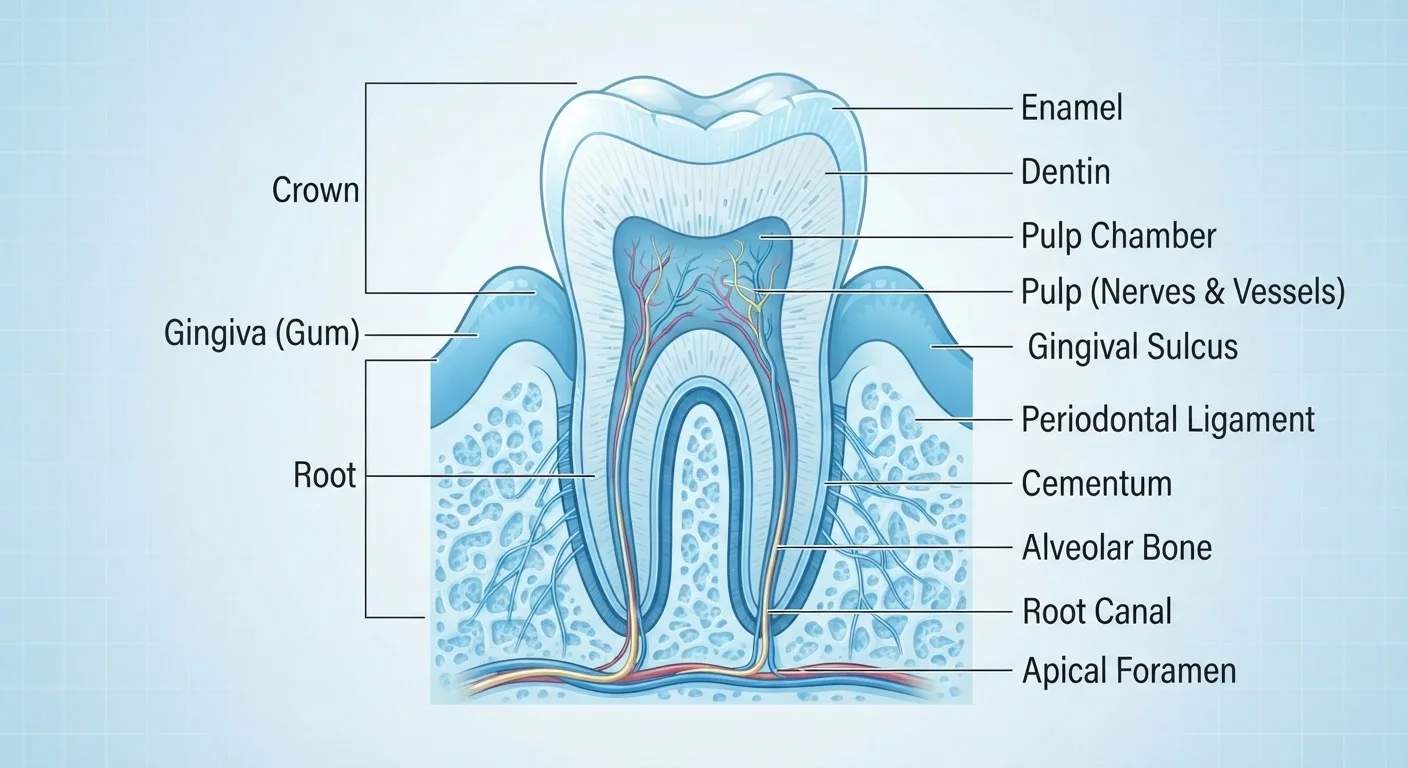
Photo: HerbHealWellness.com | Modern Guide To Wellness editorial
Key Takeaways
- Dental enamel cannot regenerate once it has been worn away — loss is permanent.
- Acidic foods, drinks, and stomach acid are the most common drivers of enamel erosion.
- Symptoms like sensitivity and yellowing signal erosion that is already underway.
- Fluoride and remineralizing agents can strengthen enamel but cannot rebuild lost structure.
- Brushing immediately after acidic exposure accelerates erosion rather than preventing it.
What Enamel Is — and Why Its Loss Is Permanent
Dental enamel is the outermost layer of each tooth and the hardest mineralized tissue in the human body — harder even than bone. It protects the sensitive dentin and pulp beneath from mechanical forces, temperature extremes, and bacterial acids. Despite this toughness, enamel is uniquely vulnerable: it is produced entirely by specialized cells called ameloblasts that are lost once a tooth finishes forming and erupts into the mouth. Without those cells, the body has no way to produce new enamel.
This makes enamel erosion fundamentally different from many other tissue injuries. A cut heals. Bone can remodel. Enamel, once gone, does not return. Understanding this irreversibility is the starting point for making sense of the myths that surround it.
Enamel Loss Is Irreversible
Common Myths About Enamel Erosion — Corrected
Confusion about enamel is widespread, and several popular beliefs actively lead people toward habits that accelerate damage. The myth-fact pairs below address the most consequential misconceptions, grounded in current clinical evidence.
Myth
Enamel can grow back if you use the right toothpaste or supplement.
Fact
No product can regrow lost enamel. Enamel-forming cells (ameloblasts) die after teeth erupt, so the body has no mechanism to rebuild worn enamel.
Marketing language around "enamel repair" or "enamel rebuilding" is often misleading. What fluoride and hydroxyapatite-based products actually do is remineralize — they deposit minerals into micro-surface defects in enamel that has been partially demineralized but not yet physically worn away. This is a meaningful benefit, but it is not the same as regenerating enamel that has already been lost. Once a measurable layer of enamel is gone, no over-the-counter product restores it. Understanding this distinction helps you evaluate product claims critically. For a closer look at which toothpaste ingredients genuinely support enamel health, see what toothpaste ingredients actually do.
Myth
Only sugary drinks erode enamel — water and plain tea are always safe.
Fact
Acid concentration — not sugar content — is what erodes enamel. Many unsweetened beverages, including sparkling water and some herbal teas, are acidic enough to contribute to erosion over time.
Enamel begins to dissolve at a pH below approximately 5.5. Carbonated water typically sits around pH 4–5, and certain fruit-infused waters can be even lower. Frequency and contact time matter as much as the beverage itself: sipping acidic drinks slowly over long periods is more damaging than drinking the same amount quickly. Stomach acid from chronic acid reflux (GERD) or frequent vomiting can also bathe teeth from the inside, causing a distinctive pattern of erosion on the inner surfaces of upper front teeth — a pattern dentists are trained to recognize.
Myth
Tooth sensitivity always means cavities — if there's no cavity, your enamel is fine.
Fact
Sensitivity is a common symptom of enamel erosion even when no cavity exists. Thinning enamel exposes the underlying dentin, which transmits temperature and pressure stimuli more readily.
Dentin contains microscopic channels (tubules) that connect to the nerve of the tooth. As enamel thins, these tubules become less insulated, making teeth react sharply to cold drinks, hot foods, or sweet stimuli. A dentist can distinguish erosion-related sensitivity from decay through clinical examination and sometimes X-rays. Erosion also often presents with a characteristic appearance: teeth may look glassy, rounded, or flatter than normal, and the edges of front teeth can become translucent. These visual signs, combined with sensitivity, warrant a professional assessment even in the absence of a cavity.
Myth
Brushing harder and more often protects enamel by removing acid faster.
Fact
Aggressive brushing is itself a cause of enamel wear and is more damaging when performed on acid-softened enamel.
Enamel erosion and abrasion (physical wearing from brushing) are distinct processes that can compound each other. Scrubbing with excessive force — especially with a hard-bristled brush — strips enamel and damages the gum margin over time. This risk is heightened immediately after acidic exposure, when enamel is transiently softer. Gentle, angled brushing with a soft-bristled brush is the evidence-supported standard. Brushing habits that quietly damage teeth covers this in detail, including technique adjustments that reduce cumulative harm.
Myth
If your teeth look normal, you don't have enamel erosion.
Fact
Erosion often progresses silently and invisibly before visible changes appear. By the time yellowing or shape changes are obvious, significant loss has already occurred.
Early enamel erosion produces no pain and minimal visible change. As the translucent enamel layer thins, the yellowish dentin beneath begins to show through — which is why eroded teeth often appear more yellow even without staining. Teeth may also appear shorter or develop notches near the gumline. Because changes accumulate gradually, many people do not notice until erosion is well advanced. This underscores why routine dental checkups matter: clinicians can identify erosion patterns early and recommend protective strategies before structural loss becomes severe. Compare this dynamic to how misconceptions about cavities similarly delay people from seeking care.
Enamel erosion shares some surface similarities with other forms of tooth damage — but the mechanisms differ. For context on how structural damage like fractures compares, see why teeth crack and how serious it can be.
Habits That Accelerate Erosion — and What to Do Instead
Several everyday behaviors compound enamel loss over time, often without the person realizing it. Key risk factors include:
- Frequent acidic beverage consumption — especially sipping slowly throughout the day
- Acid reflux or GERD — stomach acid repeatedly contacting tooth surfaces
- Dry mouth — saliva neutralizes acid and promotes remineralization; reduced flow removes this protection
- Aggressive brushing — particularly immediately after acidic meals
Don't Brush Right After Acidic Foods or Drinks
Protective strategies supported by dental evidence include drinking acidic beverages through a straw to reduce tooth contact, finishing meals with water or dairy to neutralize oral pH, chewing sugar-free gum to stimulate saliva flow, and using fluoride or hydroxyapatite toothpaste to support surface remineralization — keeping in mind that these measures protect remaining enamel rather than replace what is lost.
~30%
Adults with measurable enamel erosion
Research published in the Journal of Dentistry estimates roughly 30% of adults show clinical signs of erosive tooth wear, with prevalence increasing with age.
pH 5.5
Threshold at which enamel begins to dissolve
The critical pH for hydroxyapatite (the mineral in enamel) dissolution is approximately 5.5, according to established dental science.
30–60 min
Recommended wait time before brushing after acid
Major dental associations advise waiting 30 to 60 minutes after acidic food or drink before brushing to allow enamel to reharden.
This article is for general informational and educational purposes only. It is not a substitute for professional dental advice, diagnosis, or treatment. If you have concerns about enamel erosion or tooth sensitivity, consult a licensed dentist or dental specialist.
The content on this site is for informational purposes only and is not a substitute for professional advice. Always consult a qualified professional for guidance specific to your situation.