
What Your Dentist Can Detect Before Your Doctor Does

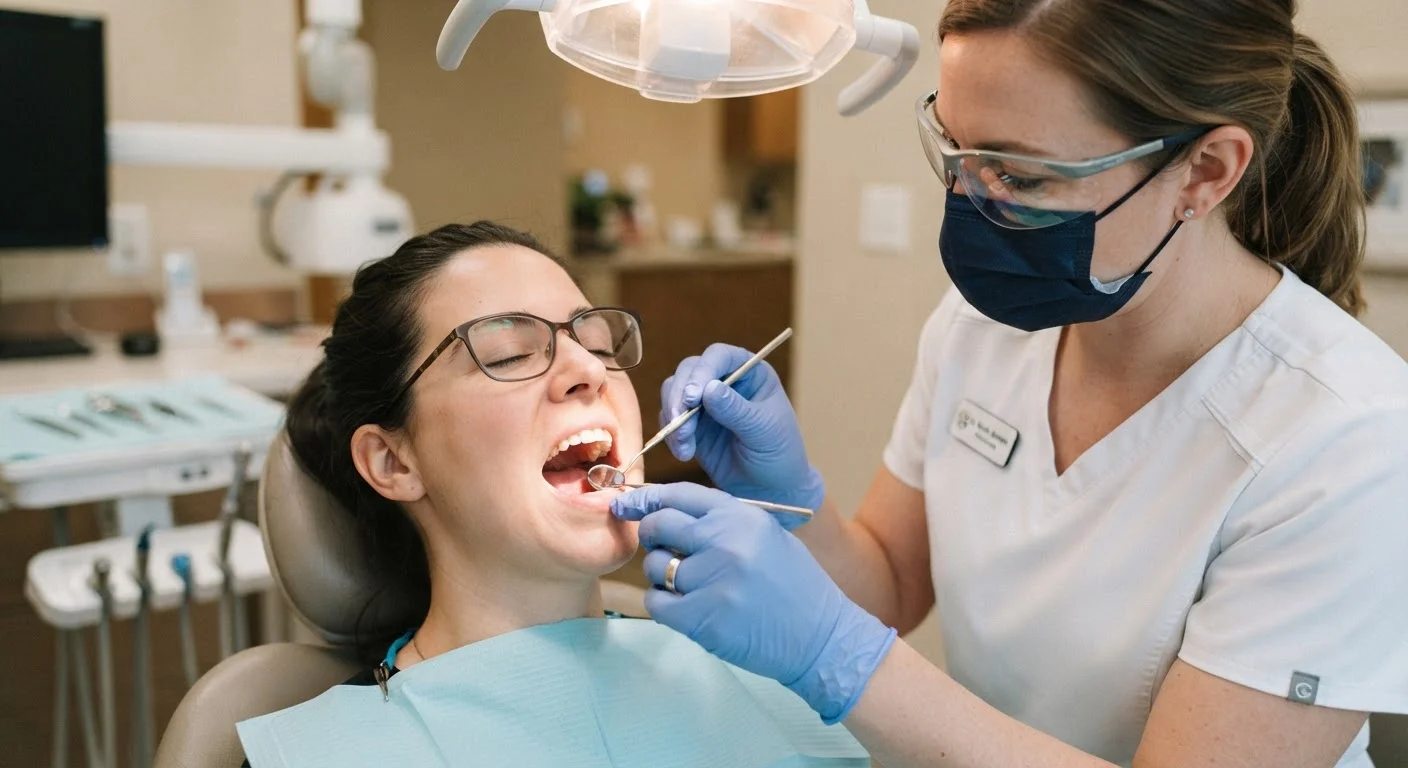
Photo: HerbHealWellness.com | Modern Guide To Wellness editorial
Key Takeaways
- Dentists are often the first clinicians to observe signs of systemic conditions like diabetes and anaemia.
- Changes in gum tissue, saliva, and oral mucosa can reflect what's happening elsewhere in the body.
- Regular dental checkups serve as an important, often undervalued, part of whole-body health monitoring.
- If your dentist flags a concern, following up with your primary care provider is strongly recommended.
Your Mouth as a Diagnostic Window
Most people think of a dental visit as a check for cavities and a professional cleaning. But a thorough dental exam also includes a systematic assessment of soft tissues, bone structure, saliva, and the condition of existing teeth — and each of these can carry information about what's happening throughout the body.
The mouth is uniquely accessible. Unlike internal organs, its tissues can be directly observed, palpated, and imaged without invasive procedures. Because many systemic diseases alter blood flow, immune response, tissue metabolism, or hormone levels, the effects often surface in the mouth — sometimes months before symptoms appear elsewhere. The six conditions below illustrate how and why your dentist may be first to notice something that warrants medical attention.
Dental Findings Are Not a Diagnosis
Six Conditions a Dentist May Spot First
Type 2 Diabetes and Prediabetes
Persistent or severe gum disease — known clinically as periodontitis — that resists standard treatment is one of the most well-documented oral signals of uncontrolled blood sugar. Research has consistently shown a bidirectional relationship between periodontitis and diabetes: each condition can worsen the other. Dentists may also observe slow healing after extractions, increased dry mouth, and a higher frequency of oral infections.
Because diabetes is often asymptomatic in its early stages, a dentist noticing recurrent gum infections or unusually rapid bone loss around teeth may prompt a referral for blood glucose testing before a patient has any other reason to suspect a metabolic issue. Learn more about how this connection works in our article on how systemic health conditions can show up in your mouth first.
Severe gum disease that resists treatment can be an early, visible marker of uncontrolled blood sugar.
Iron-Deficiency Anaemia
The tongue and inner lining of the mouth are highly vascular tissues that respond quickly to changes in red blood cell levels. In iron-deficiency anaemia, dentists may observe a smooth, pale tongue (a condition called atrophic glossitis), pale gums, angular cheilitis (cracking at the corners of the mouth), and recurrent mouth ulcers.
These findings are relatively subtle and easy to overlook in a mirror at home, but an experienced clinician conducting a full soft-tissue exam will note the pattern. If you're curious about the broader picture, signs your body may not be getting enough iron outlines what low iron looks like across the body.
A pale, smooth tongue and recurring mouth ulcers may be among the earliest visible signs of iron deficiency.
Oral Cancer
Dentists are trained to screen for oral cancer as part of a routine examination, inspecting the lips, tongue, floor of the mouth, cheeks, palate, and throat. Suspicious findings include persistent red or white patches, ulcers that haven't healed after two to three weeks, unusual lumps, and tissue changes in colour or texture.
Oral cancer is far more treatable when caught early, yet many people have no pain or obvious symptoms in the initial stages. Because primary care visits don't typically include a dedicated oral soft-tissue exam, the dental chair is often where these lesions are identified first. Our guide on oral thrush and white patches that aren't normal can help distinguish between benign and potentially concerning lesions.
Oral cancer often causes no pain early on, making a dentist's soft-tissue screening uniquely valuable.
Acid Reflux and Eating Disorders
Stomach acid erodes enamel from the inside out, producing a distinctive pattern of tooth wear on the inner surfaces of the upper front teeth — different from the grinding wear seen in bruxism. Dentists call this erosion pattern a key indicator of chronic acid exposure, whether from gastroesophageal reflux disease (GERD) or from self-induced vomiting associated with an eating disorder.
Many patients are unaware their symptoms constitute GERD, or may not yet have received support for disordered eating. A compassionate dental professional who identifies this pattern can open a conversation that connects oral findings to broader medical or psychological care. For context on what tooth sensitivity caused by enamel loss can feel like, see what tooth sensitivity is telling you.
Distinctive enamel erosion on inner tooth surfaces can reveal chronic acid exposure before a formal GERD diagnosis.
Immune System Disorders and HIV
Oral manifestations are among the earliest and most consistent findings in immune compromise. Dentists may observe unusual or persistent oral candidiasis (thrush), hairy leukoplakia on the tongue, severe or rapidly progressing gum disease, or recurrent herpetic lesions. These patterns may appear months or years before other systemic symptoms prompt a medical evaluation.
Guidelines from major dental and infectious disease bodies recognize oral examination as an important component of early HIV detection. A dentist who identifies unexplained immune-related oral patterns will typically encourage the patient to follow up with a physician for comprehensive evaluation. For a closer look at how these signs present, signs your mouth might be flagging a systemic problem explores the full spectrum of oral warning signs.
Oral candidiasis and unusual gum disease patterns may emerge months before other signs of immune compromise.
Osteoporosis
Dental X-rays taken during routine checkups can reveal decreased bone density in the jaw before a patient or their doctor has reason to suspect osteoporosis. Dentists and radiologists have noted associations between measurable jaw bone changes on panoramic X-rays and reduced systemic bone density, particularly in postmenopausal women.
Additionally, tooth loss or ill-fitting dentures that occur without an obvious local cause may signal generalized bone loss. While dental X-rays are not a substitute for a bone density scan (DEXA), they can prompt a clinician to recommend appropriate follow-up testing.
Jaw bone changes visible on dental X-rays may offer an early signal of systemic osteoporosis.
Bridge the Gap Between Your Dental and Medical Care
Why Routine Visits Are Worth Prioritising
The oral-systemic link is not a new idea, but it remains underappreciated in day-to-day healthcare decisions. Skipping dental appointments doesn't just raise the risk of cavities — it removes a regular, accessible opportunity for early detection of broader health concerns. For a more complete look at the oral signs that may flag a systemic problem, including when to seek prompt evaluation, that resource is a useful companion to this article.
If you are experiencing any of the oral signs described here — persistent ulcers, unusual tissue changes, unexplained tooth loss, or recurring infections — speak with both your dentist and your primary care provider. This article is for general health education and is not a substitute for professional medical or dental advice.
This article is intended for general informational purposes only and does not constitute medical or dental advice. Always consult a qualified healthcare professional for guidance on your individual health situation.
The content on this site is for informational purposes only and is not a substitute for professional advice. Always consult a qualified professional for guidance specific to your situation.