
When a Red Eye Is More Than Mild Irritation

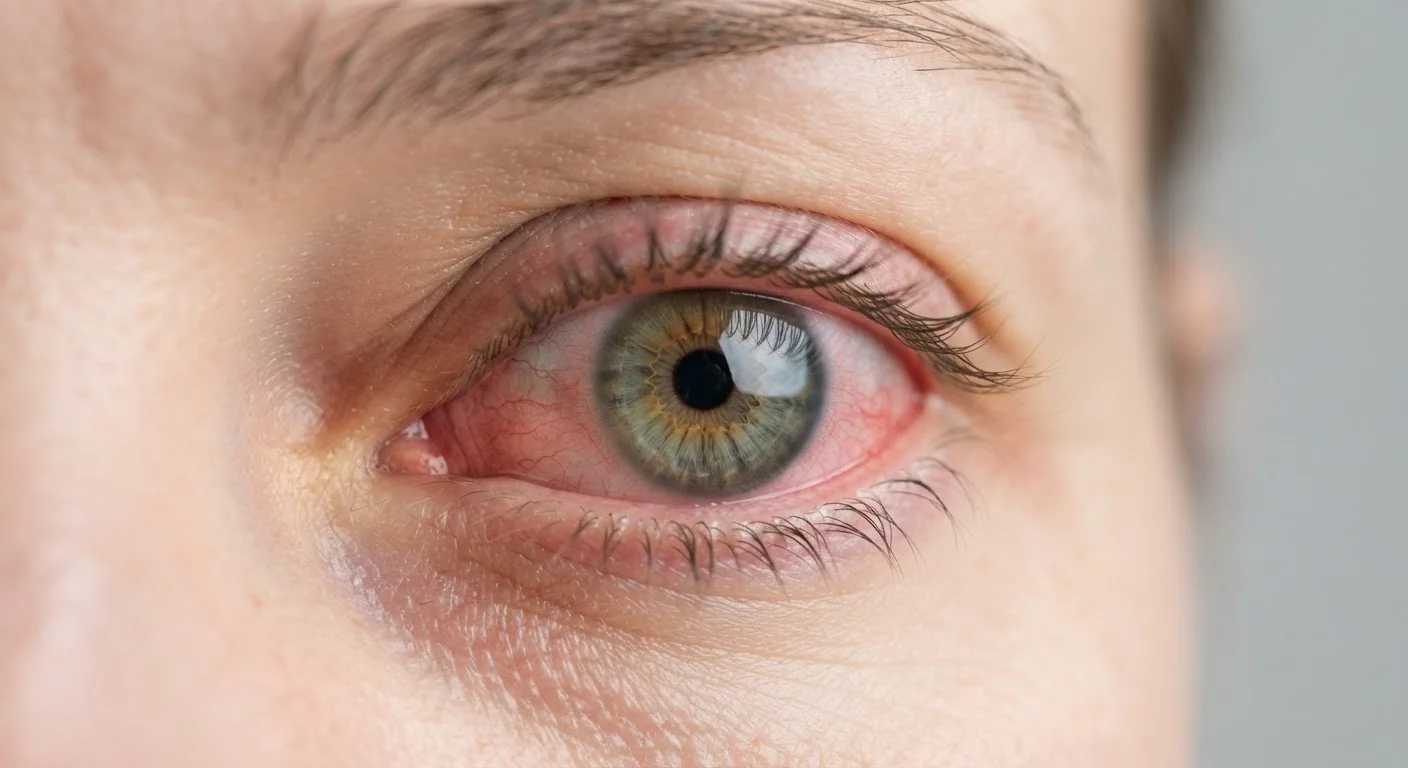
Photo: HerbHealWellness.com | Modern Guide To Wellness editorial
Key Takeaways
- Redness alone is rarely an emergency, but paired symptoms can change that quickly.
- Pain, vision changes, sensitivity to light, and corneal cloudiness all warrant prompt evaluation.
- Many benign causes of red eye resolve within a day or two without treatment.
- Contact lens wearers face a higher risk of serious infection and should act sooner.
- When in doubt, an eye care professional can rule out sight-threatening conditions.
Why Eyes Turn Red
The white of the eye — the sclera — is covered by a thin, transparent membrane called the conjunctiva, which contains a network of tiny blood vessels. When those vessels become irritated or inflamed, they widen and fill with blood, producing the visible redness most people recognize as a red eye.
This process, called conjunctival hyperemia, is simply the eye's response to a wide range of triggers — some completely harmless and others potentially serious. Because redness looks similar regardless of its cause, accompanying symptoms are what distinguish a nuisance from a threat to your vision.
Conjunctiva
The thin, clear membrane that covers the white part of the eye and the inner surface of the eyelids. It contains small blood vessels that can become visible when irritated.
Conjunctival hyperemia
The medical term for redness of the eye caused by dilation of blood vessels in the conjunctiva — the eye's response to irritation, infection, or inflammation.
Uveitis
Inflammation of the uvea, the middle layer of the eye. It can cause a red, painful eye and sensitivity to light, and requires medical treatment to prevent vision damage.
Acute angle-closure glaucoma
A sudden and dangerous rise in pressure inside the eye that can cause severe pain, redness, blurred vision, and halos. It is a medical emergency that can lead to permanent vision loss if untreated.
Subconjunctival hemorrhage
A bright-red patch on the white of the eye caused by a tiny broken blood vessel beneath the conjunctiva. It looks dramatic but is generally harmless and clears on its own.
Microbial keratitis
A serious infection of the cornea — the clear dome at the front of the eye — most commonly associated with contact lens wear. It can progress quickly and threaten vision if not treated promptly.
Common Causes That Are Usually Minor
Most episodes of red eye have a benign explanation. The most frequent causes include:
- Allergic conjunctivitis: Seasonal allergens such as pollen or pet dander trigger itching, watering, and bilateral redness. Both eyes are typically affected, and itchiness is the hallmark symptom.
- Viral conjunctivitis (pink eye): Often associated with a cold or upper respiratory infection, viral pink eye produces watery discharge and redness that may start in one eye before spreading to the other. Most cases resolve without medication in one to two weeks.
- Dry eye: Insufficient tear production or poor tear quality leads to irritation, a gritty sensation, and chronic low-grade redness — particularly after screen use or in dry environments.
- Subconjunctival hemorrhage: A small blood vessel breaks beneath the conjunctiva, creating a vivid red patch. It looks alarming but is generally harmless, caused by sneezing, coughing, or straining, and resolves on its own.
- Environmental irritants: Smoke, chlorine, wind, and prolonged UV exposure can all cause temporary redness that clears once the trigger is removed.
The 48-Hour Rule for Mild Redness
Symptoms That Signal Something Serious
Certain symptoms accompanying a red eye should prompt you to act quickly rather than wait and see. These include:
- Eye pain: Significant aching, throbbing, or sharp pain — rather than mild irritation — is a warning sign. Pain may indicate corneal damage, infection, or elevated eye pressure.
- Vision changes: Any sudden blurriness, loss of peripheral vision, or visual disturbance requires urgent evaluation. As detailed in our guide to warning signs between eye exams, changes in vision should never be dismissed.
- Photophobia: Marked sensitivity to light, especially when paired with redness and pain, can indicate uveitis (internal eye inflammation) or a corneal condition such as a ulcer.
- Corneal cloudiness: The normally clear cornea appearing hazy or white suggests infection or inflammation affecting this critical structure.
- Halos and nausea: Seeing halos around lights along with a red eye and headache or nausea may indicate acute angle-closure glaucoma — a genuine ocular emergency requiring same-day care.
- Thick, yellow-green discharge: Bacterial conjunctivitis or, in severe cases, a gonorrheal eye infection produces copious purulent discharge that requires prompt antibiotic treatment.
Do Not Ignore Pain Alongside Redness
When to Seek Care — and How Quickly
Use this framework to calibrate your response:
| Situation | Recommended Action |
|---|---|
| Mild redness, no pain, normal vision, no discharge | Monitor for 24–48 hours; see a provider if it persists |
| Redness with itching and watering, both eyes | Schedule a routine eye care appointment |
| Redness with mucopurulent (thick) discharge | See a provider within 24 hours |
| Redness with pain, photophobia, or vision changes | Seek same-day or urgent evaluation |
| Redness after eye injury or chemical splash | Emergency care immediately |
| Contact lens wearers with any notable redness or discomfort | Remove lenses and seek prompt care |
Contact lens wearers deserve special mention. The cornea is more vulnerable to infection when lenses are present, and conditions such as microbial keratitis can progress rapidly. Remove your lenses at the first sign of redness and discomfort, and do not reinsert them until a provider clears you to do so.
Just as some infections can appear mild but occasionally signal something more serious — a distinction explored in our piece on recognizing mild vs. severe infectious illness — the same logic applies to red eye. Most cases resolve without intervention, but a small subset require timely treatment to protect sight.
This article is for general informational purposes only and is not a substitute for professional medical advice, diagnosis, or treatment. Always consult a qualified eye care professional or healthcare provider with questions about your eye health or any symptoms you are experiencing.
Frequently Asked Questions
The content on this site is for informational purposes only and is not a substitute for professional advice. Always consult a qualified professional for guidance specific to your situation.