
Chronic Illness vs. Acute Illness: Understanding the Difference

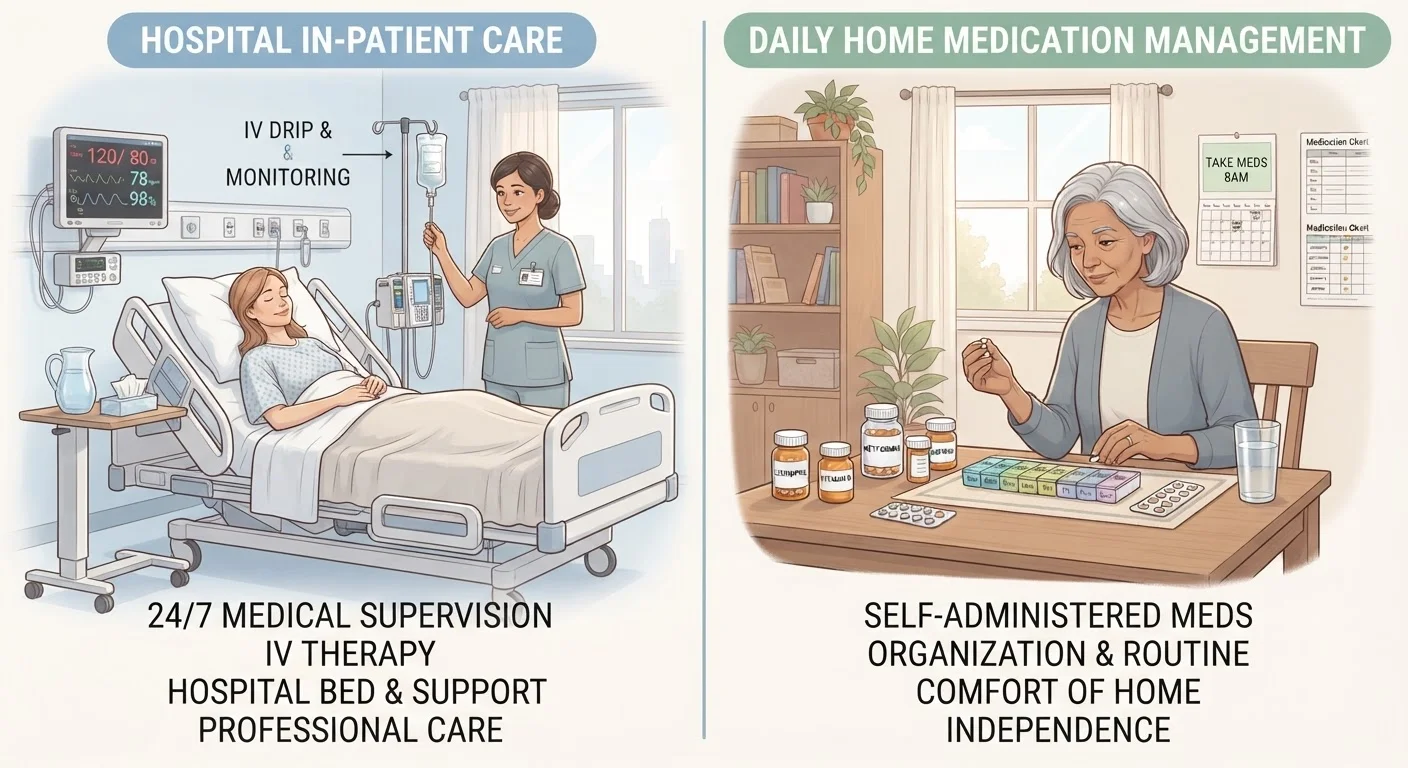
Photo: HerbHealWellness.com | Modern Guide To Wellness editorial
Key Takeaways
- Acute illnesses arise suddenly and typically resolve within days to weeks with targeted treatment.
- Chronic illnesses last three months or longer by clinical definition and often have no complete cure.
- Acute care focuses on eliminating the immediate cause; chronic care focuses on long-term management and quality of life.
- Many chronic conditions develop gradually and may be present for years before a formal diagnosis.
- Living with a chronic illness involves ongoing self-management alongside regular medical supervision.
What Sets These Two Categories Apart
In medicine, the distinction between an acute and a chronic illness is not just about how sick you feel — it's about time, trajectory, and treatment philosophy. Acute illnesses strike quickly, have an identifiable cause, and are expected to resolve. Chronic illnesses, by contrast, develop gradually or persist far beyond the normal recovery window, requiring ongoing attention rather than a single course of treatment.
Clinicians generally define a condition as chronic when it lasts three months or longer and cannot be fully resolved with short-term treatment. For a deeper look at how that threshold is applied in practice, see what "chronic" actually means in medicine.
Acute conditions — a strep throat infection, a fractured wrist, an appendicitis — follow a predictable arc: onset, peak, and resolution. Chronic conditions like type 2 diabetes, rheumatoid arthritis, or hypertension do not follow that arc. They become part of a person's baseline health landscape.
| Criterion | Acute Illness | Chronic Illness |
|---|---|---|
| Onset | Sudden or rapid | Gradual or insidious |
| Duration | Days to weeks | 3 months or longer |
| Primary treatment goal | Cure or full resolution | Management and symptom control |
| Care setting | Urgent or short-term clinical care | Ongoing primary or specialist care |
| Patient role | Passive recovery | Active daily self-management |
| Examples | Flu, fracture, appendicitis | Diabetes, hypertension, asthma |
| Mental health impact | Temporary distress | Ongoing psychological adjustment |
How Each Type Is Diagnosed and Treated
Acute illness diagnosis typically centers on identifying the specific cause — a pathogen, an injury, an obstruction — and eliminating it. A course of antibiotics, a cast, or a surgical procedure may be all that's needed. Follow-up is usually brief, and the goal is full resolution.
Chronic illness diagnosis can be more complex. Conditions like common chronic conditions such as diabetes and hypertension may develop silently for years before symptoms become apparent. Diagnosis often involves tracking patterns over time rather than identifying a single acute trigger.
Treatment goals also diverge sharply. For acute illness, success means cure. For chronic illness, success means control — managing symptoms, slowing progression, and preserving function. This is why chronic care is not just medical but also behavioral, involving lifestyle changes, self-monitoring, and regular healthcare visits. Self-management and medical treatment in chronic care work in tandem rather than as alternatives.
6 in 10
US adults with at least one chronic condition
According to the CDC, approximately 6 in 10 American adults live with at least one chronic disease.
4 in 10
US adults with two or more chronic conditions
The CDC also reports that 4 in 10 US adults have two or more chronic conditions simultaneously, a pattern known as multimorbidity.
Impact on Daily Life and Mental Health
An acute illness disrupts daily life temporarily — you recover and return to your baseline. Chronic illness, by definition, changes what your baseline is. Work schedules, relationships, diet, sleep, and energy levels may all be affected on an ongoing basis. Many chronic conditions are also invisible to others, making social recognition of the illness a challenge. Invisible illness is a well-documented phenomenon with real social and psychological consequences.
The mental health dimension of chronic illness is significant and often underappreciated. Persistent physical illness is closely linked to anxiety and depression, not merely as a side effect but as part of the broader experience of living with ongoing health uncertainty. Understanding how chronic conditions shape mental health over time can help patients and caregivers recognize when additional support is warranted.
Acute illness, while distressing, does not typically alter a person's long-term sense of identity or daily functioning once resolved. This is one of the most meaningful — and often overlooked — distinctions between the two categories. If you or someone you care for is navigating a new long-term diagnosis, a grounded introduction to living with a chronic condition offers practical context for what to expect.
When Acute and Chronic Overlap
This article is for informational purposes only and does not constitute medical advice. Always consult a qualified healthcare professional regarding symptoms, diagnosis, or treatment decisions.
The content on this site is for informational purposes only and is not a substitute for professional advice. Always consult a qualified professional for guidance specific to your situation.