
Bacteria, Viruses, Fungi, and Parasites: What Actually Makes You Sick

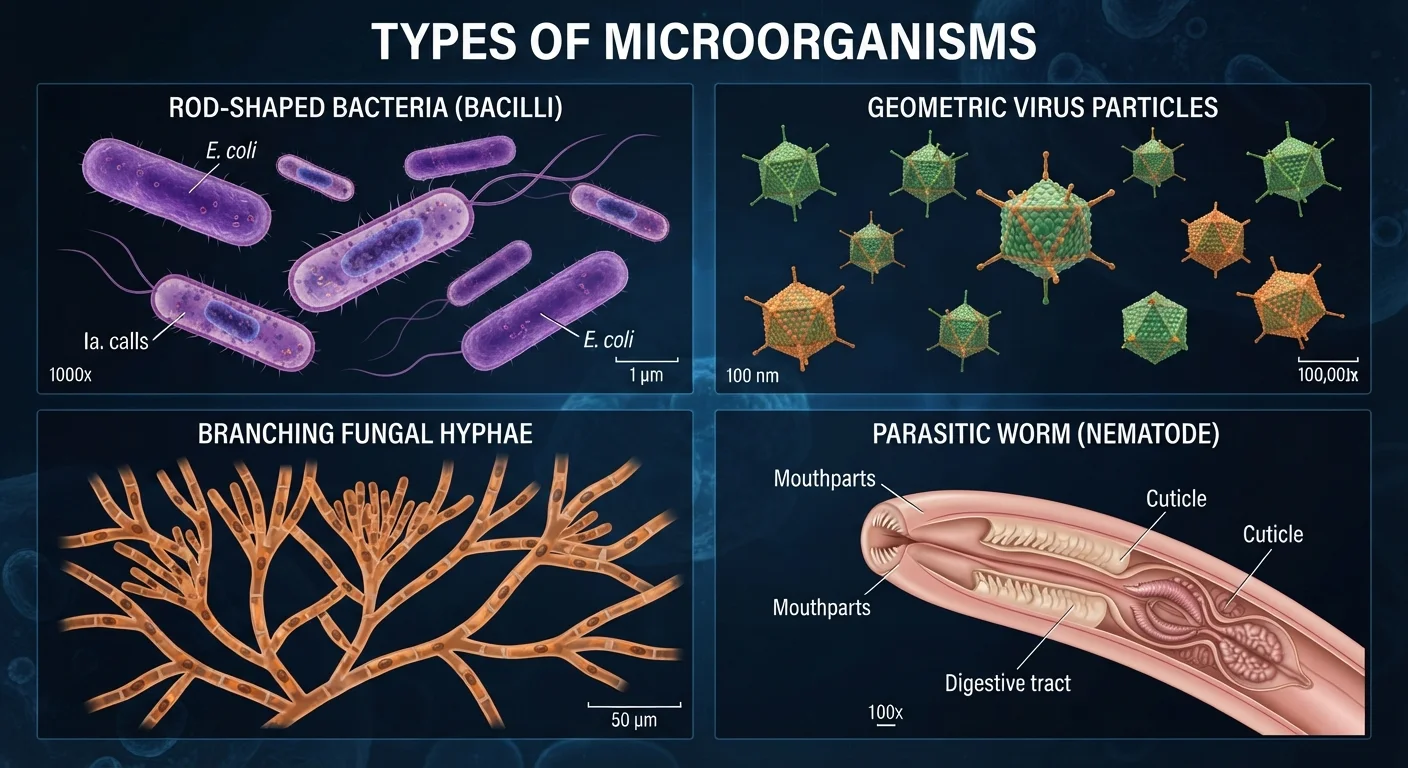
Photo: HerbHealWellness.com | Modern Guide To Wellness editorial
Key Takeaways
- Bacteria, viruses, fungi, and parasites each cause illness through different biological mechanisms.
- Antibiotics treat bacterial infections but have no effect on viral illnesses.
- Fungi and parasites require entirely different drug classes than those used for bacteria or viruses.
- Identifying the type of pathogen is essential for a healthcare provider to recommend the right treatment.
- Many infections resolve without medication, but some require prompt medical attention.
Why the Type of Germ Matters
When you get sick, the word "infection" often gets used as a catch-all. But not all infections work the same way — and that distinction has real consequences for how your body responds and how a clinician will approach your care.
The four main categories of infectious agents — bacteria, viruses, fungi, and parasites — are biologically distinct. Each damages the body through different mechanisms, responds to different treatments, and carries different risks depending on a person's age and overall health. Understanding what separates them is a foundational step in making sense of your symptoms and the care you receive. To learn how these agents pass from one person to another, see how infectious diseases spread.
~1 trillion
Bacterial cells in and on the human body
According to estimates published in Cell journal, the human body hosts roughly as many bacterial cells as it does human cells — the vast majority of which are beneficial or harmless.
Over 200
Viruses known to cause illness in humans
The CDC and WHO recognize more than 200 distinct viral species capable of causing human disease, spanning respiratory, gastrointestinal, neurological, and other systems.
~3.3 billion
People at risk for malaria globally
The World Health Organization estimates that roughly half the world's population lives in areas where the Plasmodium parasite — spread by mosquitoes — poses a malaria risk.
Bacteria: Self-Sufficient but Treatable
Bacteria are single-celled living organisms that can survive and reproduce independently of a human host. They exist in enormous variety — most are harmless or beneficial, but a subset causes disease by releasing toxins, invading tissues, or triggering an intense immune response.
Common bacterial infections include strep throat, urinary tract infections, pneumonia caused by Streptococcus pneumoniae, and foodborne illness from Salmonella or E. coli. Bacterial infections are generally treatable with antibiotics, though the specific antibiotic depends on the bacterial species involved. Antibiotic resistance — where bacteria evolve to survive drug exposure — is a growing public health concern that makes correct diagnosis more important than ever.
Don't Request Antibiotics for Viral Illness
Viruses: Hijackers That Depend on Your Cells
Viruses are fundamentally different from bacteria. They are not technically alive in the biological sense — they are packets of genetic material enclosed in a protein shell. A virus cannot reproduce on its own; it must enter a host cell, hijack its machinery, and use it to make copies of itself, often destroying the cell in the process.
This biology explains why antibiotics are useless against viral infections. The flu, COVID-19, the common cold, HIV, hepatitis C, and chickenpox are all caused by viruses. Treatment options vary widely: some viral infections are managed with antiviral medications, while many — like most common colds — are addressed through symptom relief while the immune system does the work. Vaccines, where available, remain one of the most effective tools for preventing viral illness.
For a closer look at how viral and bacterial infections compare in terms of symptoms and care, see why the distinction changes everything.
Fungi and Parasites: The Less-Discussed Pathogens
Fungi are organisms that reproduce through spores. While thousands of fungal species are harmless or even useful — think yeast in bread — some cause infections in humans. Fungal infections range from superficial conditions like athlete's foot and oral thrush to more serious lung infections such as histoplasmosis, particularly in people with weakened immune systems. Antifungal medications are used to treat these infections, and they work through mechanisms entirely different from antibiotics.
Parasites are organisms that live on or inside a host and rely on that host for survival — often at the host's expense. They range from microscopic protozoa like Giardia and Plasmodium (the parasite behind malaria) to larger organisms like tapeworms and roundworms. Parasitic infections are more common in regions with limited access to clean water and sanitation infrastructure, though they can and do occur in the United States. Antiparasitic drugs form their own drug class, distinct from antibiotics or antifungals.
For definitions of terms you may encounter when reading about any of these pathogens, see infectious disease terminology every patient should know.
What This Means When You're Feeling Sick
Symptoms alone rarely reveal which type of pathogen is responsible. Fever, fatigue, and inflammation are common responses to many different infections. That is why a healthcare provider may order tests — throat cultures, blood panels, stool samples, or imaging — before recommending a treatment approach.
Self-treating with antibiotics when a virus is the cause not only fails to help but contributes to antibiotic resistance. Conversely, dismissing a bacterial or fungal infection as something that will resolve on its own can allow it to worsen. If your symptoms are severe, lasting longer than expected, or include warning signs like high fever, difficulty breathing, or a rapidly spreading rash, seek medical evaluation promptly.
Understanding what separates mild from severe infectious illness can help you gauge when to monitor symptoms at home and when to act.
This article is for general informational purposes only and is not a substitute for professional medical advice, diagnosis, or treatment. Always consult a qualified healthcare provider with questions about your symptoms or health conditions.
Frequently Asked Questions
The content on this site is for informational purposes only and is not a substitute for professional advice. Always consult a qualified professional for guidance specific to your situation.