
How Infectious Diseases Spread: A Plain-Language Guide to Transmission

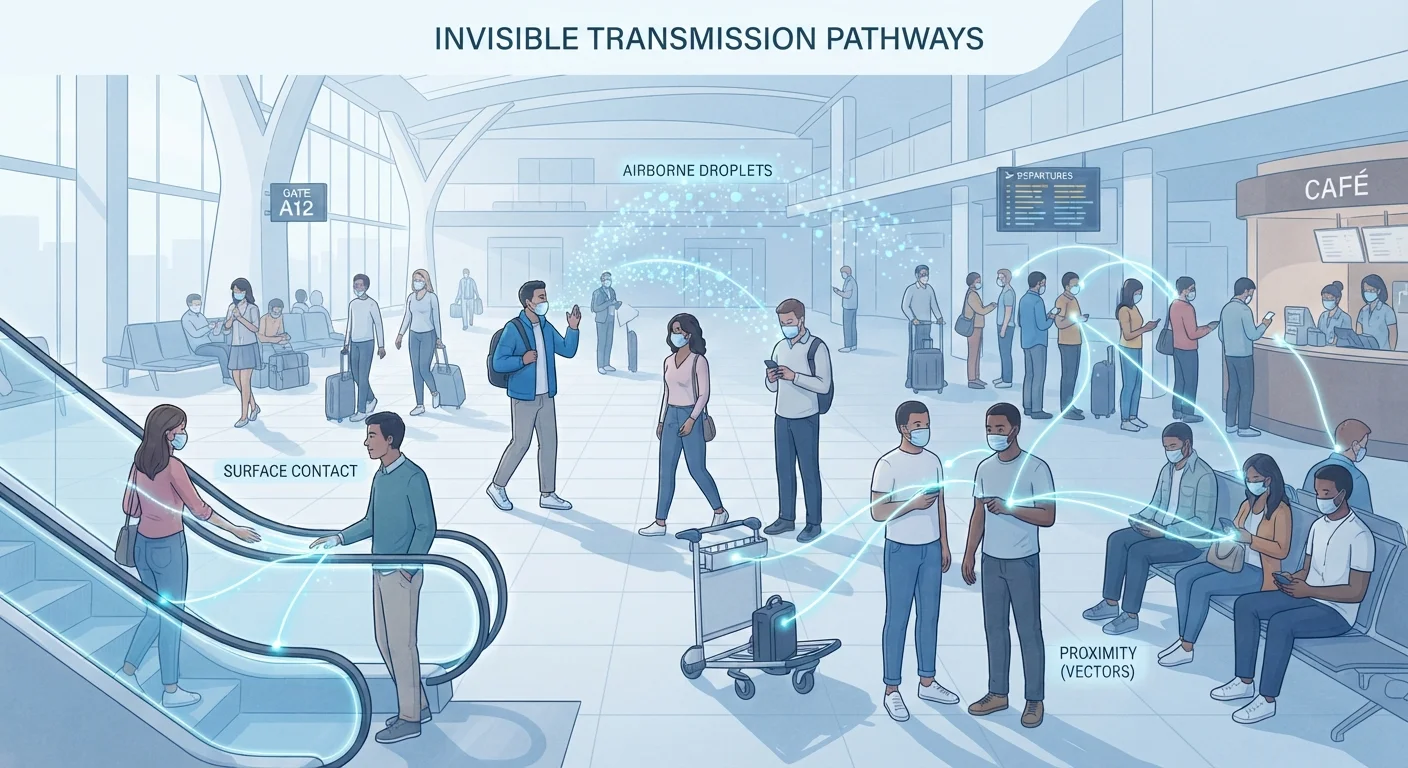
Photo: HerbHealWellness.com | Modern Guide To Wellness editorial
Key Takeaways
- Infectious diseases are caused by pathogens — viruses, bacteria, fungi, or parasites — that can pass from one host to another.
- Transmission routes include respiratory droplets, airborne particles, direct contact, contaminated surfaces, food/water, and animal vectors.
- How contagious a disease is depends on the pathogen type, dose required to cause infection, and the host's immune status.
- Recognizing transmission routes helps you understand why specific precautions — like masking or handwashing — target particular diseases.
- Always consult a healthcare professional if you suspect you have been exposed to or are experiencing symptoms of an infectious illness.
What Makes a Disease 'Infectious'?
An infectious disease is one caused by a pathogen — a microorganism capable of invading a host and causing illness. Pathogens include viruses (influenza, SARS-CoV-2), bacteria (streptococcus, salmonella), fungi (candida, ringworm), and parasites (giardia, malaria-causing plasmodium). What distinguishes infectious diseases from other illnesses is their capacity to be transmitted: they can pass from one person, animal, or environmental source to another.
Not every infectious disease is equally contagious, and not every exposure leads to illness. Whether infection takes hold depends on the pathogen's virulence, the dose of exposure, and the strength of the exposed person's immune defenses. For a thorough grounding in the vocabulary clinicians and public health officials use, see our plain-language glossary of infectious disease terms.
Pathogen
Any microorganism — virus, bacterium, fungus, or parasite — capable of causing disease in a host.
Transmission
The process by which a pathogen passes from one host or source to another person or animal.
Fomite
An inanimate object (such as a doorknob or shared utensil) that can carry and transfer infectious agents.
Vector
A living organism, typically an insect, that carries a pathogen from one host to another without necessarily becoming ill itself.
Incubation Period
The time between exposure to a pathogen and the first appearance of symptoms. A person can sometimes be contagious during this window.
Basic Reproduction Number (R0)
A measure of how many people, on average, one infected individual is likely to infect in a fully susceptible population. Higher values indicate greater potential for spread.
The Main Routes of Transmission
Understanding how a pathogen travels is essential to understanding why specific precautions work. Transmission routes fall into several recognized categories:
Respiratory Transmission
Droplet transmission occurs when an infected person coughs, sneezes, or talks, releasing large respiratory particles that can land on another person's mucous membranes within close range (generally within about six feet). Airborne transmission involves smaller aerosol particles that remain suspended in the air longer and can reach people at greater distances — measles and tuberculosis spread this way.
Direct and Indirect Contact
Some infections require physical contact with an infected person's skin, blood, or bodily fluids — HIV and herpes simplex virus are examples. Indirect contact, or fomite transmission, happens when a pathogen deposited on a surface is later picked up and introduced to a mucous membrane by touch.
Foodborne and Waterborne Routes
Ingesting contaminated food or water is a primary route for enteric pathogens like norovirus, E. coli O157:H7, and cholera. Inadequate cooking, poor sanitation, and contaminated water supplies are the most common contributing factors.
Vector-Borne Transmission
Some pathogens rely on a biological carrier — most often an insect — to reach a human host. Mosquitoes transmit malaria, dengue, and Zika virus; ticks carry Lyme disease and Rocky Mountain spotted fever. For a deeper look at how animal reservoirs factor into human disease, see how zoonotic infections jump from animals to humans.
Match Your Precaution to the Route
Factors That Affect How Easily a Disease Spreads
Transmission is rarely a simple on/off switch. Several variables determine whether exposure leads to a chain of infection:
- Infectious dose: The minimum quantity of pathogen needed to establish infection. Some pathogens (norovirus) require only a handful of viral particles; others require far larger exposures.
- Incubation and contagious periods: Many diseases are transmissible before symptoms appear, enabling silent spread. The length of the contagious window varies considerably by pathogen.
- Host immunity: Prior infection, vaccination, or underlying health conditions all influence susceptibility. A community with high vaccination coverage can slow or stop spread even if the pathogen is introduced.
- Environment: Crowded indoor spaces with poor ventilation favor airborne and droplet spread. Temperature and humidity affect pathogen survival on surfaces and in the air.
These variables explain why public health responses are tailored to specific diseases rather than applied uniformly. Learn how health authorities classify and respond when spread escalates beyond individual cases.
Asymptomatic Spread Is Real
When to Seek Medical Guidance
Understanding transmission is useful background knowledge, but it does not substitute for professional evaluation when you are unwell. Seek care from a qualified healthcare provider if you experience:
- High or persistent fever
- Difficulty breathing or chest tightness
- Symptoms that worsen rapidly or do not improve within a few days
- A rash that spreads quickly, especially with fever
- Signs of dehydration from vomiting or diarrhea
If you know you have been exposed to someone with a confirmed serious infectious illness, contact a provider promptly — some exposures warrant time-sensitive interventions. For practical guidance on day-to-day precautions, see evidence-backed strategies for reducing your risk in everyday settings. If someone in your household is already ill, our home care guidance covers isolation measures and warning signs to watch for.
This article is for general informational and educational purposes only and does not constitute medical advice. Always consult a qualified healthcare professional for guidance specific to your health situation.
Frequently Asked Questions
The content on this site is for informational purposes only and is not a substitute for professional advice. Always consult a qualified professional for guidance specific to your situation.