
Pulse Oximetry: What the Number on Your Finger Actually Measures

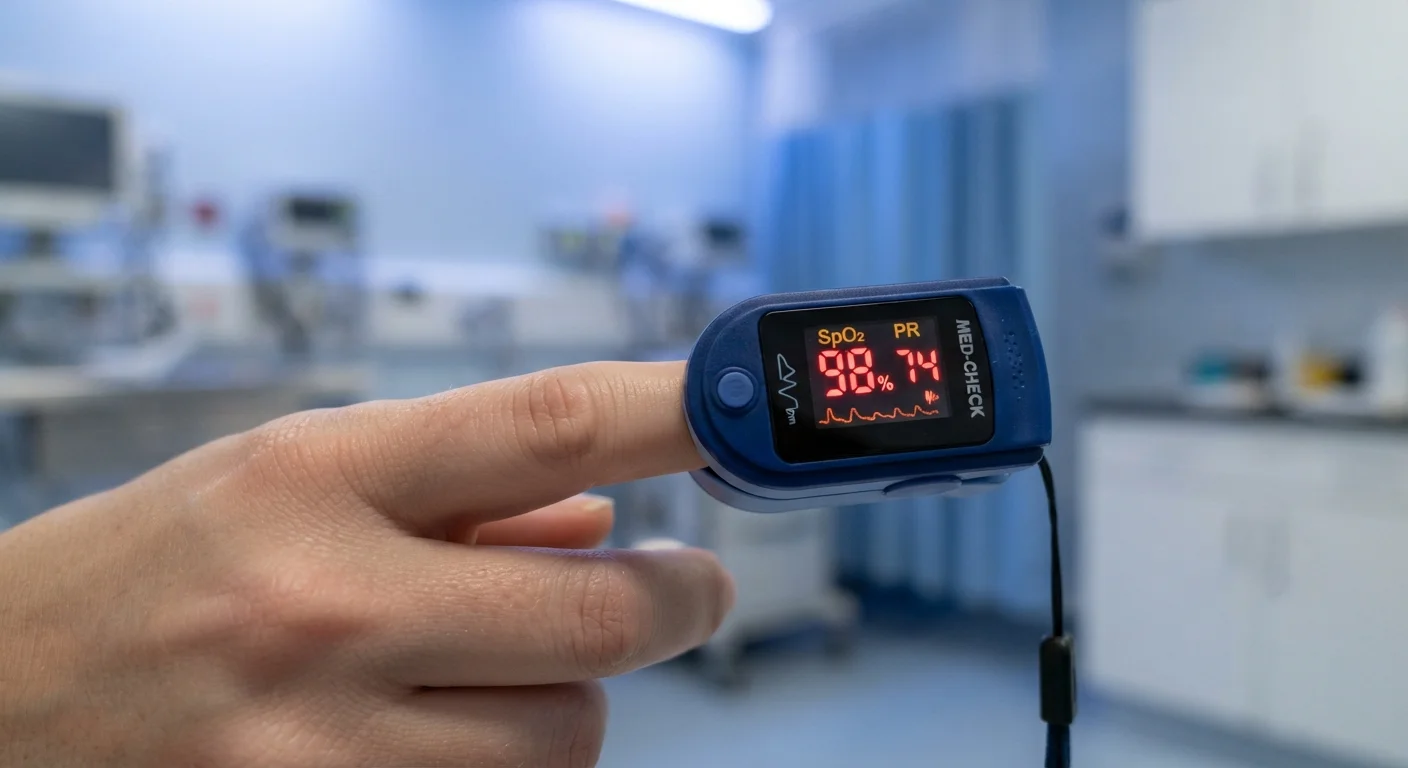
Photo: HerbHealWellness.com | Modern Guide To Wellness editorial
Key Takeaways
- SpO2 measures the proportion of hemoglobin carrying oxygen, not the total amount of oxygen in your blood.
- Normal SpO2 readings in healthy adults generally fall between 95% and 100%.
- Pulse oximeters have documented limitations, including reduced accuracy in people with darker skin tones.
- Readings can be thrown off by nail polish, poor circulation, motion, and carbon monoxide exposure.
- A single reading without clinical context is rarely enough to make a medical determination.
- Always consult a healthcare professional if you are concerned about your oxygen saturation levels.
How a Pulse Oximeter Actually Works
The number on your fingertip comes from a surprisingly elegant piece of physics. A pulse oximeter contains two small LEDs — one emitting red light (around 660 nm) and one emitting infrared light (around 940 nm) — and a photodetector positioned on the opposite side of the finger. Oxygenated hemoglobin and deoxygenated hemoglobin absorb these wavelengths differently, and the device uses the ratio of light absorption to calculate your SpO2 percentage.
The "pulse" part matters too. The device looks specifically at the pulsatile component of the light signal — the rhythmic change caused by each heartbeat — which is why it can also report your heart rate. By focusing on pulsatile changes rather than static tissue, it filters out interference from bone, skin, and venous blood.
This method is called photoplethysmography (PPG), and it's the same underlying technology used in many wearable fitness trackers, though clinical-grade pulse oximeters are held to stricter accuracy standards by the U.S. Food and Drug Administration (FDA).
FDA Clearance vs. Consumer Grade
What SpO2 Actually Represents — and What It Doesn't
SpO2 tells you the percentage of hemoglobin molecules in your blood that are bound to oxygen. It does not tell you the total volume of oxygen in your blood, how efficiently your lungs are ventilating, or whether your tissues are actually receiving and using that oxygen effectively.
Think of it like measuring how full each taxi in a fleet is, without knowing the total number of taxis on the road. If you have anemia — fewer red blood cells overall — your SpO2 could read 98% while your tissues still receive inadequate oxygen, because there are simply fewer carriers doing the work.
95–100%
Normal SpO2 range for healthy adults
According to the American Lung Association, readings in this range are generally considered normal for adults at sea level under typical conditions.
~3x
Higher risk of missed hypoxemia in darker skin tones
A 2020 study published in the New England Journal of Medicine found occult hypoxemia was identified approximately three times more often in Black patients than in white patients using pulse oximeter data.
90%
SpO2 threshold often considered clinically significant
Healthcare providers generally treat SpO2 readings at or below 90% as a threshold warranting prompt clinical evaluation, though individual context always applies.
This distinction is why clinicians rarely rely on SpO2 in isolation. It's one data point in a broader vital signs picture. For context on how it fits alongside other metrics, see the Vital Signs 101 guide covering heart rate, blood pressure, and respiratory rate.
Known Limitations and Sources of Error
Pulse oximeters are useful tools, but they come with well-documented limitations that every user should understand.
- Skin pigmentation: Multiple peer-reviewed studies have found that pulse oximeters can overestimate SpO2 in patients with darker skin tones, a disparity with serious clinical implications that the FDA has publicly acknowledged.
- Poor peripheral circulation: Cold hands, low blood pressure, or conditions like Raynaud's disease can reduce blood flow to the fingertip, making it harder for the device to get an accurate pulsatile signal.
- Motion artifact: Movement during measurement distorts the light signal and produces unreliable readings.
- Nail interference: Dark nail polish, gel nails, and acrylic overlays can block or scatter the light beams.
- Carbon monoxide poisoning: Standard pulse oximeters cannot distinguish carboxyhemoglobin from oxyhemoglobin, meaning readings may appear falsely normal in CO poisoning.
- Methemoglobinemia: Similarly, the presence of methemoglobin — an abnormal form of hemoglobin — can cause readings to converge toward approximately 85%, regardless of actual oxygen status.
Getting the Most Accurate Reading
For a broader comparison of what home monitoring devices can and cannot tell you, the Home Health Monitoring Devices field guide provides useful context.
When Readings Matter Most — and When to Seek Care
Pulse oximeters became household items during the COVID-19 pandemic, when monitoring oxygen saturation at home became a recommended practice for many patients. They are also commonly used by people with chronic obstructive pulmonary disease (COPD), asthma, heart failure, and sleep apnea, often under guidance from a clinician.
A single reading — especially in a non-clinical setting — should always be interpreted carefully. Factors like how long you held still, finger temperature, and device quality all influence the result. When in doubt, repeat the measurement after resting quietly for several minutes with your hand at heart level.
If readings are consistently below 95%, or if you experience symptoms like shortness of breath, confusion, or bluish lips regardless of what your device displays, seek medical evaluation promptly. No consumer device replaces clinical assessment.
This article is for general informational and educational purposes only and does not constitute medical advice. Always consult a qualified healthcare professional for questions about your health or any symptoms you are experiencing.
Frequently Asked Questions
The content on this site is for informational purposes only and is not a substitute for professional advice. Always consult a qualified professional for guidance specific to your situation.