
Before Your First Home Monitoring Session: A Preparation Checklist

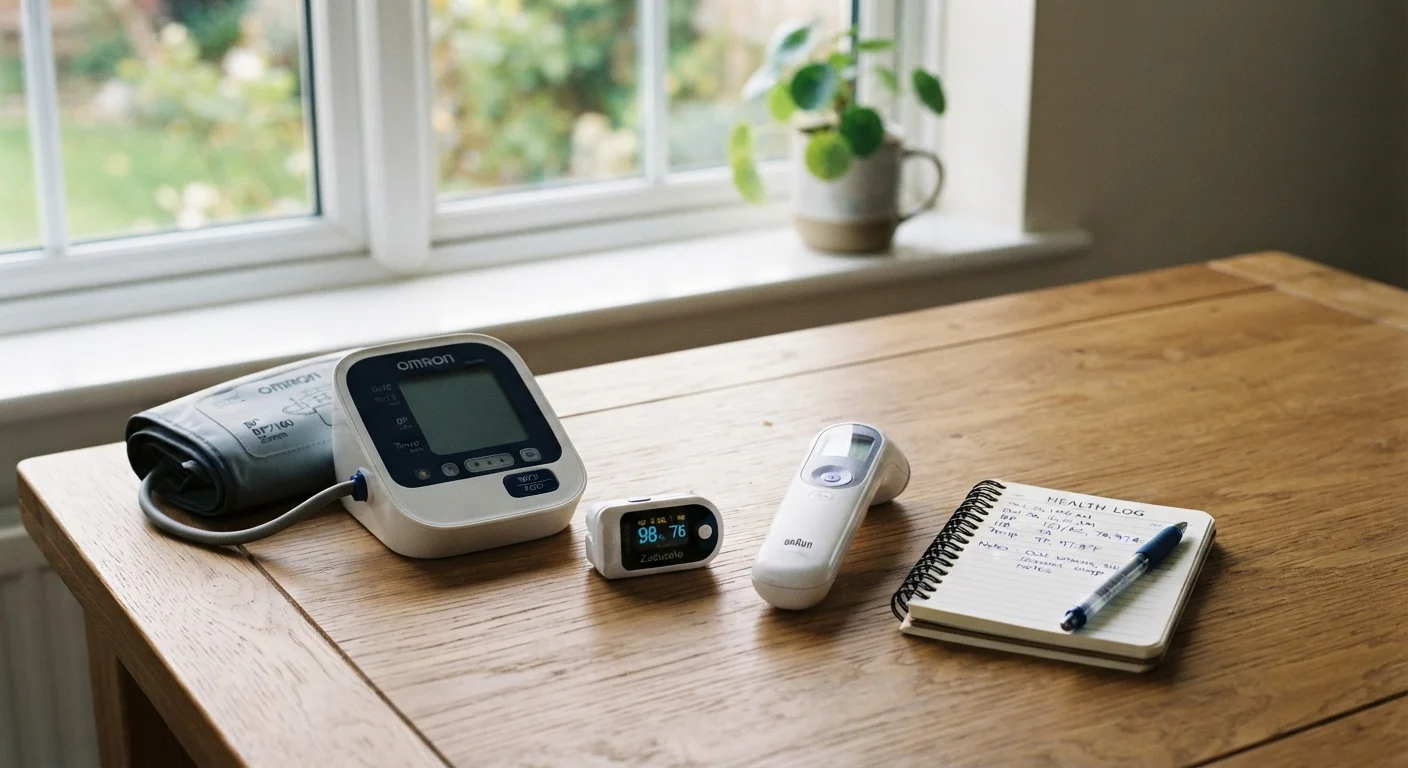
Photo: HerbHealWellness.com | Modern Guide To Wellness editorial
Key Takeaways
- Calibrating and validating your device before the first use is essential for accurate readings.
- Your physical state — posture, activity, caffeine, and rest — directly affects vital sign measurements.
- Environmental factors like temperature, noise, and distractions can skew results.
- Consistent technique matters as much as the device itself for reliable home monitoring.
- All home readings should be shared with a healthcare professional for proper interpretation.
Why Preparation Makes or Breaks Home Monitoring
Home monitoring devices — blood pressure monitors, pulse oximeters, glucose meters, and digital thermometers — are only as reliable as the conditions under which you use them. A single poorly prepared session can produce readings that are inaccurate enough to cause unnecessary concern or, worse, false reassurance.
Before you reach for your device, it helps to understand what you're actually measuring. The field guide to home health monitoring devices covers what each common device captures and why those signals matter. This checklist picks up where that knowledge leaves off — giving you a structured way to prepare your environment, your body, and your equipment before you record a single reading.
None of the steps below require medical training. They do require a few minutes of mindful preparation each time you monitor.
Accuracy Depends on Consistent Conditions
What You'll Need
Gather the following before working through the checklist. Having everything in one place reduces the chance of skipping a step.
Validated home monitoring device
The primary instrument for recording the vital sign you've been advised to track (e.g., upper-arm blood pressure monitor, pulse oximeter, glucose meter).
Logbook or health-tracking app
Records each reading with date, time, and contextual notes to support pattern recognition over multiple sessions.
Device user manual
Provides cuff sizing charts, positioning diagrams, error-code explanations, and maintenance instructions specific to your model.
Spare batteries or charging cable
Ensures the device has sufficient power to complete a full monitoring session without interruption.
Timer or clock
Used to enforce the required rest period before measuring and the one-minute interval between repeat readings.
Consumable accessories (test strips, probe covers, lancets)
Device-specific supplies required for glucose meters, ear thermometers, or other devices that use single-use components.
The Preparation Checklist
Work through each group in order. Items marked must are non-negotiable for accurate results. Should items are strongly recommended for consistency, especially if you plan to track readings over time — as outlined in the guide to building a useful home monitoring routine.
Device Readiness
Body & Physical State
Environment
Technique & Positioning
Recording & Follow-Up
Do Not Self-Diagnose Based on Readings
Special Populations Require Professional Guidance
Logging and Sharing Your Results
A single reading is rarely meaningful on its own. Clinicians typically look for patterns across multiple sessions, taken under comparable conditions. Once you've completed your session, write down the reading, the time, and any notes about how you felt or any conditions that may have affected the result.
If you're preparing for an upcoming appointment, a structured symptom and reading log is a direct asset for your doctor. The symptom tracking checklist for before a doctor's appointment explains exactly what information is most useful to bring. Similarly, if you have a general checkup approaching, the annual checkup preparation checklist covers what records and questions to have ready.
This article is for informational purposes only and does not constitute medical advice. Always consult a qualified healthcare professional before making decisions about your health based on home monitoring readings.
The content on this site is for informational purposes only and is not a substitute for professional advice. Always consult a qualified professional for guidance specific to your situation.