
How Thermometer Types Differ — and When Each One Matters

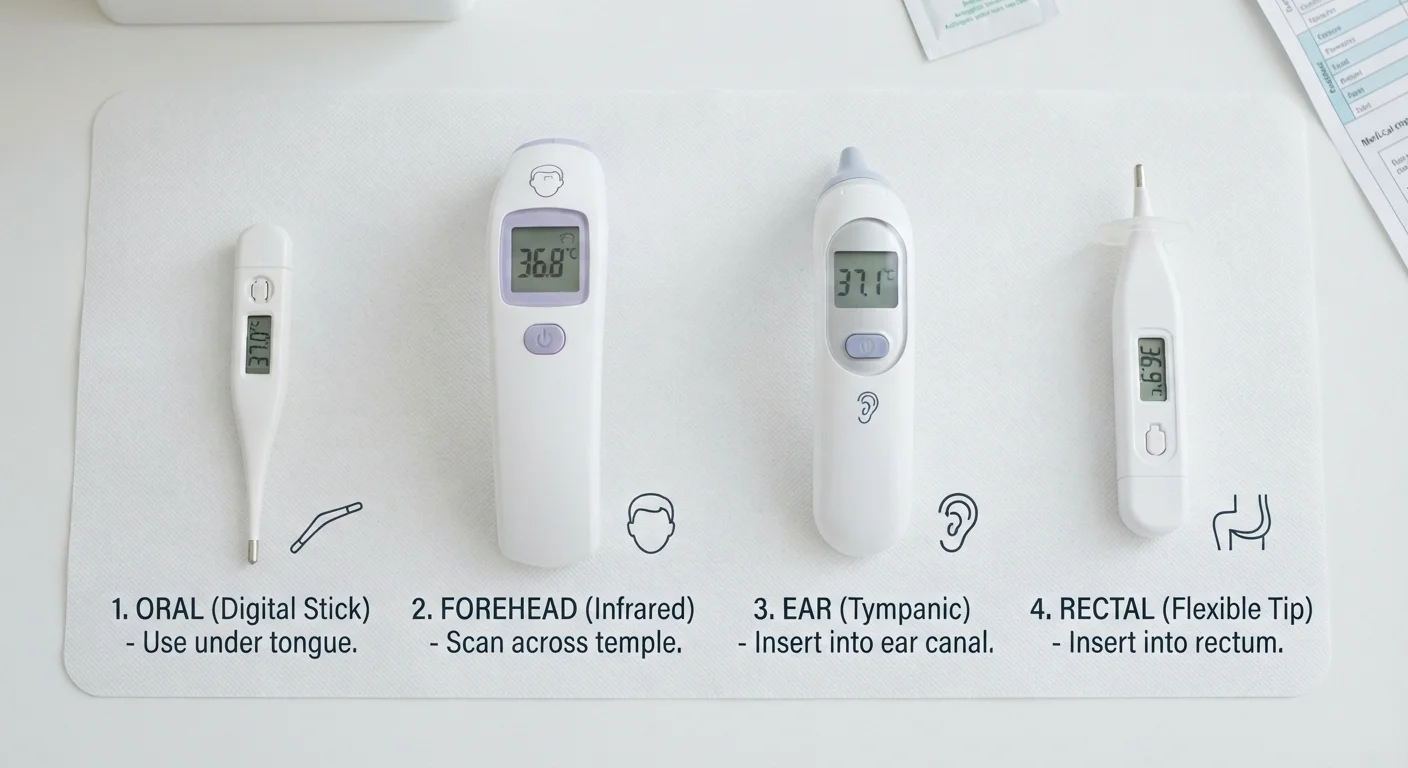
Photo: HerbHealWellness.com | Modern Guide To Wellness editorial
Key Takeaways
- Rectal thermometers provide the most accurate core temperature readings, especially for infants.
- Forehead (temporal artery) thermometers offer speed and convenience but can be affected by environmental conditions.
- Ear thermometers require proper positioning to return reliable readings.
- Oral thermometers remain a dependable standard for cooperative adults and older children.
- No single thermometer type is ideal for every person or situation.
Why Thermometer Type Actually Matters
Temperature is one of the most fundamental vital signs your body produces, and how you measure it can meaningfully affect the number you see. A reading that appears normal on a forehead scan may mask an elevated core temperature — or vice versa. Different thermometer designs access temperature at different body sites, each with its own physiological relationship to true internal (core) body temperature.
Understanding the distinctions matters practically: a reading interpreted in the wrong context could lead to unnecessary worry or, more dangerously, a missed fever. This is especially relevant for caregivers of infants, older adults, and anyone managing a chronic condition. For broader context on monitoring devices and what they actually measure, see our field guide to home health monitoring devices.
The Four Main Thermometer Types Compared
Each thermometer type works by sensing temperature at a specific anatomical site. Here is how they compare across the criteria that matter most in a real-world health context.
| Rectal | Oral | Tympanic (Ear) | Temporal Artery (Forehead) | |
|---|---|---|---|---|
| Accuracy vs. core temp | Highest | High (when done correctly) | Moderate | Moderate |
| Best age group | Infants under 3 years | Adults and older children | 6 months to adult | All ages (screening) |
| Ease of use | Requires care and positioning | Simple if cooperative | Requires correct angle | Very fast and simple |
| Common sources of error | Improper insertion depth | Recent food or drink | Earwax, wrong angle | Sweat, cold environment |
| Invasiveness | Invasive | Minimally invasive | Non-invasive | Non-invasive |
| Typical use setting | Clinical or home (infants) | Home, clinic | Home, clinic | Home, screening, clinic |
It is worth noting that normal body temperature is not a single fixed number. The widely cited 98.6°F (37°C) is an average; healthy individuals can range from approximately 97°F to 99°F (36.1°C to 37.2°C), and temperature varies by time of day, activity level, age, and measurement site.
Reading Each Type Accurately
Rectal: Considered the closest proxy to core temperature, rectal thermometers are routinely recommended by pediatric guidelines for children under 3 years old. Insert only the tip (approximately half an inch) and hold gently in place. Always clean and disinfect thoroughly between uses, and dedicate one thermometer solely to rectal use.
Oral: Place the probe under the tongue, toward the back of the mouth. Wait at least 15 minutes after eating, drinking, or smoking before taking a reading, as any of these can skew results. Oral thermometers are not suitable for young children who cannot hold the probe still.
Tympanic (ear): These infrared devices read heat radiating from the eardrum. Correct positioning is critical — the probe must be aimed at the eardrum, not the ear canal wall. Earwax buildup or a recent ear infection can interfere with accuracy. Pull the ear gently upward and back in adults (or straight back in young children) to straighten the canal before inserting.
Getting the Best Ear Reading
Temporal artery (forehead): Swept across the forehead, these devices detect infrared heat from the temporal artery. They are fast and non-invasive, making them popular for children and screening situations. However, sweat, cold ambient temperatures, or improper technique can produce falsely low readings. Always follow the manufacturer's instructions for sweeping speed and distance.
Special Populations and Clinical Considerations
For infants under 3 months, any reading suggesting fever — generally 100.4°F (38°C) or above — warrants prompt medical attention regardless of thermometer type. Rectal measurement is strongly preferred in this age group for its accuracy. Parents and caregivers should consult a pediatrician about which method is appropriate for their child's age.
For older adults, baseline temperatures may naturally run lower, so even a reading within the typical normal range could represent a fever if it is elevated from the person's individual baseline. Oral or temporal artery thermometers are generally well-tolerated in this group.
People with chronic conditions that affect circulation — such as peripheral vascular disease — may find peripheral measurements less representative of core temperature. Discuss monitoring preferences with a healthcare provider.
This article is for general informational purposes only and does not constitute medical advice. Always consult a qualified healthcare professional regarding fever management, device selection for specific health conditions, or any concerns about temperature readings, particularly in infants, young children, or individuals with serious illness.
The content on this site is for informational purposes only and is not a substitute for professional advice. Always consult a qualified professional for guidance specific to your situation.