
Why Your Pulse Oximeter Reading Might Not Be as Reliable as You Think

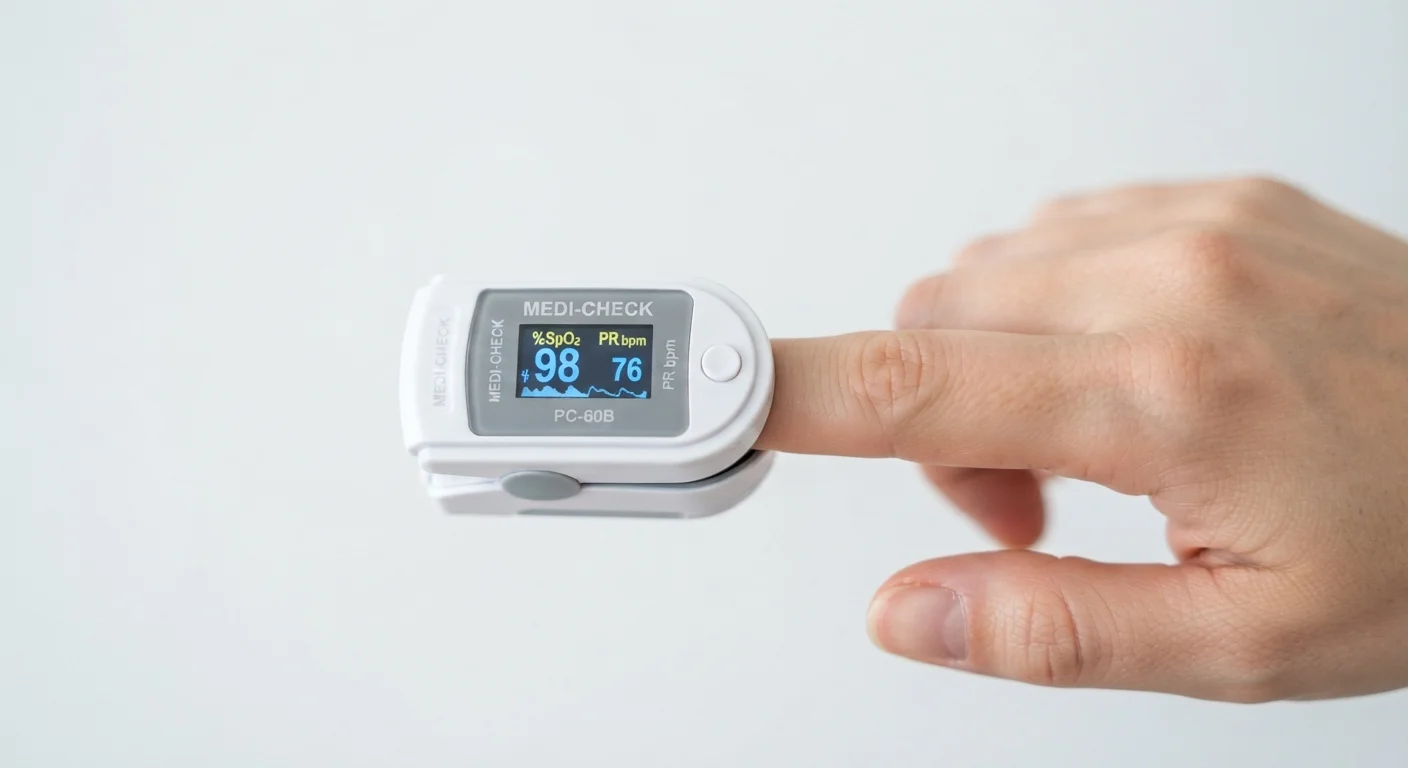
Photo: HerbHealWellness.com | Modern Guide To Wellness editorial
Key Takeaways
- Nail polish, artificial nails, and dark pigmentation can all reduce pulse oximeter accuracy.
- Poor circulation, cold fingers, and motion artifacts frequently produce falsely low or unstable readings.
- A single reading taken incorrectly tells you far less than a steady, properly obtained measurement.
- Pulse oximeters are screening tools — concerning readings should always be confirmed by a clinician.
How Pulse Oximeters Work — and Where They Fall Short
Pulse oximeters estimate blood oxygen saturation (SpO2) by passing two wavelengths of light — red and infrared — through the tissue of your fingertip and measuring how much each wavelength is absorbed. Oxygenated and deoxygenated hemoglobin absorb light differently, and the device uses that difference to calculate a percentage. For most healthy adults in clinical settings, this method is remarkably convenient and reasonably accurate.
The operative word is estimate. Pulse oximeters do not measure oxygen saturation directly from a blood sample; that requires arterial blood gas analysis, a laboratory test. The optical approach used by consumer and clinical-grade finger devices introduces several well-documented vulnerabilities that readers should understand before acting on any reading. For a deeper explanation of what these numbers represent, see what the number on your finger actually measures.
Using a finger with nail polish or artificial nails.
Taking a reading on a cold or poorly perfused finger.
Moving or not keeping the finger still during the reading.
Assuming the device accounts equally for all skin tones.
Reading the number once and treating it as definitive.
What Accurate Readings Actually Require
Getting a trustworthy SpO2 reading is more than clipping a device to your finger and glancing at the screen. Consistency, proper positioning, and an awareness of your own physical state all matter.
~2–4%
Typical accuracy margin for FDA-cleared consumer pulse oximeters
The FDA notes that cleared devices must demonstrate accuracy within ±3–4 percentage points under controlled conditions, meaning a reading of 96% could represent a true saturation anywhere from roughly 92–100%.
3×
Higher odds of occult hypoxemia missed in darker-skinned patients
A 2020 New England Journal of Medicine analysis found patients with darker skin pigmentation were approximately three times more likely to have undetected low oxygen levels based on pulse oximeter readings alone.
If you use a pulse oximeter regularly — for example, to monitor a chronic respiratory condition — keep a simple log of readings taken under the same conditions each time. Note the time, how long you held the device still, and whether you felt warm or cold. Patterns over time are more informative than a single data point. For broader context on home monitoring habits, our field guide to home health monitoring devices covers what each common device actually measures and how to interpret results.
Do Not Delay Emergency Care Based on a Reading
This article is for general informational purposes only and is not a substitute for professional medical advice, diagnosis, or treatment. If you are concerned about your oxygen levels or overall health, consult a qualified healthcare provider.
The content on this site is for informational purposes only and is not a substitute for professional advice. Always consult a qualified professional for guidance specific to your situation.