
Infrared vs. Red Light Therapy: Wavelengths, Depth, and Clinical Use

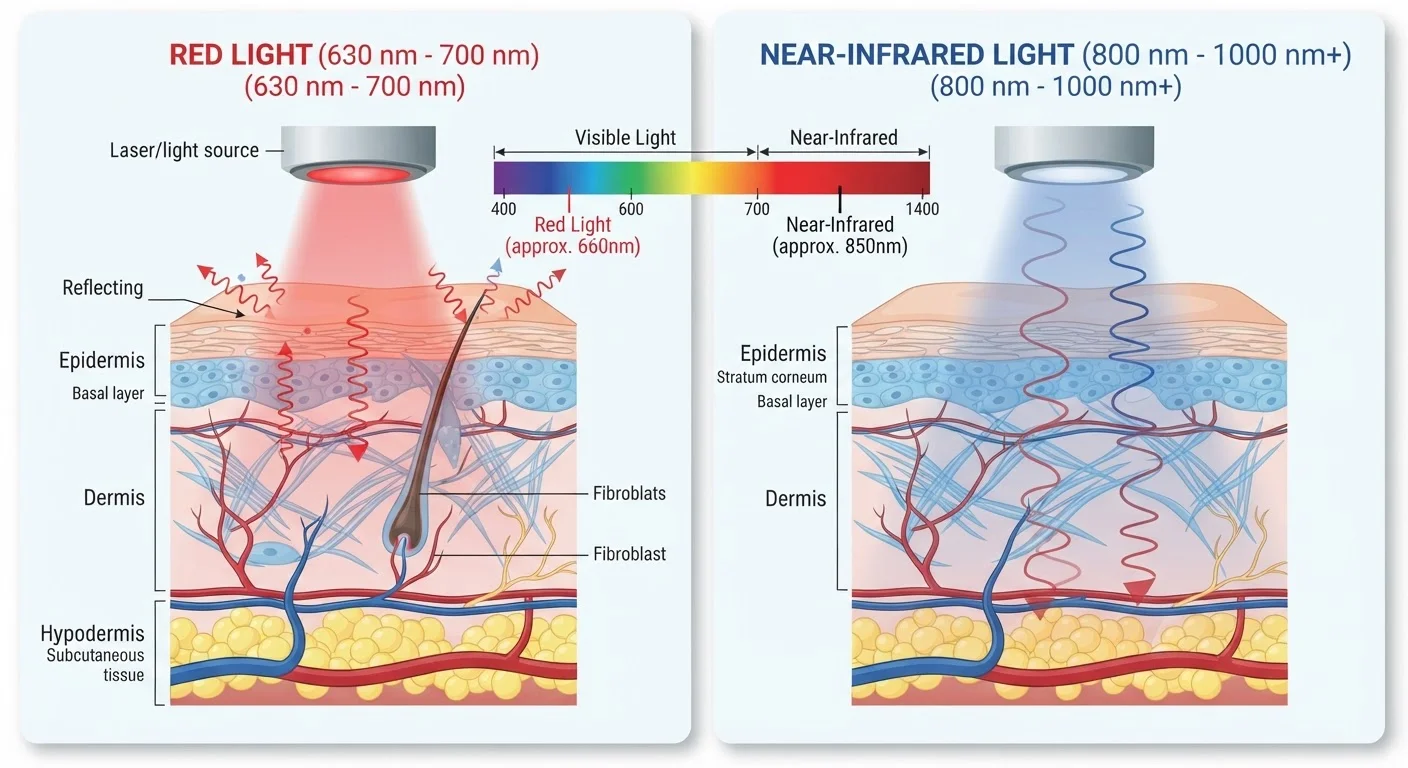
Photo: HerbHealWellness.com | Modern Guide To Wellness editorial
Key Takeaways
- Red light therapy operates at 620–700 nm and primarily affects superficial skin layers.
- Near-infrared light (700–1100 nm) penetrates deeper into muscle, joint, and nerve tissue.
- Both modalities work through photobiomodulation — stimulating cellular energy production.
- Clinical applications differ based on tissue depth: skin concerns favor red light; musculoskeletal issues favor near-infrared.
- Neither modality is a substitute for professional medical diagnosis or treatment.
How Wavelength Determines Penetration Depth
Light therapy devices are defined by their wavelength — measured in nanometers (nm) — which determines how far photons travel into biological tissue. This is not a minor technical detail; it is the core variable that separates one therapeutic application from another.
Red light occupies the 620–700 nm range. At these wavelengths, light is absorbed primarily by the epidermis (outer skin layer) and superficial dermis. This makes it well-suited for applications involving skin cell activity, collagen synthesis, and surface wound healing.
Near-infrared (NIR) light spans roughly 700–1100 nm. Because longer wavelengths scatter less in water-rich tissue, NIR photons travel several centimeters into the body — reaching muscle fibers, tendons, cartilage, peripheral nerves, and even bone surfaces. Clinicians and researchers therefore use NIR wavelengths when the therapeutic target lies beneath the skin.
| Red Light Therapy | Near-Infrared Therapy | |
|---|---|---|
| Wavelength range | 620–700 nm | 700–1100 nm |
| Tissue penetration depth | Superficial (epidermis, upper dermis) | Deep (muscle, tendon, bone surface) |
| Primary cellular target | Skin fibroblasts, keratinocytes | Muscle cells, nerve fibers, chondrocytes |
| Typical clinical uses | Wound healing, skin repair, acne | Musculoskeletal pain, muscle recovery |
| Visibility to the human eye | Visible (red glow) | Mostly invisible above ~780 nm |
| Heat generation | Minimal at therapeutic doses | Mild warmth at higher irradiance |
It is worth noting that "infrared" is a broad category. Far-infrared (above ~1400 nm), used in sauna applications, is absorbed almost entirely at the skin surface and generates heat rather than cellular photochemical effects. Near-infrared is the range most relevant to photobiomodulation therapy.
The Shared Mechanism: Photobiomodulation
Despite their different penetration profiles, both red and near-infrared wavelengths work through the same fundamental mechanism: photobiomodulation (PBM). PBM refers to the process by which light photons are absorbed by photoreceptors within cells — particularly cytochrome c oxidase, an enzyme in the mitochondrial respiratory chain — triggering a cascade of biological responses.
These responses include increased production of adenosine triphosphate (ATP, the cell's energy currency), modulation of reactive oxygen species, and changes in gene expression that can influence inflammation and cell proliferation. For a more detailed examination of the evidence behind this mechanism, see our overview of photobiomodulation research.
Wavelength Windows Matter for Device Selection
The distinction between PBM and simple heat generation matters clinically. Effective photobiomodulation occurs at low irradiance levels — high-powered devices that generate significant heat are operating through a different (thermal) mechanism and carry different risk profiles.
Clinical Applications by Wavelength
Understanding where each wavelength is absorbed translates directly into clinical indications.
Red Light (620–700 nm) Applications
- Superficial wound healing and scar tissue remodeling
- Acne and inflammatory skin conditions (used in dermatology settings)
- Stimulation of fibroblast activity and collagen production in the dermis
- Post-procedural skin recovery in aesthetic medicine
Near-Infrared (700–1100 nm) Applications
- Musculoskeletal pain management — including joint and tendon conditions
- Post-exercise muscle recovery in sports medicine
- Peripheral nerve repair and neuropathic pain (investigational in many contexts)
- Deep tissue inflammation reduction
Some clinical devices deliver both wavelengths simultaneously, targeting layered tissue structures in a single treatment session. This approach is increasingly common in physiotherapy and rehabilitation settings. For context on how other energy-based therapies approach deep tissue, see how therapeutic ultrasound targets soft tissue.
~2–3 cm
Approximate NIR penetration depth in soft tissue
Near-infrared wavelengths around 800–850 nm can reach several centimeters into tissue, depending on the target anatomy and power density, according to peer-reviewed photobiomodulation research.
< 1 mm
Red light penetration into skin
Red light at 660 nm is absorbed predominantly within the epidermis and upper dermis, making depth of penetration a key differentiator from near-infrared wavelengths.
Safety Considerations and When to Consult a Professional
Both red and near-infrared light therapies have favorable safety profiles when devices are used as directed, but neither modality is without contraindications.
Do Not Self-Treat Undiagnosed Conditions
Key safety considerations include:
- Eye protection: Direct or prolonged light exposure to the eyes can cause retinal damage. Protective goggles specific to the device's wavelength output are required.
- Photosensitizing medications: Certain drugs — including some antibiotics and chemotherapy agents — increase light sensitivity. Disclose all medications to your provider before beginning any light therapy.
- Active cancer or malignancy: Stimulating cellular proliferation in areas of known or suspected malignancy is generally contraindicated.
- Pregnancy: Insufficient safety data exists; pregnant individuals should consult a healthcare provider before use.
Light therapy devices vary considerably in power output, treatment area, and intended use. Clinical devices operated by trained practitioners differ significantly from consumer products. Neither category replaces a professional evaluation of the underlying condition being treated.
This article is for general informational purposes only and does not constitute medical advice. Always consult a qualified healthcare professional before beginning any new therapeutic modality or if you have questions about symptoms or treatment.
The content on this site is for informational purposes only and is not a substitute for professional advice. Always consult a qualified professional for guidance specific to your situation.