
Photobiomodulation: What the Research Says About Low-Level Light Therapy

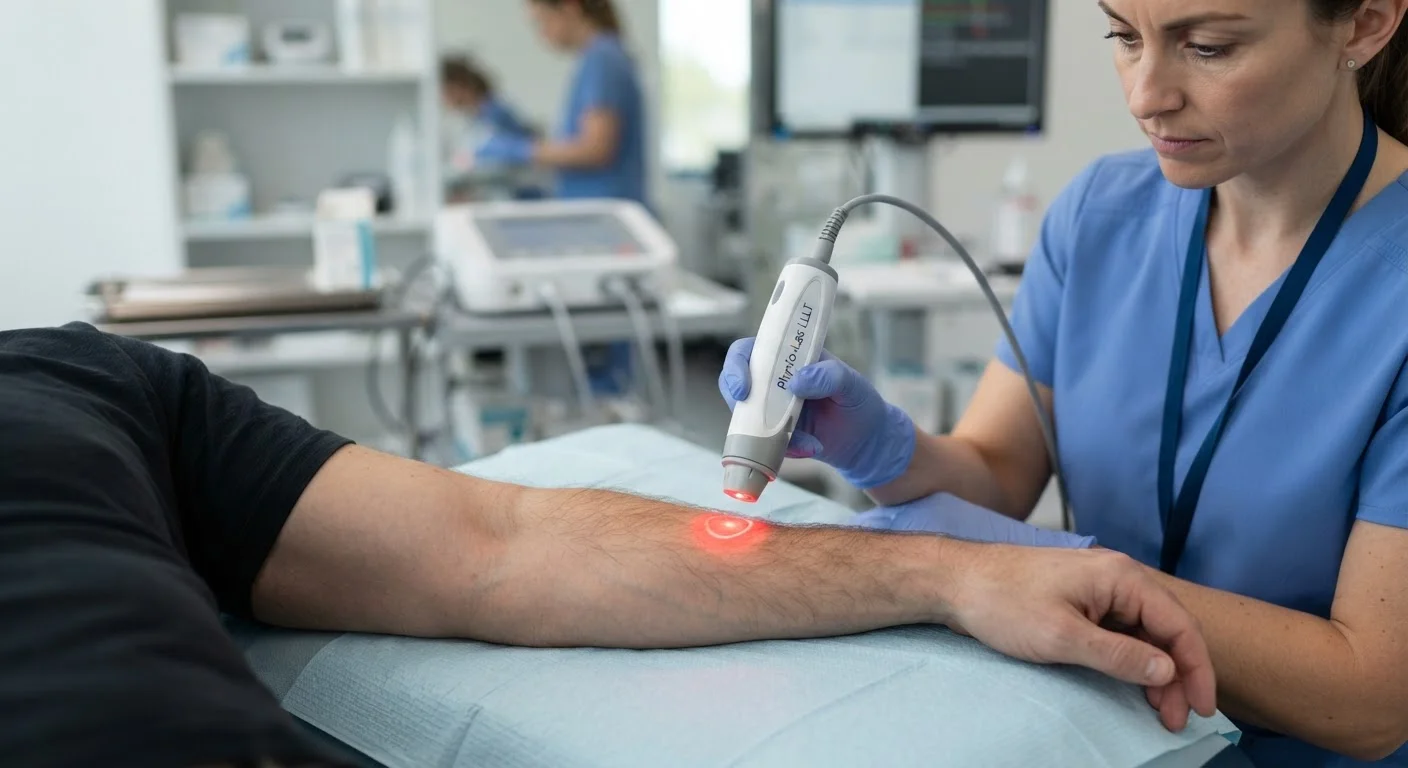
Photo: HerbHealWellness.com | Modern Guide To Wellness editorial
What Is Photobiomodulation?
Photobiomodulation (PBM) — also called low-level laser therapy (LLLT) or low-level light therapy (LLLT) — refers to the application of low-intensity light, typically in the red (620–700 nm) or near-infrared (700–1100 nm) wavelength range, to stimulate biological processes in tissue. Unlike surgical lasers or intense pulsed light devices, PBM devices do not heat or ablate tissue. Instead, they deliver energy at levels intended to trigger cellular responses without causing damage.
The therapy is delivered through handheld wands, pads, or fixed emitters using either laser diodes or light-emitting diodes (LEDs). Clinicians use it for applications ranging from musculoskeletal pain to wound healing. For a detailed look at how wavelength determines how deeply light penetrates tissue, see our guide on infrared vs. red light therapy.
| Therapy type | Non-thermal, non-ablative light-based treatment |
| Common wavelength ranges | Red: 620–700 nm; Near-infrared: 700–1100 nm |
| Device types | Laser diodes, LEDs (wands, pads, fixed emitters) |
| Strongest evidence for | Neck pain, oral mucositis, some wound healing (Based on systematic review consensus) |
| Primary proposed mechanism | Mitochondrial photoreception via cytochrome c oxidase |
| Regulatory status (US) | Various devices cleared by the FDA for specific indications (U.S. Food and Drug Administration) |
How PBM Is Thought to Work
The dominant proposed mechanism centers on mitochondrial photoreception. Research suggests that a mitochondrial enzyme called cytochrome c oxidase absorbs photons in the red and near-infrared spectrum, triggering a downstream cascade that may include increased adenosine triphosphate (ATP) production, modulation of reactive oxygen species, and changes in nitric oxide release. These cellular-level effects are hypothesized to support tissue repair, reduce inflammation, and alter pain signaling.
It is important to note that while this mechanism is widely cited, the complete picture of how light interacts with tissue at a biochemical level remains an active area of investigation. Not all proposed effects have been confirmed across human clinical trials.
Photobiomodulation (PBM)
The use of low-intensity light — from lasers or LEDs — to stimulate cellular activity without generating heat or tissue damage. Also referred to as low-level laser therapy (LLLT) or low-level light therapy.
Cytochrome c oxidase
An enzyme in mitochondria believed to act as a primary photoreceptor for red and near-infrared light. Its activation is central to the leading hypothesis explaining how PBM produces biological effects.
Near-infrared (NIR) light
Light in the 700–1100 nm wavelength range, just beyond what the human eye can see. NIR wavelengths penetrate deeper into tissue than visible red light, making them useful for targeting muscle and joint structures.
Oral mucositis
Painful inflammation and ulceration of the mouth lining, commonly caused by chemotherapy or radiation therapy. It is one of the indications for which PBM has the most clinical evidence.
Power density (irradiance)
The amount of light energy delivered per unit area per unit time, measured in milliwatts per square centimeter (mW/cm²). It is one of several dosage parameters that significantly affect PBM treatment outcomes.
What the Clinical Evidence Shows
The evidence base for PBM is uneven across applications. The strongest clinical support exists for a handful of specific indications:
- Neck pain and musculoskeletal conditions: Multiple systematic reviews, including analyses published in major physical therapy and pain management journals, report modest but statistically significant short-term reductions in pain compared to sham treatment.
- Oral mucositis prevention: The use of PBM to reduce mouth sores caused by cancer chemotherapy has received formal support from several oncology organizations and is considered one of the more robustly evidenced applications.
- Wound healing: Some controlled trials support accelerated healing of chronic wounds and diabetic ulcers, though study quality varies considerably.
Comparatively, evidence for traumatic brain injury, depression, and cognitive enhancement remains highly preliminary. Readers encountering claims about these applications should look for peer-reviewed, controlled trial data before drawing conclusions.
~400+
Randomized controlled trials on PBM published to date
A 2021 systematic review noted several hundred RCTs across musculoskeletal, wound, and neurological applications, though methodological quality varies widely.
~30%
Reduction in oral mucositis severity reported in supported trials
Multiple oncology clinical guidelines cite PBM as a preventive intervention for chemotherapy-induced oral mucositis based on pooled trial data.
Limitations and Safety Considerations
Several factors complicate interpreting PBM research. Dosage parameters — wavelength, power density, treatment duration, and pulse frequency — vary widely across studies, making it difficult to pool results or establish universal protocols. Many trials are small, and blinding participants to whether they received active treatment is methodologically challenging with light-based devices.
From a safety standpoint, PBM is generally regarded as low-risk when used by trained clinicians with appropriate eye protection, as direct exposure of the eyes to laser diodes carries a genuine hazard. Contraindications typically cited in clinical literature include use over active cancerous lesions, the thyroid gland, or developing fetuses, though evidence for some of these restrictions is largely precautionary rather than harm-documented.
PBM is distinct from other physical modalities such as therapeutic ultrasound, which uses mechanical sound-wave energy rather than light to affect soft tissue. The two are sometimes used in combination at rehabilitation clinics.
This article is for general informational purposes only and does not constitute medical advice. Always consult a qualified healthcare professional before beginning, changing, or stopping any treatment.
The content on this site is for informational purposes only and is not a substitute for professional advice. Always consult a qualified professional for guidance specific to your situation.