
TENS and EMS: Two Forms of Electrical Stimulation With Very Different Purposes

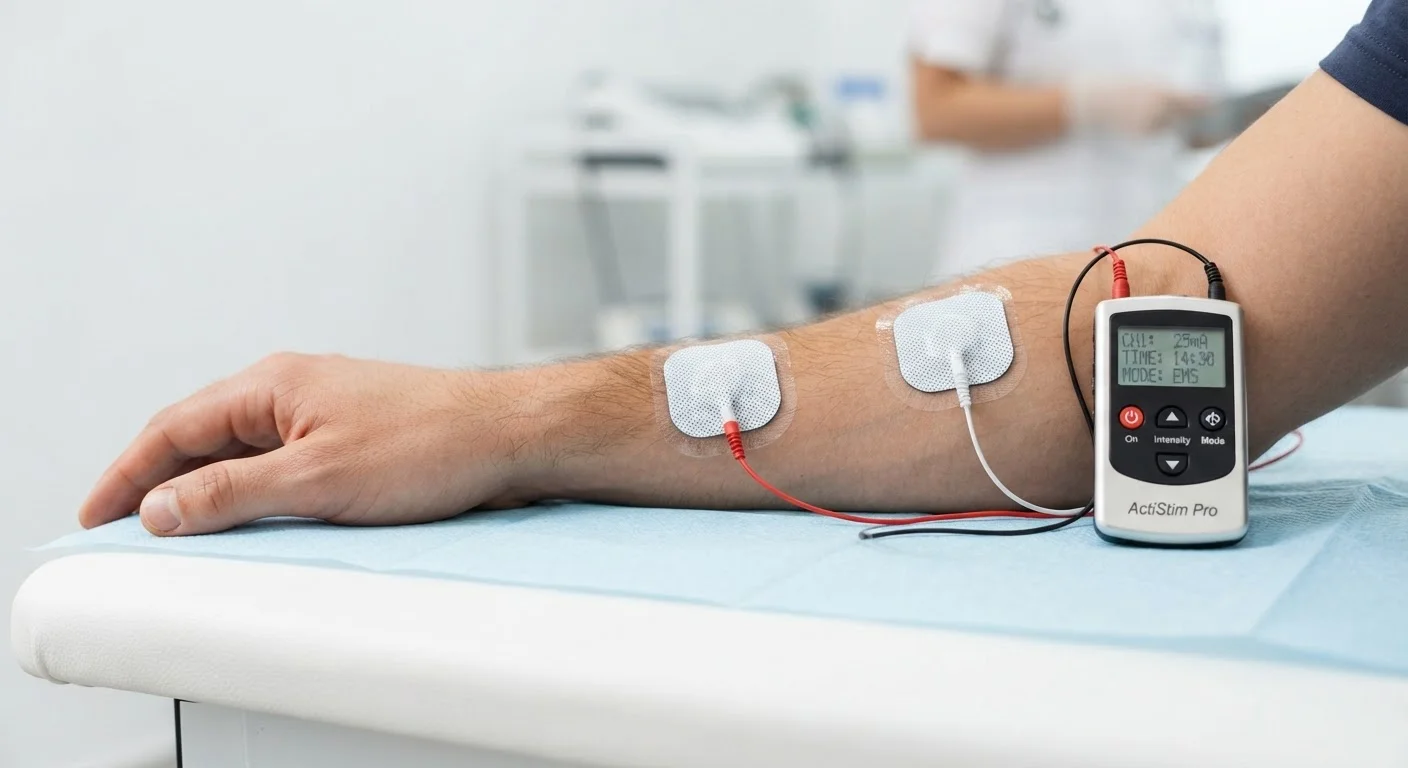
Photo: HerbHealWellness.com | Modern Guide To Wellness editorial
Key Takeaways
- TENS works on sensory nerves to block or modulate pain signals; it does not cause significant muscle contractions.
- EMS works on motor nerves and muscle tissue directly, producing visible contractions for strength or re-education goals.
- Both modalities use surface electrodes and low-level electrical current, but their waveforms, frequencies, and therapeutic targets differ substantially.
- TENS is most commonly used for pain management; EMS is most commonly used in rehabilitation and sports medicine contexts.
- Neither device is appropriate for everyone — contraindications include pacemakers, pregnancy, and certain skin conditions.
- A healthcare professional should guide device selection, electrode placement, and treatment parameters for any therapeutic use.
What Each Technology Actually Does
Despite sharing a similar appearance — small devices, adhesive electrode pads, adjustable intensity dials — TENS and EMS operate on fundamentally different biological targets and serve distinct clinical purposes. Understanding this distinction starts at the level of the nervous system.
TENS delivers low-voltage electrical pulses through the skin to stimulate sensory nerves. The prevailing explanation for its pain-relieving effect draws on the gate control theory of pain, proposed by Melzack and Wall in 1965. According to this model, activating large-diameter sensory nerve fibers can reduce the transmission of pain signals carried by smaller pain fibers to the brain — effectively "closing the gate" on the perception of pain. At higher frequencies, TENS may also encourage the release of endorphins, the body's natural pain-modulating compounds. Crucially, standard TENS settings are calibrated to stay below the motor threshold, meaning the muscles should not contract noticeably during use. For a broader look at how these and similar tools fit into clinical care, see our overview of therapeutic devices.
EMS, by contrast, intentionally crosses the motor threshold. It targets motor nerves — and sometimes muscle fibers directly — to generate visible, measurable muscle contractions. This mimics the voluntary contraction signal that the brain would normally send. EMS is applied in physical therapy to re-educate muscles that have lost neural input after injury or surgery, to slow muscle atrophy during immobilization, and to support strength recovery. In sports contexts, it is sometimes used alongside active training under professional supervision.
| Criterion | TENS | EMS |
|---|---|---|
| Primary target | Sensory nerves | Motor nerves / muscle tissue |
| Main therapeutic goal | Pain modulation and relief | Muscle contraction and strengthening |
| Typical frequency range | 1–150 Hz | 20–80 Hz |
| Visible muscle contraction | Not intended; usually absent | Intentional and expected |
| Common clinical settings | Pain clinics, home use, physiotherapy | Rehabilitation, sports medicine, physical therapy |
| Sensation during use | Tingling or buzzing | Pulsing contraction or muscle twitch |
| Self-administration | Common with portable home units | Possible but typically clinician-supervised |
Key Differences in Parameters and Application
The practical differences between TENS and EMS become clearer when examining how each is actually set up and delivered.
TENS units typically operate at frequencies between 1 and 150 Hz (hertz), with pulse widths ranging from 50 to 250 microseconds. High-frequency TENS (around 80–150 Hz) is often associated with fast-acting, shorter-duration relief; low-frequency TENS (1–10 Hz) may produce a stronger endorphin-mediated effect that lasts longer after treatment ends. Intensity is kept comfortable — users typically feel a tingling or buzzing sensation, not a forceful jolt. Common misunderstandings about TENS machines explores why many people hold unrealistic expectations about what these devices can and cannot achieve.
EMS devices generally use lower frequencies — often between 20 and 80 Hz — but higher current amplitudes to recruit motor units and produce contractions. Sessions typically involve timed cycles of contraction and rest to mimic natural muscle exertion and allow recovery between stimuli. Electrode placement for EMS targets specific muscle bellies rather than the nerve trunks or pain sites that TENS typically addresses.
1965
Year gate control theory was proposed
Melzack and Wall introduced the gate control theory of pain in 1965, forming a key conceptual basis for TENS therapy.
1–150 Hz
TENS operating frequency range
Clinical TENS devices span a wide frequency range, with high and low settings producing different physiological and pain-relief effects.
20–80 Hz
Typical EMS frequency for muscle activation
EMS devices used in rehabilitation generally operate within this range to produce sustained, fatigue-managed muscle contractions.
It is worth noting that some modern units marketed as "combination devices" can deliver both TENS and EMS programs, switching between modes. However, the underlying mechanisms remain distinct, and using the wrong mode for a given goal — say, using an EMS program when pain relief is the aim — will not produce the intended outcome.
Safety, Contraindications, and When to Consult a Professional
Both TENS and EMS are generally considered low-risk when used correctly, but neither is appropriate for everyone. Shared contraindications include the presence of an implanted electrical device such as a pacemaker or defibrillator, active cancer in or near the treatment area, application over broken or irritated skin, and use during pregnancy (particularly over the abdomen or lower back). Electrode placement over the front of the neck, eyes, or directly over the spine is also typically contraindicated.
When a Device Is Labeled "Combination TENS/EMS"
Because EMS produces muscle contractions, it carries additional considerations: stimulating muscles around an unstable fracture site or recent surgical repair can be harmful. Individuals with epilepsy, deep vein thrombosis, or active infection should also avoid electrical stimulation unless specifically cleared by a clinician.
A physical therapist, physiatrist, or other licensed healthcare provider is best positioned to determine which modality — TENS, EMS, or a related technology such as neuromuscular electrical stimulation (NMES) — is appropriate for a specific condition, and to guide correct electrode placement and intensity settings. Self-treating with either device without professional guidance can result in missed diagnoses, delayed appropriate care, or unintentional tissue irritation.
This article is for general informational and educational purposes only and does not constitute medical advice. Always consult a qualified healthcare professional before using any therapeutic device, particularly if you have an existing health condition or are recovering from injury or surgery.
The content on this site is for informational purposes only and is not a substitute for professional advice. Always consult a qualified professional for guidance specific to your situation.