
Neuromuscular Electrical Stimulation in Rehabilitation: A Closer Look

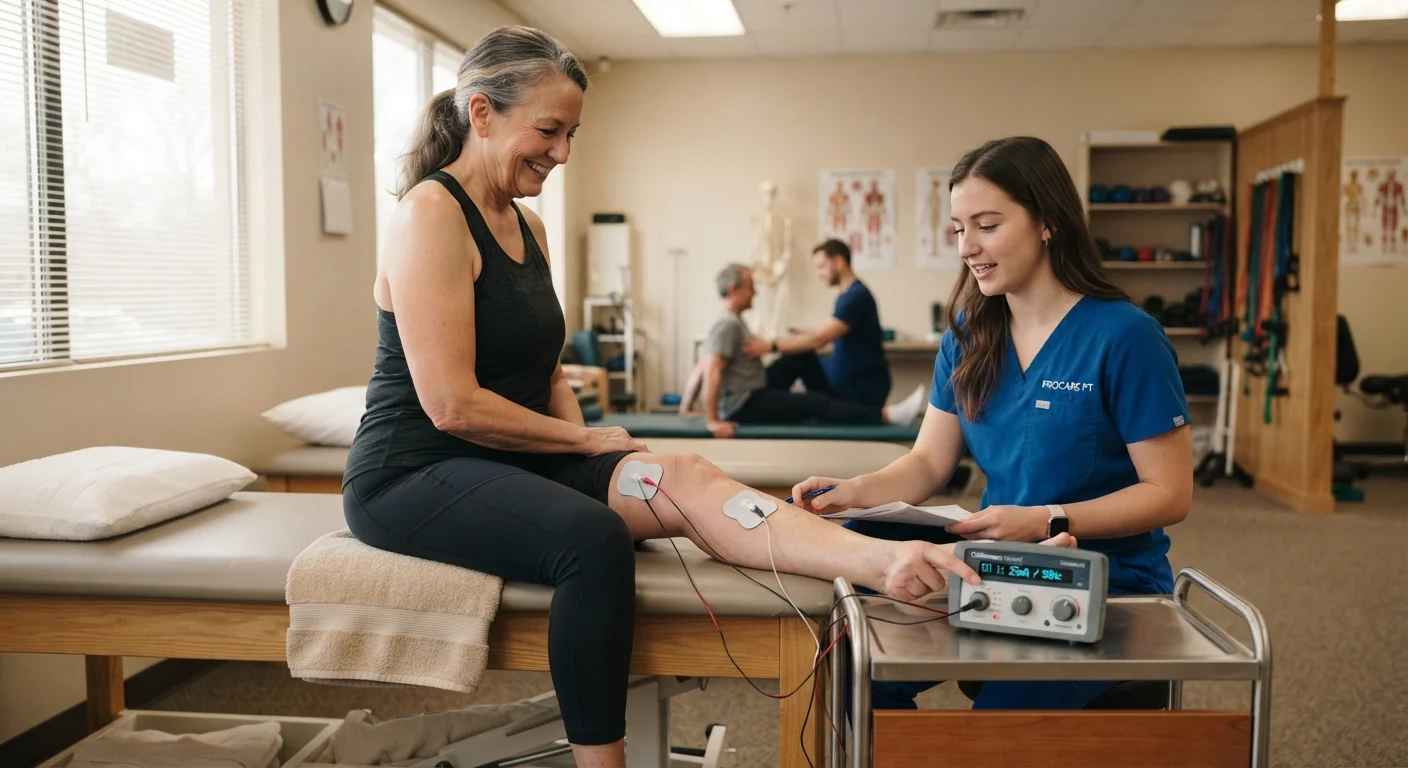
Photo: HerbHealWellness.com | Modern Guide To Wellness editorial
Key Takeaways
- NMES uses low-level electrical pulses to trigger muscle contractions that the patient cannot produce voluntarily.
- It is used clinically after surgery, stroke, or prolonged immobility to slow muscle loss and rebuild strength.
- A trained clinician determines electrode placement, waveform, and intensity — these are not arbitrary settings.
- NMES differs from TENS, which targets pain signals rather than muscle activation.
- Certain conditions, including pacemakers and active implants, are contraindications for NMES use.
What Is Neuromuscular Electrical Stimulation?
Neuromuscular electrical stimulation — commonly abbreviated as NMES — is a therapeutic technique that uses low-level electrical current delivered through surface electrodes to elicit involuntary muscle contractions. Unlike exercise, which depends on signals the brain sends voluntarily, NMES bypasses that process by directly stimulating the motor nerves that tell muscles to contract.
Clinicians use NMES as part of structured rehabilitation programs, particularly when a patient cannot generate adequate muscle activity on their own — such as after surgery, significant injury, or neurological impairment. It is one of several forms of electrical stimulation used in clinical practice. For a broader overview of how therapeutic devices function, see Therapeutic Devices Explained.
Motor neuron
A nerve cell that carries signals from the spinal cord or brain to a muscle, instructing it to contract.
Muscle atrophy
The loss of muscle mass and strength that occurs when muscles are not used, often due to injury, immobility, or neurological conditions.
Electrode
A conductive pad placed on the skin that transmits electrical current from a device into the underlying tissue.
Tetanic contraction
A sustained, forceful muscle contraction produced when electrical pulses are delivered rapidly enough that the muscle cannot fully relax between them.
Volitional overlay
A rehabilitation technique where a patient deliberately tries to contract a muscle at the same time as an NMES device stimulates it, reinforcing the brain-muscle connection.
How NMES Works in the Body
NMES devices generate an electrical waveform — typically a pulsed current — that travels through electrode pads placed on the skin above the target muscle. The current activates the motor neurons beneath the skin, causing the muscle fibers they innervate to contract in a pattern similar to voluntary movement.
Several parameters determine the effect: pulse frequency influences whether the contraction is a twitch or a sustained tetanic contraction; pulse width affects which nerve fibers are recruited; and intensity controls the force of contraction. Clinicians calibrate these settings based on the specific therapeutic goal — whether that is preventing atrophy, re-educating motor patterns, or improving circulation.
It is important to understand how NMES differs from related technologies. TENS and EMS serve very different purposes — TENS modulates pain pathways while EMS (of which NMES is a clinical subset) focuses on muscular activation.
Ask About Parameter Rationale
Conditions NMES Is Used to Address
NMES has an established role in rehabilitation across several clinical contexts:
- Post-surgical recovery: After procedures such as knee replacement or anterior cruciate ligament reconstruction, quadriceps inhibition is common. NMES helps restore muscle activation during early recovery.
- Stroke rehabilitation: When voluntary motor control is impaired following a stroke, NMES can help re-engage weakened muscles and support motor relearning.
- Spinal cord injury: In incomplete spinal cord injuries, NMES may help maintain muscle mass and support functional movement training.
- Prolonged immobility: Extended bed rest leads to rapid muscle atrophy. NMES is sometimes used in intensive care settings to slow this process.
- Dysphagia: Specialized NMES protocols have been developed to support the swallowing muscles in patients with swallowing difficulties, though evidence is still evolving in this area.
These applications are determined by a licensed clinician. NMES is not a self-prescribed treatment.
What to Expect During an NMES Session
During a clinical NMES session, a physical therapist or other trained provider will place adhesive electrode pads on specific sites over the target muscle group. Placement accuracy matters significantly — even small deviations affect which muscle fibers are recruited.
Once electrodes are positioned, the device is activated at a low intensity and gradually increased until a visible or palpable muscle contraction occurs. The sensation is often described as a buzzing or rhythmic tightening. Patients are frequently asked to attempt a voluntary contraction simultaneously, a technique known as volitional overlay, which may enhance motor relearning.
Sessions typically run 15 to 30 minutes. The number of sessions depends on the clinical goal and the patient's response. Progress is monitored through functional assessments rather than device readings alone.
NMES Is One Part of a Larger Plan
Safety Considerations and Who Should Avoid It
NMES is generally well tolerated when properly administered, but it is not appropriate for everyone. Standard contraindications include:
- Implanted cardiac devices such as pacemakers or defibrillators
- Active deep vein thrombosis (DVT) in the treatment area
- Epilepsy or seizure disorders
- Placement over cancerous tissue or active infection sites
- Use during pregnancy without explicit clinical guidance
Skin irritation at electrode sites is the most commonly reported side effect. Burns can occur if electrodes are damaged or incorrectly applied — a risk that underscores the importance of professional oversight. This concern applies equally to related consumer devices; readers interested in home-use considerations may find common mistakes with home electrical stimulators useful context.
Do Not Self-Prescribe NMES for Rehabilitation
This article is for informational purposes only and is not a substitute for professional medical advice, diagnosis, or treatment. Always consult a qualified healthcare provider before beginning any rehabilitation therapy.
Frequently Asked Questions
The content on this site is for informational purposes only and is not a substitute for professional advice. Always consult a qualified professional for guidance specific to your situation.