
Generic vs. Brand-Name Drugs: What Bioequivalence Actually Guarantees

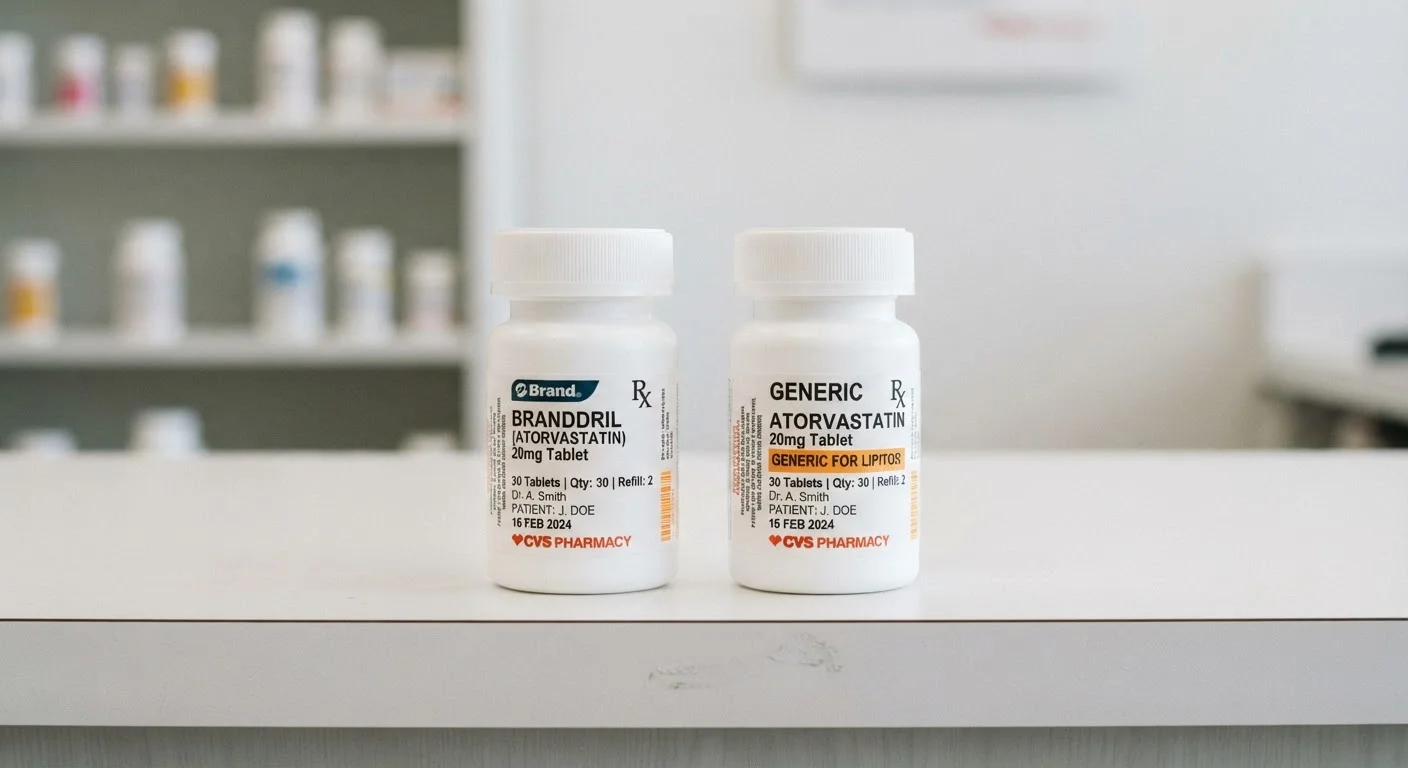
Photo: HerbHealWellness.com | Modern Guide To Wellness editorial
Key Takeaways
- FDA bioequivalence standards require generics to deliver the same active ingredient at a similar rate and extent as the brand-name original.
- Inactive ingredients (excipients) can legally differ, which occasionally affects tolerability for sensitive individuals.
- Narrow therapeutic index drugs like warfarin and levothyroxine warrant extra attention when switching between formulations.
- The FDA's Orange Book lists all approved generic drugs and their therapeutic equivalence ratings.
- Most patients can safely switch between brand-name and generic versions without any meaningful change in clinical effect.
What Bioequivalence Actually Means
When the FDA approves a generic drug, it requires manufacturers to demonstrate bioequivalence — a scientific standard confirming that the generic delivers the same active ingredient into the bloodstream at a similar rate and to a similar extent as the original brand-name product. This is measured through pharmacokinetic studies tracking two key values: Cmax (peak blood concentration) and AUC (total drug exposure over time).
The FDA requires the generic's Cmax and AUC to fall within 80–125% of the brand-name drug's values — a range deliberately designed to be clinically insignificant for most medications. Importantly, the average generic actually performs within 3–5% of its brand-name counterpart in practice; the wider range is a statistical boundary, not a target.
What bioequivalence does not guarantee is that every component of the pill is identical. Inactive ingredients — known as excipients — such as binders, fillers, colorants, and coatings can differ legally between formulations. For the vast majority of patients, this has no clinical consequence. But for individuals with allergies, intolerances, or highly sensitive metabolic profiles, these differences can occasionally matter. Individual factors like genetics and liver function further influence how any formulation behaves in a specific person's body.
| Criterion | Brand-Name Drug | Generic Drug |
|---|---|---|
| Active ingredient | Original patented compound | Same active ingredient, same strength |
| FDA approval pathway | New Drug Application (NDA) | Abbreviated New Drug Application (ANDA) |
| Bioequivalence required | N/A (original standard) | Yes — Cmax & AUC within 80–125% |
| Inactive ingredients | Proprietary formulation | May differ; legally permitted |
| Typical cost difference | Higher (R&D and patent costs) | Typically 80–85% less expensive |
| Narrow therapeutic index caution | Stable if no switch occurs | Monitor if switching; consult prescriber |
| Orange Book equivalence rating | Reference listed drug (RLD) | AB-rated when therapeutically equivalent |
Where Real Differences Can Emerge
For most medications, switching between brand-name and generic is clinically seamless. However, a specific category — narrow therapeutic index (NTI) drugs — warrants closer attention. These are medications where a small difference in blood concentration can tip from therapeutic to toxic, or from effective to ineffective. Common examples include warfarin (a blood thinner), levothyroxine (thyroid hormone), and certain antiepileptics.
The FDA acknowledges this and has issued additional guidance for NTI drugs, but it does not categorically prohibit generic substitution. The practical takeaway: if you are stable on a particular formulation of an NTI drug, any switch — including brand-to-generic, generic-to-brand, or even one generic to another — should involve a conversation with your prescriber and follow-up monitoring.
90%+
Share of US prescriptions filled as generics
According to the FDA, generics account for more than 90% of prescriptions dispensed in the United States.
80–125%
FDA bioequivalence window for Cmax and AUC
This is the regulatory boundary, not typical performance — most approved generics fall within 3–5% of the brand reference.
~3–5%
Average deviation of generic vs. brand pharmacokinetics
FDA analyses of approved generics consistently show average differences well below the maximum permitted range.
Excipient differences can also surface in ways unrelated to drug efficacy. A patient with lactose intolerance, for example, may react to a filler used in one formulation but not another. Similarly, dye-free or gluten-free preferences can vary between products. These are real but manageable considerations — your pharmacist can review the inactive ingredient list for any approved drug. For a broader look at how two drugs can interact once they share a biological pathway, see our article on how mixing medications can change drug behavior.
What to Do After Switching Formulations
Making an Informed Decision With Your Care Team
The FDA's Orange Book (Approved Drug Products with Therapeutic Equivalence Evaluations) is a publicly accessible database that lists every FDA-approved generic drug alongside its therapeutic equivalence rating. A rating of AB means the generic is expected to be therapeutically equivalent to the brand-name version — a useful resource if you want to verify a specific substitution.
For most people, generics represent a safe, evidence-backed choice. Understanding why drug prices vary so widely can help you have more productive conversations about cost and access. If you've recently switched formulations and noticed a change in how you feel — whether a new side effect or a sense that the medication is less effective — report it to your pharmacist or prescriber rather than self-adjusting. They can review the inactive ingredients, check your formulation's equivalence rating, and determine whether a change is warranted.
No medication decision should be made in isolation. This is general health information to support informed conversations — not a substitute for guidance from a licensed pharmacist or prescribing clinician who knows your full medical history.
This article is for informational purposes only and is not medical advice. Always consult a qualified healthcare professional before making changes to your medications.
The content on this site is for informational purposes only and is not a substitute for professional advice. Always consult a qualified professional for guidance specific to your situation.