
Drug Interactions Demystified: Why Mixing Medications Can Change Everything

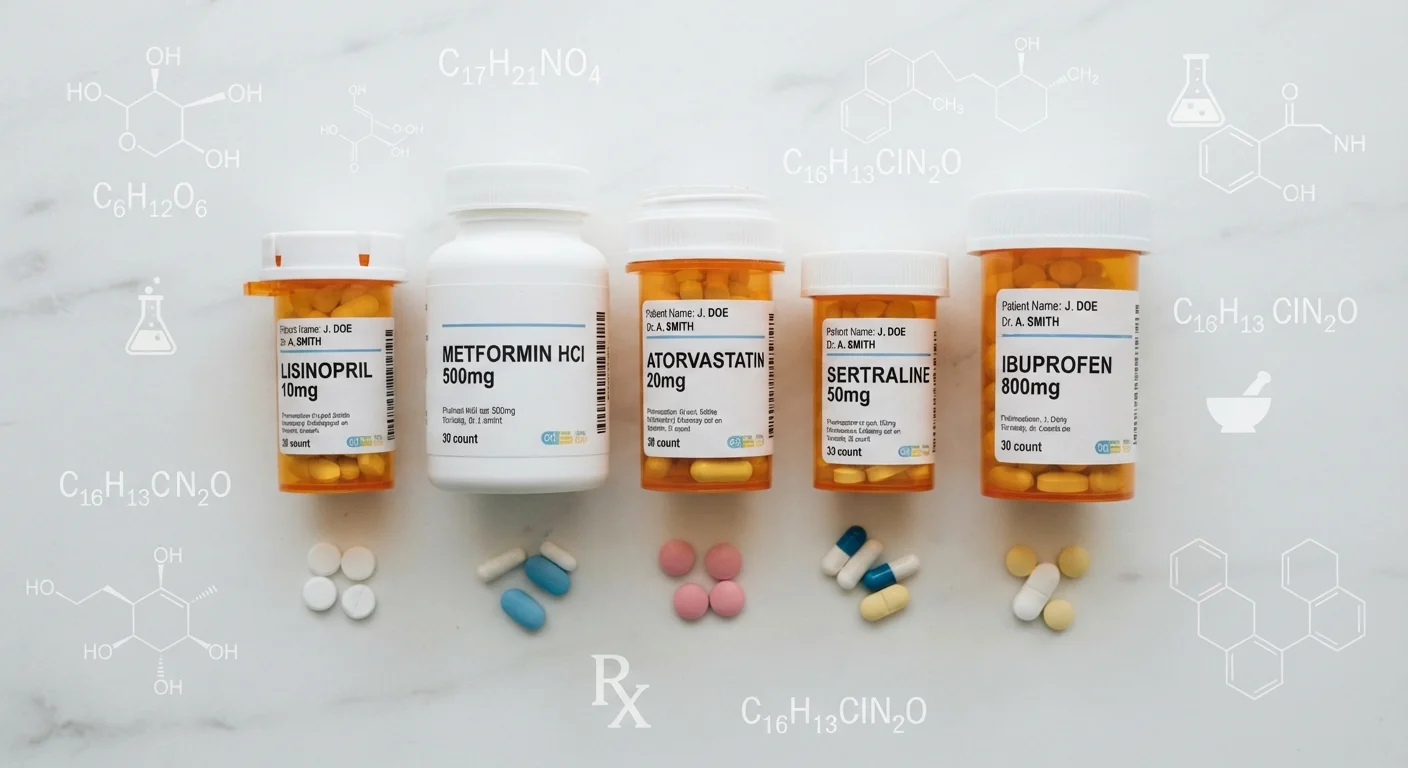
Photo: HerbHealWellness.com | Modern Guide To Wellness editorial
Key Takeaways
- Drug interactions can make a medication stronger, weaker, or unpredictably different in effect.
- The liver's cytochrome P450 enzyme system is central to most metabolism-based drug interactions.
- Over-the-counter drugs, supplements, and foods can all trigger clinically significant interactions.
- Pharmacists are trained to screen your full medication list for potential interaction risks.
- Always disclose every substance you take — including vitamins and herbal products — to your care team.
What Actually Happens When Two Drugs Meet in Your Body
Most people understand that mixing medications can be risky — but the why often stays mysterious. At its core, a drug interaction is a biological event: one substance changes the environment the second drug is entering, altering how it behaves. That change can be subtle or dramatic, predictable or surprising.
Every drug you take follows a path through your body. It gets absorbed into your bloodstream, distributed to tissues, chemically processed (metabolized), and eventually excreted. An interaction can disrupt any of these stages. If drug A slows the breakdown of drug B, drug B accumulates — sometimes to harmful concentrations. If drug A speeds up that breakdown, drug B may clear your system too fast to be effective.
These are called pharmacokinetic interactions — they affect the drug's journey through the body. A separate category, pharmacodynamic interactions, is about what drugs do once they arrive at their target. Two drugs acting on the same receptor can either amplify each other's effect or cancel each other out.
Not All Interactions Are Harmful
The Liver's Enzyme System: Where Most Interactions Begin
The liver is your body's primary drug-processing facility. It contains a family of enzymes — collectively called cytochrome P450 (CYP450) — responsible for chemically transforming most medications so they can be eliminated. This system is also the source of many clinically significant drug interactions.
Some drugs are inhibitors: they slow specific CYP450 enzymes, allowing other drugs processed by those same enzymes to build up in the bloodstream. Others are inducers: they ramp up enzyme activity, accelerating how quickly certain drugs are cleared — potentially reducing their effectiveness.
A classic example involves warfarin, a blood thinner. Numerous medications — including some antibiotics and antifungals — can inhibit or induce the enzyme that metabolizes warfarin, causing its blood levels to shift unpredictably. That shift translates directly into a higher risk of bleeding or clotting. The drug itself hasn't changed; the body's processing of it has.
Understanding your own organ function matters here too. How your kidneys and liver affect the way medications work explains how impaired organ function can alter a standard dose's behavior even without a second drug involved.
~125,000
US deaths annually linked to medication non-adherence and misuse
Cited across multiple public health reports including analyses from the National Institutes of Health, highlighting the broad impact of medication management failures.
Over 50%
Of adults take at least one prescription drug
According to the U.S. Centers for Disease Control and Prevention (CDC), more than half of all American adults use at least one prescription medication, increasing the statistical likelihood of multi-drug exposure.
~30%
Of adults also use dietary supplements alongside prescriptions
National Health Interview Survey data suggests a significant portion of prescription drug users also take supplements, a combination rarely fully disclosed to healthcare providers.
When Interactions Go Beyond Prescription Drugs
A common misconception is that drug interactions only happen between prescription medications. In reality, the biology doesn't distinguish between a prescribed tablet and a herbal capsule you bought at a health food store. Any biologically active substance can alter drug metabolism or compete at the same receptor sites.
Supplements are a frequently overlooked source of interaction risk. St. John's Wort, for example, is a potent CYP450 inducer — it accelerates the breakdown of several important medications, including some antidepressants, antiretrovirals, and oral contraceptives. Because supplements aren't required to carry the same interaction warnings as prescription drugs, many people are unaware of the risk.
Food and drink add another layer. Grapefruit and grapefruit juice contain compounds that inhibit a specific enzyme responsible for processing many cardiovascular and cholesterol-lowering medications. The result can be a significant — and unintended — increase in drug concentration. Our related article on supplements and prescription drug interactions covers this territory in more depth.
Keep a Running Medication List
Recognizing Risk and Working With Your Care Team
Most drug interactions are manageable when identified early. The challenge is that symptoms of an interaction — fatigue, confusion, unusual bleeding, or a medication suddenly seeming less effective — can be easy to misattribute. They don't announce themselves with a label.
Pharmacists are uniquely positioned to catch these risks. Every time a new prescription is filled, clinical screening software flags potential conflicts across your entire medication profile. This is precisely why pharmacists ask about your other medications — the full picture matters.
Proactive disclosure is the most effective tool available to you as a patient. Tell every provider and every pharmacist about all substances you take: prescription drugs, OTC products, vitamins, minerals, and herbal supplements. If you're managing multiple conditions and multiple prescriptions, consider reading about polypharmacy and its risks — a scenario where interaction risk rises significantly.
For a broader foundation, the companion article drug interactions explained walks through real-world scenarios where individually safe medications become problematic in combination.
This article is for general informational purposes only and does not constitute medical advice. Always consult a qualified healthcare professional or pharmacist before making any changes to your medications or supplement routine.
Frequently Asked Questions
The content on this site is for informational purposes only and is not a substitute for professional advice. Always consult a qualified professional for guidance specific to your situation.