
How Your Kidneys and Liver Affect the Way Medications Work

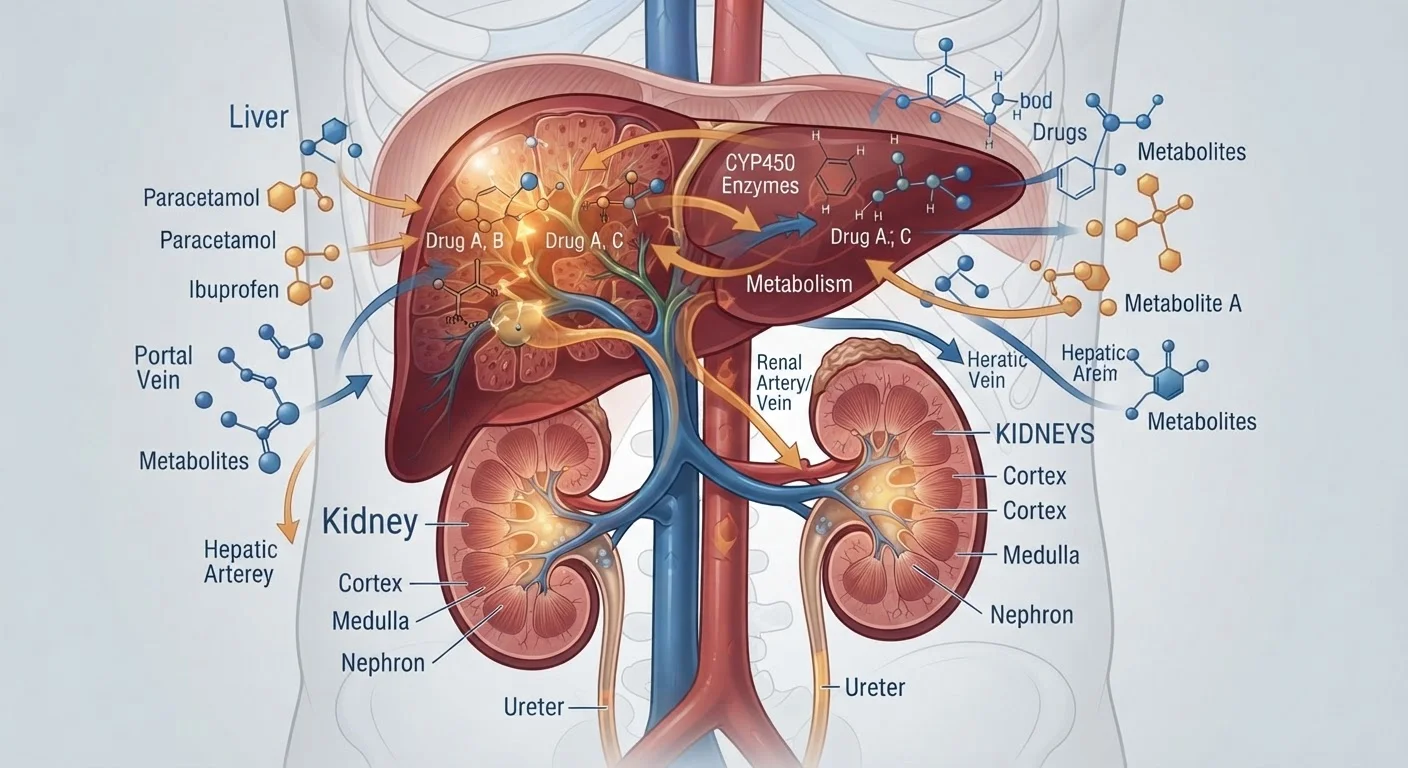
Photo: HerbHealWellness.com | Modern Guide To Wellness editorial
Key Takeaways
- The liver chemically transforms most medications before they can act or be eliminated.
- The kidneys filter drug byproducts out of the blood and excrete them in urine.
- Impaired organ function can cause drugs to accumulate, raising the risk of toxicity.
- Some medications require liver activation to become effective — organ damage can prevent this.
- Always disclose kidney or liver conditions to every prescriber and pharmacist you see.
- Dose adjustments are common and evidence-based when organ function is reduced.
The Liver's Role: Transforming Drugs Before They Act
Most medications taken by mouth pass through the digestive tract and travel directly to the liver before reaching the bloodstream — a pathway called first-pass metabolism. The liver's job is to chemically modify these compounds using enzymes, primarily a family called cytochrome P450 (CYP450). This process can do one of several things: deactivate a drug, convert it into its active form, or break it down into byproducts ready for elimination.
For drugs called prodrugs, the liver must activate them before they can have any effect. Codeine, for example, is converted by the liver into morphine to produce pain relief. If liver function is impaired, this activation may be incomplete, reducing the drug's effectiveness. On the other hand, drugs that rely on the liver for deactivation may accumulate in the body when the liver is damaged, raising the risk of toxicity at doses that would otherwise be considered standard.
Liver disease — whether from chronic alcohol use, viral hepatitis, or conditions like cirrhosis — can significantly reduce enzyme activity and liver blood flow, both of which alter how quickly and completely drugs are processed. This is why prescribers often review liver function tests before initiating certain therapies.
Always Disclose Organ Conditions to Your Pharmacist
To understand how drug transformation fits into the broader picture of how your body handles medications, see our beginner's guide to pharmacokinetics.
The Kidneys' Role: Filtering Drugs Out of Your System
Once a drug has done its job and been broken down — often by the liver — the resulting byproducts, or metabolites, need to leave the body. The kidneys handle this through a continuous filtering process, removing waste from the blood and excreting it in urine. Some medications are excreted almost entirely unchanged by the kidneys, meaning kidney function directly determines how long the drug stays active in the body.
When kidney function declines — due to conditions like chronic kidney disease, diabetes-related kidney damage, or acute illness — drug clearance slows. This means a standard dose given at standard intervals can lead to drug accumulation, pushing levels in the blood higher than intended. Over time, this raises the risk of side effects and toxicity.
~90%
Drugs metabolized at least partially by the liver
According to pharmacology literature, the vast majority of therapeutic drugs undergo some degree of hepatic (liver) metabolism before elimination.
1 in 7
US adults estimated to have chronic kidney disease
The CDC estimates approximately 37 million American adults live with chronic kidney disease, many of whom may be on medications requiring dose monitoring.
Prescribers use a calculated measure called estimated glomerular filtration rate (eGFR) to assess kidney function. Many drug dosing guidelines include specific eGFR thresholds at which doses must be reduced or drugs avoided entirely. Some antibiotics, heart medications, and diabetes treatments require particularly careful dose adjustment in patients with reduced kidney function.
Why This Matters for Your Safety
Organ impairment doesn't just affect how fast a drug leaves your body — it can also alter how the drug distributes through tissues, how strongly it binds to proteins in the blood, and whether active or inactive forms accumulate. These shifts aren't always predictable without monitoring, which is why patients with known kidney or liver conditions often require more frequent lab work and follow-up when starting or adjusting medications.
It's also worth recognizing that organ function can change over time. A dose that was appropriate for you two years ago may no longer be safe if kidney or liver function has declined. This is especially relevant for older adults, who experience gradual reductions in both kidney filtration and liver enzyme activity as a normal part of aging. Why the same dose affects people differently explores these individual factors in more depth.
Food Can Also Affect Liver Processing
Certain combinations of medications can place additional strain on already-impaired organs, compounding risk. Understanding how drug interactions work can help you have more informed conversations with your pharmacist about your current regimen.
If you have a kidney or liver condition — even a mild one — make it a habit to mention it at every pharmacy visit and with every new prescriber. This single step can prevent many medication errors before they occur.
This article is for general informational purposes only and does not constitute medical advice. Always consult a qualified healthcare professional before making any decisions about your medications or health conditions.
Frequently Asked Questions
The content on this site is for informational purposes only and is not a substitute for professional advice. Always consult a qualified professional for guidance specific to your situation.