
Supplements and Prescription Drugs: Interactions Doctors Don't Always Ask About

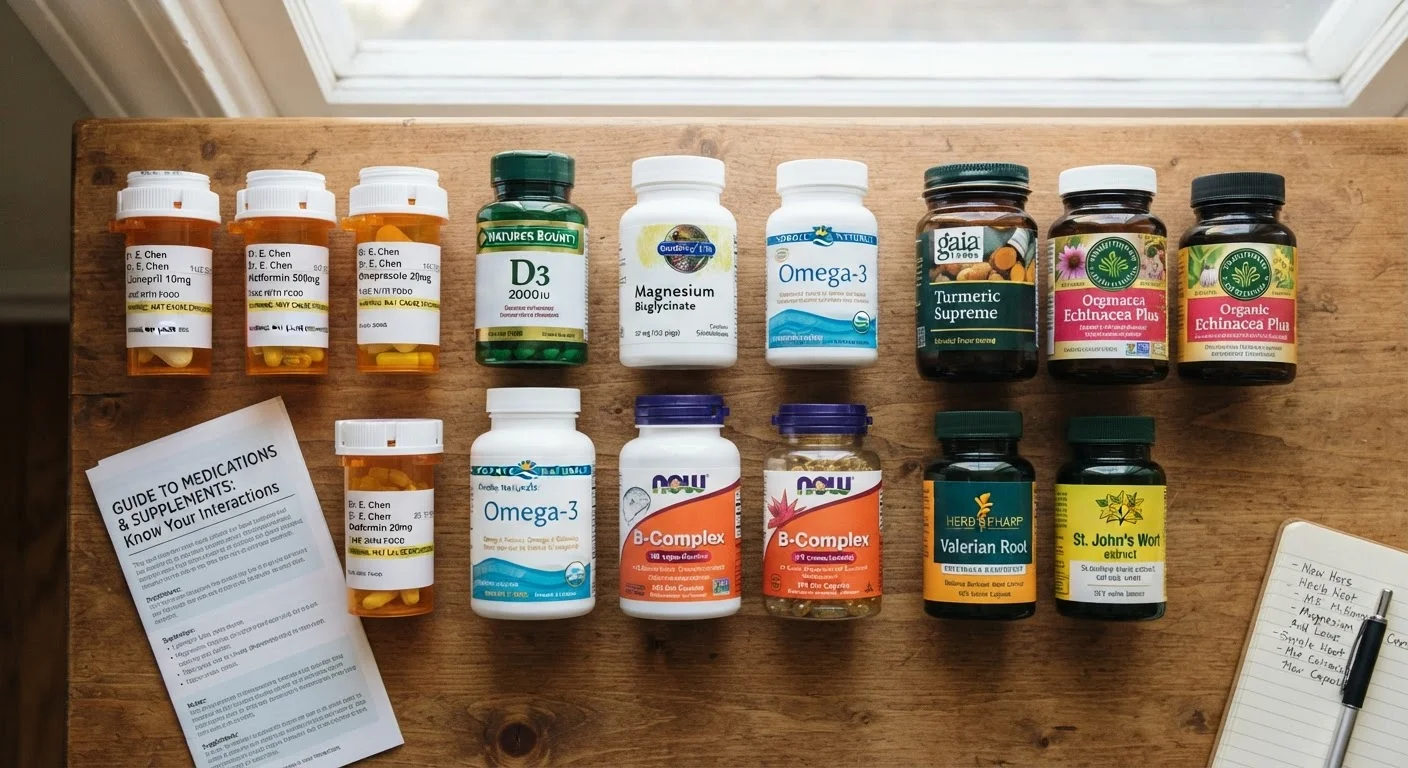
Photo: HerbHealWellness.com | Modern Guide To Wellness editorial
Key Takeaways
- Supplements are not automatically safe alongside prescription drugs — interactions are real and clinically documented.
- St. John's Wort, fish oil, vitamin K, and magnesium are among the most interaction-prone supplements.
- Doctors don't always ask about supplements, so patients need to volunteer this information proactively.
- Your pharmacist can screen for supplement-drug interactions — and is an underused resource for this purpose.
- Even widely used vitamins can alter how your body absorbs, metabolizes, or responds to a prescription drug.
The Gap Between 'Natural' and 'Safe'
Many people treat supplements — vitamins, minerals, herbal products — as a separate category from medication. They're bought without a prescription, they sit on health food store shelves, and they carry a general sense of being gentle or low-risk. But biologically, supplements are active compounds. They bind to receptors, influence enzymes, and move through the same metabolic pathways as prescription drugs.
That overlap is where interactions happen. And because clinicians often focus their medication reviews on prescription and over-the-counter drugs, supplements frequently go unmentioned — by providers and patients alike. Research consistently finds that a significant portion of adults taking prescription drugs also use dietary supplements, yet many don't disclose this to their healthcare team.
Understanding how drug interactions occur helps explain why a supplement that's harmless on its own can become a problem when combined with a specific prescription. The same mechanisms that make drugs interact with each other apply when a bioactive herbal compound enters the mix.
The combinations below represent some of the most clinically relevant supplement-drug pairings. This is general health information — not a substitute for personalized guidance from your pharmacist or prescriber.
St. John's Wort and antidepressants, birth control, or blood thinners
St. John's Wort (Hypericum perforatum) is one of the most widely studied herbal supplements — and one of the most problematic from an interaction standpoint. It strongly activates a liver enzyme system called CYP3A4, which is responsible for metabolizing a large number of drugs. When this enzyme is revved up, it clears medications from the body faster than intended, reducing their effectiveness.
Documented concerns include reduced efficacy of hormonal contraceptives, lower blood levels of HIV antiretrovirals, and reduced anticoagulant effect in people taking warfarin. When combined with prescription antidepressants — particularly SSRIs — St. John's Wort may also raise the risk of serotonin syndrome, a potentially serious condition. The molecular mechanisms behind these interactions help explain why enzyme induction has such wide-ranging effects.
St. John's Wort can reduce the effectiveness of contraceptives, antiretrovirals, and blood thinners.
Fish oil (omega-3s) and blood-thinning medications
Fish oil supplements are widely used for cardiovascular and joint health. At lower doses, they're generally considered low-risk. However, omega-3 fatty acids have mild antiplatelet properties — meaning they can slightly reduce the blood's ability to clot. On their own, this effect is usually minor. Combined with anticoagulants like warfarin, or antiplatelet drugs like clopidogrel, the cumulative effect on bleeding risk may be clinically meaningful.
This doesn't mean fish oil is always problematic for people on these medications — but it's a conversation worth having with a prescriber, particularly before surgery or any procedure. People managing cardiovascular conditions with drugs like those described in common heart drug classes should flag omega-3 supplements specifically during medication reviews.
Omega-3 supplements have mild blood-thinning properties that can add up when combined with anticoagulants.
Vitamin K and warfarin
Warfarin works by interfering with vitamin K-dependent clotting factors. Its therapeutic effect is calibrated carefully — and that calibration depends heavily on consistent vitamin K intake. Sudden changes in dietary or supplemental vitamin K can shift a patient's INR (a clotting measure) in either direction, making the drug either less effective or more potent than intended.
Patients on warfarin are typically counseled about vitamin K-rich foods like leafy greens, but may not realize that multivitamins or standalone vitamin K supplements carry the same concern. The key is consistency rather than elimination — but any meaningful change in vitamin K intake should be discussed with a prescriber or pharmacist. This is a textbook example of how organ metabolism interacts with drug dosing.
Inconsistent vitamin K intake — from food or supplements — can destabilize warfarin's anticoagulant effect.
Magnesium and certain antibiotics or thyroid medications
Magnesium is a popular supplement for sleep, muscle cramps, and cardiovascular support. It's generally well-tolerated, but it can bind to certain drugs in the digestive tract before they're absorbed — essentially reducing how much of the drug reaches your bloodstream. This process, called chelation, is particularly relevant for fluoroquinolone antibiotics (such as ciprofloxacin) and tetracyclines, where magnesium can substantially reduce absorption.
Levothyroxine, used to treat hypothyroidism, is also affected by magnesium and other mineral supplements. Timing matters enormously here: taking these supplements too close to a dose of levothyroxine or certain antibiotics can impair the drug's efficacy. This is closely related to the broader principle that when you take a drug relative to food and other substances directly affects how it works.
Magnesium can bind to certain antibiotics and thyroid medications in the gut, reducing how much is absorbed.
High-dose vitamin E and blood thinners
Vitamin E at typical dietary levels poses little concern for most people. However, high-dose vitamin E supplements — often marketed for antioxidant or cardiovascular benefits — can have antiplatelet effects similar to those of fish oil, and may amplify the action of blood-thinning drugs. Studies have suggested that doses above 400 IU daily may increase bleeding risk, particularly in combination with warfarin or aspirin.
This is an area where reading supplement labels carefully matters. Many products marketed as "antioxidant blends" or "heart health" formulas contain vitamin E at doses significantly higher than the recommended dietary allowance. If you take any blood-thinning medication, reviewing your full supplement stack with a pharmacist — as described in talking to your pharmacist effectively — is a practical precaution.
High-dose vitamin E supplements can amplify bleeding risk when combined with warfarin or aspirin.
Calcium supplements and certain medications
Like magnesium, calcium can interfere with drug absorption through chelation. The most clinically notable interactions involve bisphosphonates (used for osteoporosis), thyroid hormone replacement, and some quinolone antibiotics. Calcium forms insoluble complexes with these drugs in the GI tract, reducing how much is absorbed into the bloodstream.
Many people take calcium supplements alongside medications prescribed for the very conditions calcium is meant to support — osteoporosis, for example — which creates an unintentional conflict. Healthcare providers may assume patients understand the timing requirements, but this isn't always communicated clearly. The general rule is to separate calcium supplements from these medications by at least a few hours, but specific timing should be confirmed with a pharmacist. See overlap risks from common supplements and OTC products for related considerations.
Calcium can block absorption of bisphosphonates and thyroid medications when taken at the same time.
What to Do With This Information
Awareness is the first step — but action matters more. Before your next prescription fill or doctor's appointment, make a complete list of every supplement you take, including the dose and frequency. Include multivitamins, protein powders, herbal teas taken regularly, and anything sold as a "wellness" product.
Bring Your Supplement List to Every Appointment
Your pharmacist is specifically trained to screen for supplement-drug interactions. Why pharmacists ask about your other medications explains the clinical reasoning behind these questions — and why answering them fully matters. If you're managing multiple prescriptions, polypharmacy risks are worth understanding too, since adding supplements to a complex drug regimen raises the stakes further.
Don't stop a supplement or medication abruptly based on general information alone. Instead, raise the question: "I take — is there anything I should know about how it interacts with this prescription?" That single question can open a productive conversation.
This article is for informational purposes only and does not constitute medical advice. Always consult a qualified healthcare professional before making changes to your medications or supplement routine.
The content on this site is for informational purposes only and is not a substitute for professional advice. Always consult a qualified professional for guidance specific to your situation.