
Polypharmacy: Understanding the Risks of Taking Multiple Medications at Once

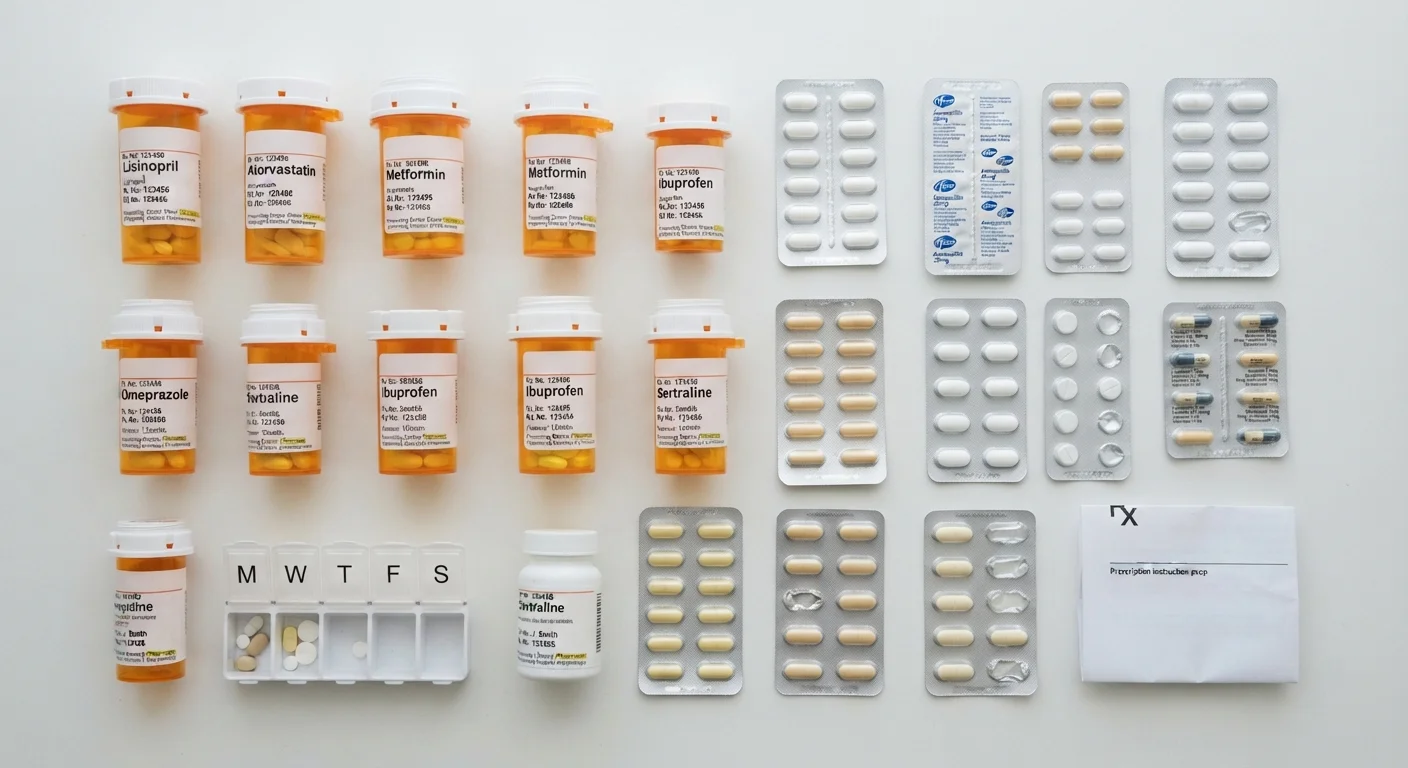
Photo: HerbHealWellness.com | Modern Guide To Wellness editorial
Key Takeaways
- Polypharmacy is typically defined as taking five or more medications simultaneously, including supplements.
- The risk of a harmful drug interaction rises with each additional medication added to a regimen.
- Older adults are disproportionately affected because they often manage multiple chronic conditions.
- A pharmacist-led medication review can identify dangerous combinations and unnecessary duplications.
- Symptoms like dizziness, confusion, or unexplained falls can sometimes be caused by drug interactions rather than a new illness.
What Is Polypharmacy?
Polypharmacy refers to the use of multiple medications at the same time — most commonly defined as five or more drugs taken simultaneously. The term covers prescription medicines, over-the-counter products, vitamins, and herbal supplements. It is a clinical concern not because taking several drugs is inherently wrong, but because the more medications a person takes, the harder it becomes to predict how they will interact inside the body.
Understanding how individual drugs work is a useful foundation. Our guide to how medications work explains how different drug classes affect the body — knowledge that helps put interaction risks in context.
Polypharmacy
Taking five or more medications — including supplements and OTC drugs — at the same time. It raises the likelihood of drug interactions and side effects.
Drug interaction
When two or more substances affect how each other works in the body, potentially making one more toxic, less effective, or causing a new side effect.
Prescribing cascade
When a drug's side effect is mistaken for a new condition, and another drug is prescribed to treat it — adding unnecessary medication to the regimen.
Medication reconciliation
A thorough review of all medications a patient takes, conducted by a pharmacist or provider to identify risks, duplications, and drugs that may no longer be needed.
Anticholinergic drugs
A class of medications that block certain nerve signals; when multiple anticholinergic drugs are combined, they can impair memory and cognition, especially in older adults.
Who Is Most at Risk?
Polypharmacy is most common among older adults, who statistically manage more chronic conditions — such as high blood pressure, diabetes, heart disease, and arthritis — than younger populations. According to publicly available data from federal health agencies, a significant proportion of adults over 65 take five or more prescription medications regularly.
However, polypharmacy is not limited to older people. Patients of any age managing multiple conditions, those who see several specialists who each prescribe independently, and people who self-medicate with supplements alongside their prescriptions can all find themselves in polypharmacy territory.
Don't overlook OTC drugs and supplements
Why Multiple Medications Become Dangerous
Each drug added to a regimen increases the number of possible two-drug combinations exponentially. Two drugs produce one possible interaction pair; five drugs produce ten pairs; ten drugs produce forty-five. Some of those combinations can alter how quickly the body processes a drug, either amplifying its effect to toxic levels or diminishing it so it stops working.
One of the most underrecognized contributors is the prescribing cascade — when a side effect from one drug is mistaken for a new medical problem, and another drug is prescribed to treat it. This cycle can be difficult to untangle without a comprehensive review. For a deeper look at how interactions develop mechanically, see our article on why two safe medicines can become dangerous together.
Supplements add another layer of complexity. Herbal products and vitamins are not inert — they can speed up or slow down the same liver enzymes that process many prescription drugs. Our article on supplement and prescription drug interactions covers the combinations most worth discussing with your pharmacist.
Warning Signs to Watch For
Some signs of a problematic drug combination mimic ordinary illness, which is why they often go unrecognized. Symptoms that appear after a new medication is added or a dose is changed deserve particular attention:
- Unexplained dizziness or falls — especially in older adults, this can signal blood pressure changes or sedation caused by an interaction.
- Sudden confusion or memory lapses — anticholinergic drugs in particular, when combined, can impair cognition.
- Unusual bleeding or bruising — may indicate that a blood-thinning medication's effect has been amplified.
- Nausea, fatigue, or appetite loss — nonspecific but worth reporting to a provider if they coincide with a medication change.
Alcohol can also intensify many of these effects. Our article on alcohol and medication combinations outlines the clearest risks to be aware of.
Keep a single, up-to-date medication list
How to Have the Medication Review Conversation
A medication review — sometimes called a medication reconciliation — is a structured conversation with a pharmacist or healthcare provider that examines every drug and supplement a patient takes. The goal is to identify duplications, unnecessary prescriptions, risky combinations, and anything that could be safely stopped.
To prepare, create a complete list of everything you take: prescription drugs, OTC medicines, vitamins, and herbal products, along with doses and frequency. Bring the actual bottles if possible. At the appointment, ask directly: Are all of these still necessary? Do any of them interact with each other?
Pharmacists are an accessible and often underused resource for this kind of review — many pharmacies offer medication therapy management (MTM) consultations, and some are covered by insurance plans. Your prescribing provider can also request a formal review.
This article is for general informational purposes only and does not constitute medical advice. Always consult a qualified healthcare professional before making any changes to your medications or treatment plan.
Frequently Asked Questions
The content on this site is for informational purposes only and is not a substitute for professional advice. Always consult a qualified professional for guidance specific to your situation.