
Storing Medicines at Home Safely

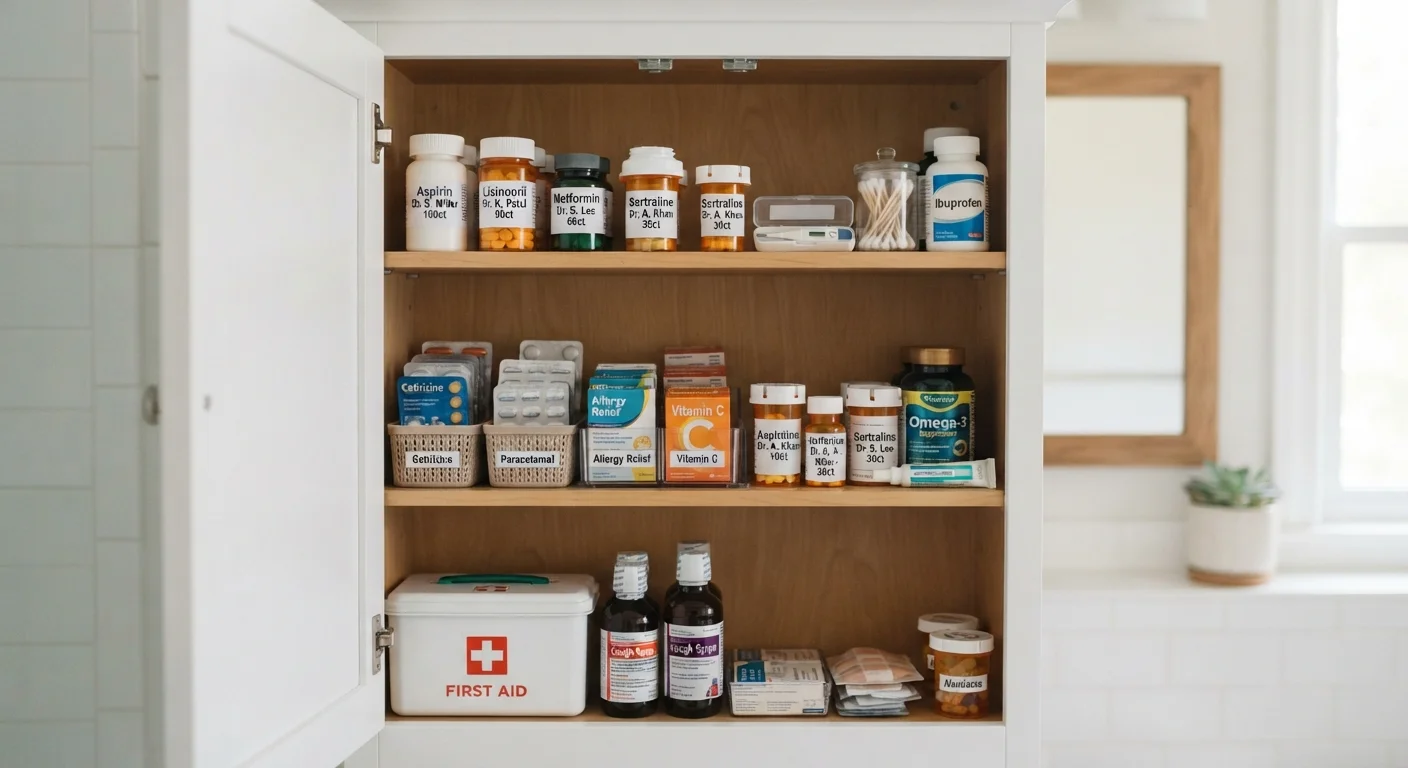
Photo: HerbHealWellness.com | Modern Guide To Wellness editorial
Key Takeaways
- Heat, humidity, and direct light can degrade medications faster than their expiration dates suggest.
- Bathrooms and kitchens are among the worst places in a home to store medicines.
- Child-resistant packaging and locked storage are essential when children are present.
- Checking expiration dates regularly prevents accidental use of degraded medications.
- Some medicines — such as insulin and certain eye drops — require refrigeration; always check the label.
Why Storage Conditions Matter More Than You Think
Most people treat their medicine cabinet as a set-and-forget solution. But where and how you store medications directly affects whether they work when you need them. Temperature swings, moisture, and light can all break down the active ingredients in a drug — sometimes well before the printed expiration date.
This isn't a minor concern. A blood pressure medication that has degraded in a hot cabinet may deliver less of its active compound than intended, which can have real consequences for your health. Understanding the basic rules of home medicine storage is a straightforward step toward safer, more effective care.
Storage Instructions Vary by Medication
Always check the label or package insert for storage instructions specific to your medication. When in doubt, ask your pharmacist — they can clarify whether a medicine needs refrigeration, protection from light, or other special handling.
The Worst Places to Keep Medicines — and Better Alternatives
The bathroom medicine cabinet is one of the most common storage spots and one of the least suitable. Steam from showers raises humidity, which accelerates the breakdown of tablets and capsules. Similarly, the kitchen — despite its convenience — exposes medicines to heat from the stove and dishwasher.
Better alternatives include:
- A bedroom dresser drawer — cool, dry, and away from light
- A dedicated storage box on a high shelf — out of children's reach and away from heat sources
- A hall closet — typically stable in temperature and low in humidity
The goal is a location that stays consistently cool (ideally below 77°F / 25°C), dry, and away from direct sunlight. If a medicine requires refrigeration, store it in its original container in the main body of the fridge — not the door, where temperatures fluctuate.
Travel and Medicine Storage
Best Practices for Safe Home Storage
Following a few consistent habits makes a significant difference in how long your medicines stay effective — and how safe your home environment remains.
Keep all medicines in their original, labeled containers
Check expiration dates at least every six months
Store medicines out of sight and reach of children
Separate medications from supplements and topical products
Follow specific refrigeration instructions exactly
For a broader view of medication safety habits, see our guide to common drug safety myths that many people still believe.
Quick Wins You Can Act on Today
You don't need to overhaul your entire home routine to improve medicine safety. A few targeted actions done now can meaningfully reduce risk.
Once you've established good storage habits, it's also worth reviewing what to do with medicines you no longer need. Our article on disposing of unused medicines safely explains responsible options that protect both your household and the environment.
This article is for informational purposes only and is not a substitute for professional medical advice. Always consult your pharmacist or healthcare provider with questions about your specific medications.
The content on this site is for informational purposes only and is not a substitute for professional advice. Always consult a qualified professional for guidance specific to your situation.