
Disposing of Unused Medicines: What You Should Know
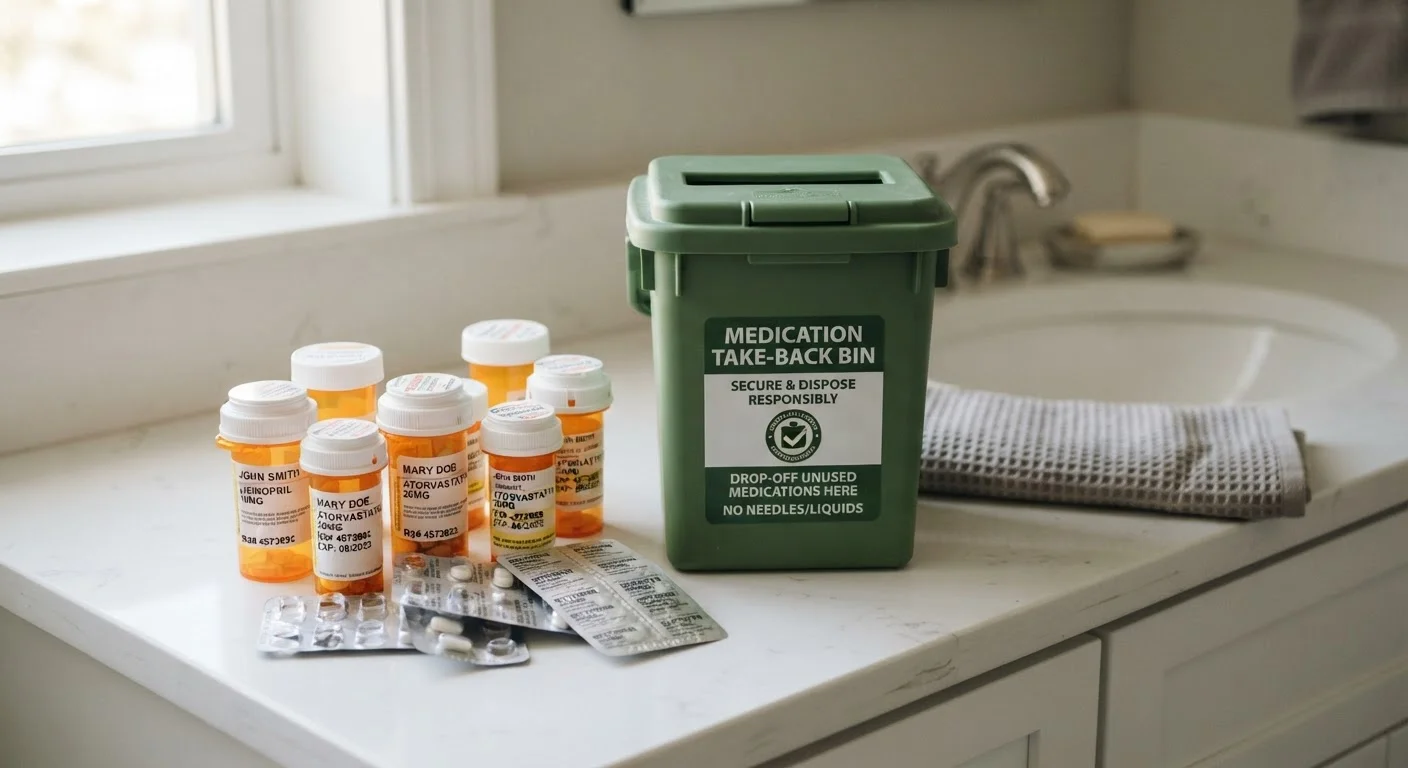
Photo: HerbHealWellness.com | Modern Guide To Wellness editorial
Key Takeaways
- Drug take-back programs at pharmacies are the safest and most recommended disposal method.
- Most medications should never be flushed unless specifically listed on the FDA flush list.
- Mixing medicines with coffee grounds or kitty litter before trashing reduces misuse risk.
- Leaving unused opioids at home significantly increases the risk of accidental ingestion or misuse.
- Removing personal information from prescription labels protects your privacy before disposal.
Why Proper Disposal Actually Matters
Many households have a medicine cabinet holding prescriptions from years ago — antibiotics that weren't finished, painkillers left over from a procedure, or a medication that was switched for something else. It can feel harmless to leave them sitting there, but unused medicines pose two real risks: accidental ingestion by children or pets, and environmental contamination when disposed of carelessly.
According to the U.S. Environmental Protection Agency, pharmaceuticals have been detected in surface water, groundwater, and drinking water sources across the country. While researchers are still studying the long-term effects, flushing drugs or tossing them loosely in the trash allows active compounds to enter ecosystems. Meanwhile, the CDC has linked household medication stockpiles to a significant share of pediatric poisoning cases and drug misuse incidents. Safe disposal isn't bureaucratic caution — it's a practical step with measurable benefits.
54%
Unused medicines kept at home
A study published in the journal Substance Abuse found that more than half of surveyed patients kept unused prescription medications at home rather than disposing of them.
~500,000
Pounds collected at take-back events
The DEA has reported collecting hundreds of thousands of pounds of unwanted prescription drugs during National Prescription Drug Take Back Day events, highlighting the scale of household medication stockpiles.
The Right Ways to Dispose of Medicines
The FDA and the DEA both provide guidance on disposal, and the options are more accessible than most people realize.
If you're ever unsure which method applies to a specific medication, your pharmacist is a reliable first stop. See what to confirm before leaving the pharmacy counter for a broader checklist of safe medication practices.
Quick Steps You Can Take Today
You don't need to wait for a community drug take-back event to start clearing out old medications safely. Several of the steps below can be done immediately with items already in your home.
Ask Your Pharmacist About Take-Back Options
Special Situations Worth Knowing
Some medications require extra caution at the disposal stage, and a few categories have rules that differ from the general guidance.
Opioids and High-Risk Medications Need Faster Action
Liquid Medications and Patches Require Special Handling
For a broader look at medication risks that often catch people off guard, the drug safety myths worth knowing article addresses several common misconceptions. And if you want to stay organized about what you're currently taking before conducting a medicine cabinet cleanout, consider keeping a personal medication record as a first step.
This article is for general informational purposes only and does not constitute medical or pharmaceutical advice. Always consult your pharmacist or healthcare provider with questions about specific medications or disposal guidance for your situation.
The content on this site is for informational purposes only and is not a substitute for professional advice. Always consult a qualified professional for guidance specific to your situation.