
Reading a Nutrition Label Without Getting Confused

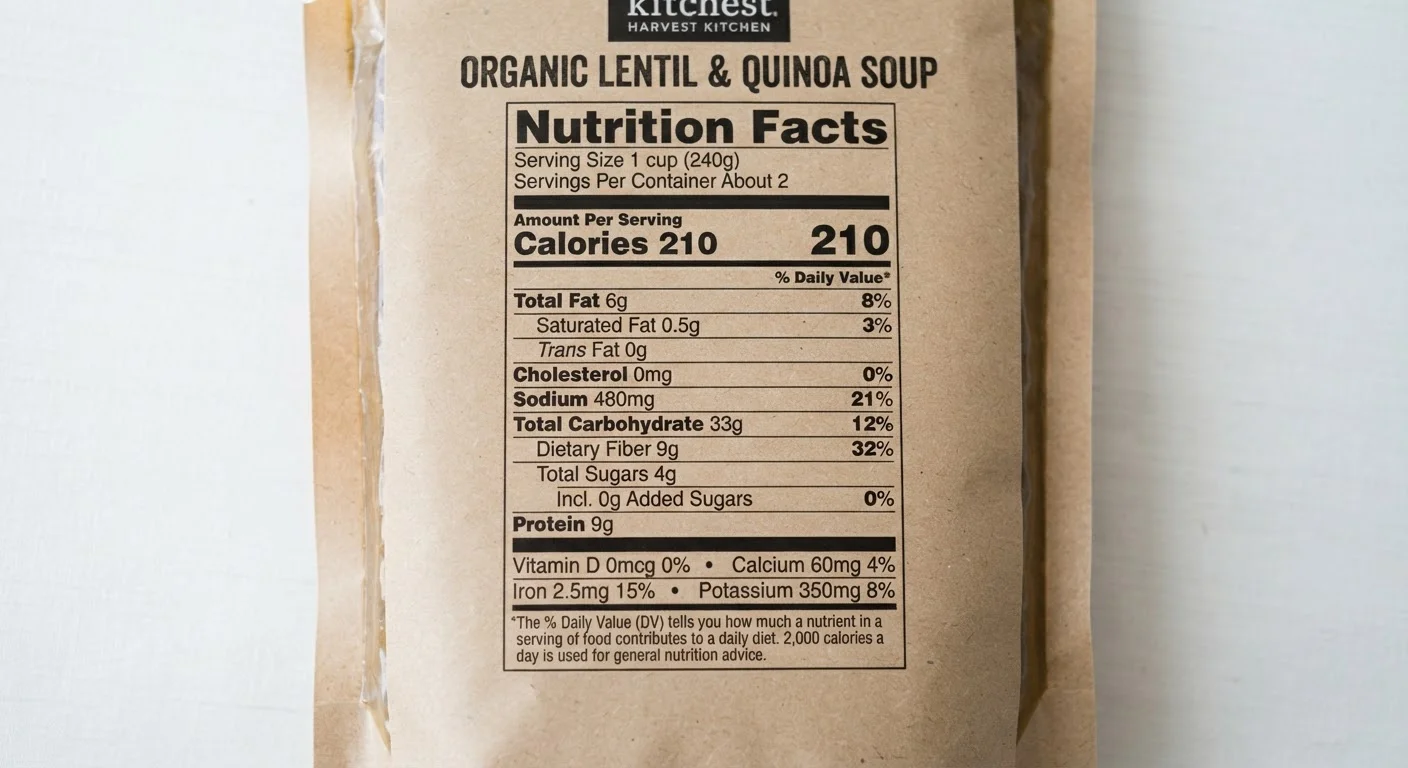
Photo: HerbHealWellness.com | Modern Guide To Wellness editorial
Key Takeaways
- Serving size is the starting point — all label numbers apply to that amount, not the whole package.
- Percent Daily Value (%DV) tells you how much a nutrient contributes to a standard 2,000-calorie daily diet.
- Aim to limit saturated fat, sodium, and added sugars; prioritize fiber, vitamins, and minerals.
- Ingredients are listed by weight — the first few listed make up the bulk of the product.
- Labels follow a mandatory FDA format, making it easier to compare products side by side.
Why Nutrition Labels Exist — and What They Actually Cover
The Nutrition Facts panel is a federally mandated format regulated by the U.S. Food and Drug Administration (FDA). It must appear on most packaged foods sold in the US, with some exemptions for small businesses and certain single-ingredient raw foods. The current label format was updated in 2020 to reflect advances in nutrition science and reflect how people actually eat today.
The label is designed to communicate two things: what a food is made of (ingredients) and how much of key nutrients one serving provides (the Nutrition Facts panel). Together, these sections give you the raw material to compare foods, track intake patterns, and spot products that may not align with your dietary goals — without needing a background in nutrition science.
Labels do not tell the whole story. A food with a modest nutrient profile can still be part of a healthy diet, and a food with a strong label can be over-consumed. Understanding how to use label data in proportion is part of building a balanced approach to eating.
What you will need
How to Read a Nutrition Label Step by Step
Work through each section of a Nutrition Facts panel in a logical order. The steps below follow the label from top to bottom, mirroring the layout you will find on any standard US packaged food.
Nutrition Facts Panel (on packaging)
The primary label format required by the FDA on most packaged foods sold in the US.
Smartphone or calculator
Useful for multiplying per-serving values when you consume more or less than one listed serving.
Start with the serving size
Find the Serving Size line at the very top of the label, directly below the bold "Nutrition Facts" heading. This tells you the amount the manufacturer considers one serving — for example, 2/3 cup (55g) or 1 slice (28g). Every number on the label applies to this amount only, not the entire package.
Also note Servings Per Container. If the package holds 3.5 servings and you eat the whole thing, all listed values must be multiplied by 3.5.
Check the calorie count
The large, bold Calories figure shows the total energy in one serving. This includes energy from all macronutrients — carbohydrates, protein, and fat. The smaller "Calories from Fat" figure was removed from the current label format; the FDA determined total calorie count is more useful for most consumers.
Context matters: a 250-calorie snack bar and a 250-calorie piece of salmon deliver calories very differently in terms of satiety and nutrient density. For deeper context, see our guide to macronutrients.
Review nutrients to limit
Scan the section listing Total Fat, Saturated Fat, Trans Fat, Cholesterol, Sodium, and Added Sugars. U.S. dietary guidelines generally recommend keeping saturated fat, sodium, and added sugars below recommended daily thresholds for most adults.
- Trans fat: No safe level has been established; products should show 0g.
- Added sugars: Distinct from naturally occurring sugars in fruit or dairy; the %DV for added sugars helps put the amount in perspective.
- Sodium: Many processed foods are high in sodium; comparing labels across similar products can reveal significant differences.
Identify nutrients to get enough of
Below the "limit" nutrients, the label lists those many Americans tend to under-consume: Dietary Fiber, Vitamin D, Calcium, Iron, and Potassium. A higher %DV for these is generally favorable.
Dietary fiber supports digestive health and is associated with sustained energy and satiety. Vitamins and minerals like calcium and vitamin D are critical for bone health, while potassium plays a role in blood pressure regulation. For a closer look at what micronutrient figures on labels mean, see our micronutrient label walkthrough.
Interpret the Percent Daily Value (%DV)
%DV shows how much a nutrient in one serving contributes toward recommended daily intake, based on a 2,000-calorie reference diet. It appears in the right-hand column next to most nutrients.
%DV is particularly useful for comparing two products head-to-head — for example, two breakfast cereals — without needing to know exact gram targets. It is less directly applicable if your calorie needs differ significantly from 2,000.
Scan the ingredients list
The ingredients list sits below or beside the Nutrition Facts panel and is ordered by weight, from most to least. The first three to five ingredients make up the majority of the product. A whole grain, vegetable, or protein listed first generally signals a more nutrient-dense product than one where a refined starch or added sugar leads the list.
Be aware that sugar can appear under many names — sucrose, high-fructose corn syrup, dextrose, maltose — and multiple sugar entries spread across the list can add up. Understanding ingredient terminology pairs well with our plain-language glossary of eating plan terms.
Watch for Multiple Servings Per Package
Labels Reflect a Reference Diet, Not Yours
Use the 5%/20% Rule as a Quick Guide
This article provides general nutritional information for educational purposes only and is not a substitute for advice from a qualified healthcare provider or registered dietitian.
Common Label-Reading Mistakes and How to Avoid Them
Even attentive readers fall into predictable traps when scanning nutrition labels. Awareness of the most common errors makes a significant difference:
- Ignoring serving size: The single most common error. Always verify the serving before drawing conclusions from any other figure on the label.
- Treating %DV as a percentage of your personal needs: %DV is a standardized reference figure, not personalized. It is a useful comparison tool, not an exact prescription.
- Focusing only on calories: A low-calorie product can still be high in sodium or added sugars. Reading the full panel gives a more complete picture.
- Overlooking the ingredients list: The Nutrition Facts panel shows quantities; the ingredients list shows composition. Both matter.
If you regularly manage food choices for a specific health condition or dietary pattern, a registered dietitian can help you interpret label data in the context of your individual needs. For a broader understanding of how nutrition research translates into dietary advice, our guide to reading diet studies provides useful critical-thinking tools. And if you also read medication labels, note that food and drug labels follow different regulatory frameworks and serve distinct purposes.
The content on this site is for informational purposes only and is not a substitute for professional advice. Always consult a qualified professional for guidance specific to your situation.