
Getting Vitamins from Food vs. Supplements: What Research Suggests

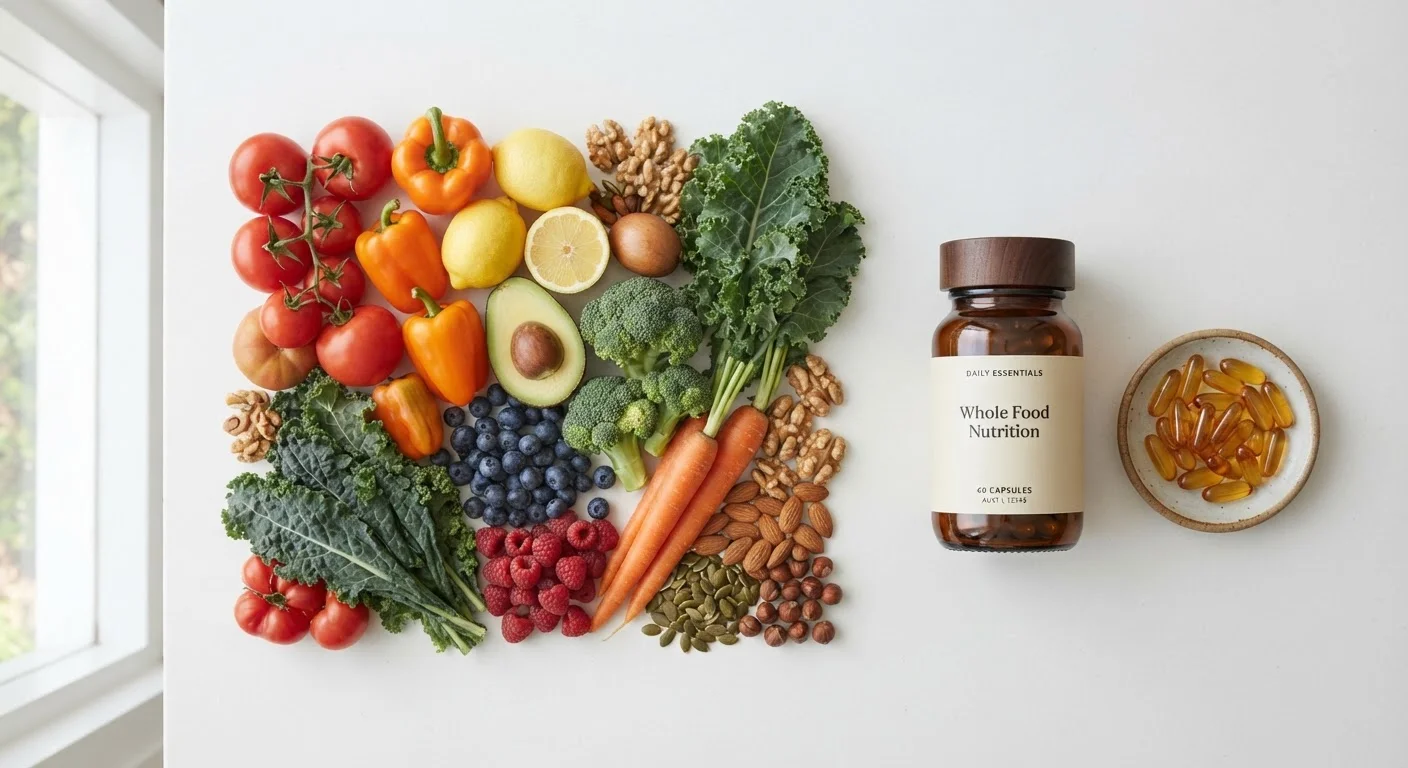
Photo: HerbHealWellness.com | Modern Guide To Wellness editorial
Key Takeaways
- Whole foods deliver vitamins alongside fibre, phytonutrients, and synergistic compounds that supplements cannot fully replicate.
- Supplements can correct documented deficiencies but carry risks of toxicity when fat-soluble vitamins are taken in excess.
- Research consistently favors food-first approaches for long-term health outcomes in the general population.
- Certain groups — pregnant individuals, older adults, those with absorption disorders — may have evidence-based supplement needs.
- No supplement formulation has consistently matched the health benefits observed from whole-diet patterns in large clinical trials.
Why the Source of a Vitamin Can Matter
Vitamins are essential micronutrients the body cannot synthesize in adequate quantities on its own — they must come from diet or supplementation. But emerging nutritional research suggests that how those vitamins arrive in the body influences how well they are absorbed and used. To understand the full picture of what vitamins do at the cellular level, see our guide to what vitamins actually do in the body.
Whole foods deliver vitamins within a complex matrix of fibre, water, fats, and phytonutrients. These compounds interact — sometimes boosting absorption, sometimes buffering absorption rates to prevent sudden spikes. Vitamin C in an orange, for instance, comes packaged with flavonoids and fibre that influence how it is processed. A vitamin C tablet delivers the isolated compound without that surrounding structure.
This does not automatically make supplements inferior for every purpose. It does mean the two approaches are not nutritionally equivalent, and choosing between them depends on context.
| Whole Foods | Dietary Supplements | |
|---|---|---|
| Nutrient complexity | Vitamins + fibre + phytonutrients + minerals | Isolated or combined nutrients only |
| Absorption dynamics | Food matrix can enhance or moderate absorption | Variable; may lack synergistic cofactors |
| Overdose risk | Very low from food sources alone | Real risk with fat-soluble vitamins at high doses |
| Evidence for chronic disease prevention | Consistently strong in large diet-pattern studies | Mixed; few trials match food-based benefits |
| Usefulness for deficiency correction | Effective over time; may be slow for severe deficiency | Fast, targeted, and clinically established |
| Accessibility and cost | Varies; fresh produce can be costly | Often lower cost per nutrient unit |
What the Evidence Shows for Whole Foods
Large observational studies and dietary pattern research consistently link high intakes of vegetables, fruits, legumes, and whole grains with reduced risk of chronic disease. A key challenge for researchers is isolating which factor drives those benefits — the vitamins, the minerals, the fibre, or the combination.
Several large randomized controlled trials testing isolated vitamins as supplements have failed to reproduce the protective associations seen with food-based diets. A notable example is beta-carotene: observational data linked high fruit and vegetable intake (rich in this vitamin A precursor) with lower lung cancer risk, yet supplemental beta-carotene trials showed no benefit and, in smokers, some harm. This pattern suggests that the food matrix — not a single compound — may be what matters. See also our overview of whole foods vs. processed foods for broader context.
~90%
US adults falling short on vegetables
According to the USDA Dietary Guidelines Advisory Committee, approximately 90% of Americans do not meet recommended vegetable intake — suggesting dietary gaps are largely a food-pattern problem, not a supplement gap.
~42%
US adults with vitamin D insufficiency
NIH data indicates a substantial proportion of U.S. adults have vitamin D blood levels below recommended thresholds, reflecting one of the clearest population-level cases for targeted supplementation.
Whole foods also supply dietary fibre, which supports gut microbiome diversity — an emerging area of research with wide-ranging health implications that no vitamin capsule addresses.
When Supplements Have Legitimate Value
The food-first principle does not mean supplements are without merit. Several situations carry strong evidence for supplementation:
- Folate before and during early pregnancy: Neural tube defect prevention is one of the most robustly supported supplement use cases in nutritional science.
- Vitamin D in populations with limited sun exposure: Dietary sources of vitamin D are limited, and deficiency is common in northern latitudes and among older adults.
- Vitamin B12 for people following plant-based diets: B12 occurs almost exclusively in animal products; supplementation is widely recommended for vegans. Learn more in our guide to the B vitamins.
- Documented clinical deficiencies: Conditions affecting nutrient absorption — such as celiac disease or Crohn's disease — may require targeted supplementation under medical supervision.
Check Before You Supplement
Fat-soluble vitamins (A, D, E, K) accumulate in body tissue and carry a genuine overdose risk when taken in supplement form without professional guidance. Water-soluble vitamins are generally excreted more readily, but high-dose B6, for example, has been associated with nerve damage in some studies. Context and quantity always matter.
For a detailed look at common misconceptions around supplement use, our article on widespread myths about vitamin supplements is a useful companion read.
Practical Guidance: Building a Sensible Approach
For most healthy adults without a documented deficiency, dietary variety remains the most evidence-supported strategy. A diet that includes a wide range of vegetables, fruits, whole grains, legumes, and protein sources will cover the majority of micronutrient needs without the toxicity risks associated with high-dose supplementation.
If you are considering a supplement for any reason, starting with a conversation with a healthcare provider — ideally informed by blood work where relevant — is the most rational approach. Self-prescribed supplementation based on perceived symptoms can mask underlying conditions and, in the case of fat-soluble nutrients, cause harm over time. Our article on common pitfalls when trying to improve your nutrient intake covers specific missteps worth avoiding.
Special populations — including pregnant individuals, young children, older adults, and those managing chronic conditions — should always consult a qualified healthcare professional before making changes to their supplement regimen. General guidance in this area does not substitute for individualized clinical assessment.
This article is for general informational purposes only and does not constitute medical advice. Consult a qualified healthcare professional before making decisions about your diet or supplement use.
The content on this site is for informational purposes only and is not a substitute for professional advice. Always consult a qualified professional for guidance specific to your situation.