
Reading a Toothpaste Label: What the Ingredients Mean for Your Teeth

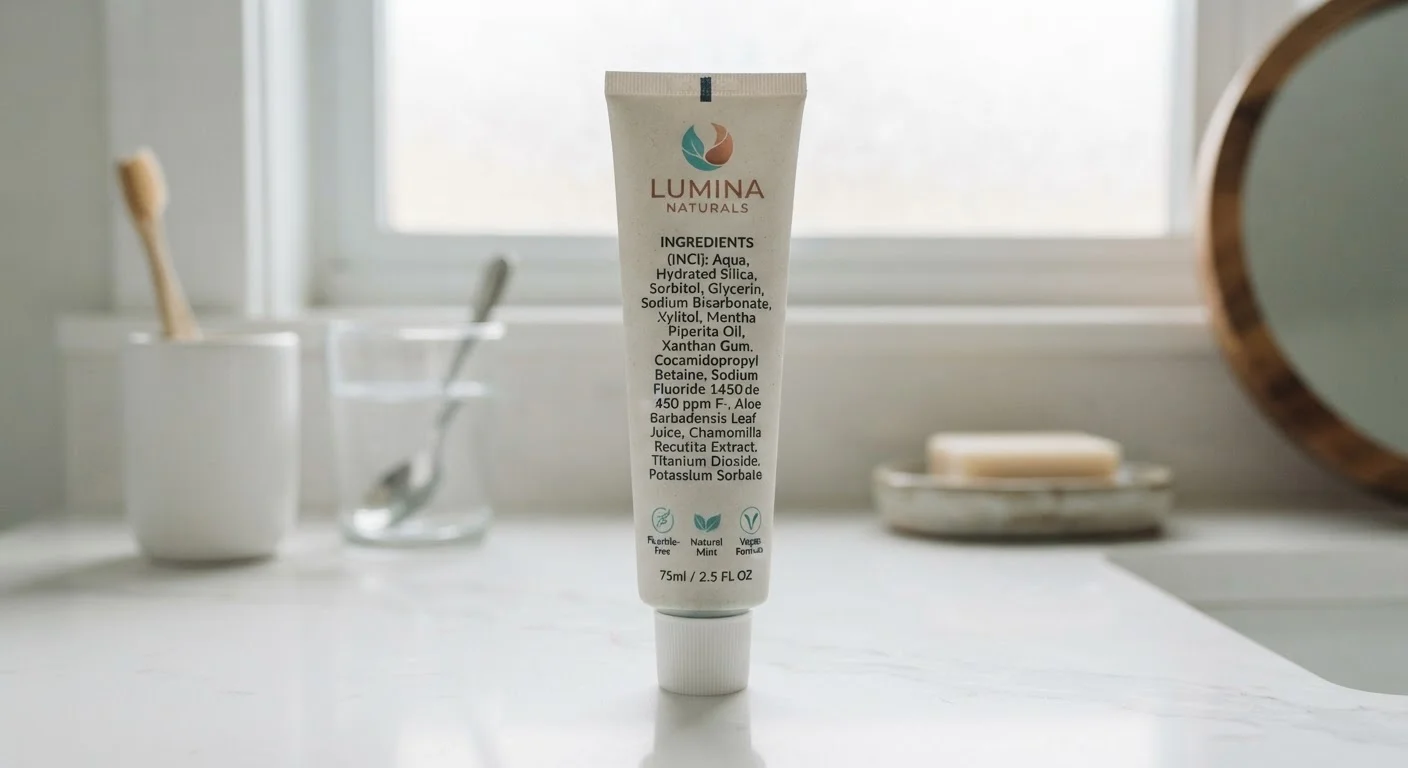
Photo: HerbHealWellness.com | Modern Guide To Wellness editorial
Why Toothpaste Ingredients Are Worth Understanding
Most people reach for toothpaste out of habit, rarely glancing at the ingredient list. But toothpaste is a regulated OTC drug product in the United States when it contains fluoride — meaning the FDA requires manufacturers to list active and inactive ingredients in a specific format. Knowing what those terms mean helps you select a product suited to your actual dental needs, avoid ingredients that may not agree with you, and recognize marketing claims that outpace the evidence.
This article is a lookup-style reference — not personal dental advice. Consult your dentist or dental hygienist about which formulation is right for your situation.
| Regulatory category (US) | OTC drug (when fluoride-containing) (U.S. Food and Drug Administration) |
| Standard adult fluoride concentration | 1,000–1,500 ppm (American Dental Association guidelines) |
| Children's fluoride concentration | 500–1,000 ppm (age-dependent) (American Academy of Pediatric Dentistry) |
| Safe RDA threshold | Below 250 (ISO 11609 international standard) |
| Most common surfactant | Sodium lauryl sulfate (SLS) |
| Ingredients listed by | Concentration (highest to lowest) (FDA labeling regulations) |
The Active Ingredient: Fluoride
The active ingredient listed on most toothpastes sold in the United States is a fluoride compound. The three most common forms are sodium fluoride, stannous fluoride, and sodium monofluorophosphate. Each delivers fluoride ions to tooth surfaces, where they help remineralize early enamel lesions and inhibit the bacteria responsible for decay.
Standard adult toothpaste contains 1,000–1,500 ppm (parts per million) of fluoride. Children's formulas are lower — typically 500–1,000 ppm — to limit ingestion risk in young children who may not spit reliably. Prescription-strength fluoride toothpaste (5,000 ppm) exists for high-risk patients and is only appropriate under professional supervision.
Stannous fluoride also provides antimicrobial and anti-gingivitis effects beyond fluoride alone, which is why you'll see it in toothpastes marketed for gum health. For a deeper look at how fluoride works and what decades of research show, see our detailed fluoride explainer.
Fluoride
A naturally occurring mineral compound that strengthens tooth enamel and inhibits the bacteria that cause decay. In toothpaste, it is the FDA-recognized active ingredient for cavity prevention.
Relative Dentin Abrasivity (RDA)
A standardized index measuring how abrasive a toothpaste is against tooth dentin. Higher scores indicate more aggressive abrasion; most dentists recommend products with an RDA below 250.
Humectant
An ingredient that attracts and retains moisture. In toothpaste, humectants like glycerin and sorbitol prevent the product from drying out and maintain its smooth texture.
Surfactant
A foaming or detergent-like agent — most commonly sodium lauryl sulfate (SLS) in toothpaste — that helps the paste spread across teeth and lift debris from surfaces.
Dentinal Hypersensitivity
Short, sharp tooth pain triggered by temperature, sweet foods, or touch, caused by exposure of the dentin layer beneath enamel. Desensitizing toothpastes target this condition specifically.
Sodium Monofluorophosphate
A fluoride compound commonly abbreviated as MFP on labels. It releases fluoride ions in the mouth that are then incorporated into tooth enamel during brushing.
Key Inactive Ingredients and What They Do
Despite the name, inactive ingredients play essential roles in making toothpaste safe, effective, and usable. Here is what you are most likely to encounter:
- Abrasives (e.g., hydrated silica, calcium carbonate, dicalcium phosphate) — These mild abrasives physically remove surface stains and plaque. The RDA score measures how abrasive a toothpaste is; most standard toothpastes fall well within the safe range (below 250). Enamel erosion is a legitimate concern over time — understanding it matters for long-term tooth health. See enamel erosion and what can't be reversed for context.
- Humectants (e.g., glycerin, sorbitol, propylene glycol) — These prevent the paste from drying out by retaining moisture in the formulation.
- Binders and thickeners (e.g., carrageenan, cellulose gum, xanthan gum) — These stabilize the mixture so it holds its consistency throughout the tube's shelf life.
- Surfactants (e.g., sodium lauryl sulfate, or SLS) — SLS creates the foaming action many people associate with cleaning. Some individuals find that SLS aggravates canker sores; SLS-free alternatives are widely available.
- Flavoring and sweeteners (e.g., saccharin, xylitol, mint oils) — These improve palatability. Xylitol, a sugar alcohol, also has modest evidence supporting cavity-reducing properties at sufficient concentrations, though it is not a substitute for fluoride protection.
- Desensitizing agents (e.g., potassium nitrate, stannous fluoride, arginine) — These are the active or near-active ingredients found in sensitivity toothpastes, working to reduce dentinal hypersensitivity with consistent use over several weeks.
Whitening toothpastes typically rely on higher concentrations of abrasives or chemical agents such as hydrogen peroxide or sodium tripolyphosphate. Their whitening effect on surface stains is real but modest compared to in-office or tray-based bleaching treatments.
"Natural" Toothpastes and Fluoride
How to Apply This When Shopping
When evaluating a toothpaste, start with the active ingredient panel. If a product claims to prevent cavities, fluoride must be listed there by law. Claims appearing only on the front of the box — such as "whitening," "natural," or "remineralizing" — are marketing terms that are not regulated the same way and merit more scrutiny.
Match ingredients to your primary concern: if you have documented sensitivity, look for potassium nitrate or stannous fluoride; if gum inflammation is a concern, stannous fluoride formulations have the strongest evidence base; if you experience canker sores frequently, an SLS-free option may be worth trying. Cavity prevention is the baseline goal for most adults, which means confirmed fluoride content matters above all else.
Understanding toothpaste labels is one piece of a broader picture. Knowing how a cavity actually forms and progresses can sharpen your understanding of why consistent fluoride exposure matters daily, not just at the dentist's office. And if you encounter unfamiliar dental terminology on your product packaging or during a checkup, our dental conditions reference can help you decode it.
This article is for general informational purposes only and does not constitute dental or medical advice. Always consult a licensed dental professional for guidance tailored to your oral health needs.
The content on this site is for informational purposes only and is not a substitute for professional advice. Always consult a qualified professional for guidance specific to your situation.