
What Actually Happens Inside a Cavity

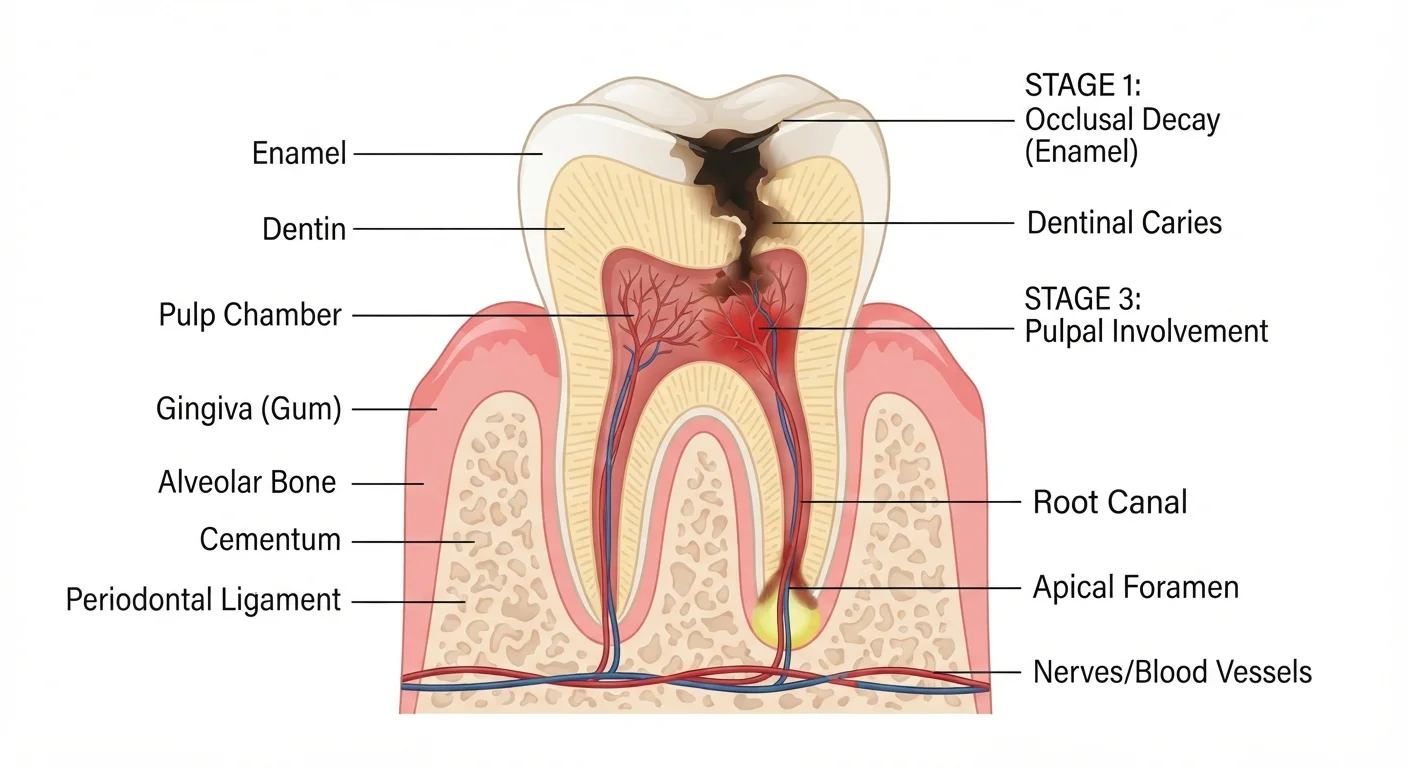
Photo: HerbHealWellness.com | Modern Guide To Wellness editorial
Key Takeaways
- Cavities form when bacterial acids dissolve tooth mineral — it's a biological process, not just a hygiene failure.
- Tooth decay moves inward through enamel, dentin, and eventually the pulp, becoming more serious at each stage.
- Early-stage cavities may cause no symptoms at all, which is why regular dental check-ups matter.
- Once a cavity reaches dentin, the decay accelerates because dentin is softer and more permeable than enamel.
- Reaching the pulp can cause infection, severe pain, and may require a root canal or extraction if untreated.
- Prompt treatment at any stage stops further damage — earlier intervention generally means simpler treatment.
The Starting Point: What Sets a Cavity in Motion
Every cavity begins with a film you can't quite see: dental plaque. Plaque is a sticky community of bacteria that clings to tooth surfaces. When you eat or drink anything containing fermentable carbohydrates — sugars and refined starches — these bacteria convert those carbohydrates into organic acids within minutes.
Those acids lower the pH in your mouth, creating conditions that pull minerals out of tooth enamel in a process called demineralization. Saliva works as a natural buffer, neutralizing acid and carrying calcium and phosphate back to the enamel surface. Under normal circumstances, this back-and-forth is manageable.
Problems arise when acid attacks are too frequent or prolonged — from constant snacking, sugary beverages sipped throughout the day, or reduced saliva flow — and demineralization consistently outpaces remineralization. Over time, enough mineral is lost that the enamel structure begins to break down at a specific site.
Cavities vs. Cracks: Different Problems, Different Paths
For a broader look at common misunderstandings that allow cavities to develop unnoticed, see common misconceptions about cavities that can steer dental decisions in the wrong direction.
Stage by Stage: How Decay Moves Through the Tooth
Understanding tooth anatomy helps clarify why cavities become more serious as they progress inward.
Enamel: The First Line to Fall
Enamel is the hardest substance in the human body, but it isn't invincible. The earliest visible sign of decay is a chalky white spot lesion — an area where subsurface mineral has been lost while the surface is still intact. At this pre-cavity stage, remineralization is still possible. Once the surface breaks, however, a true cavity exists. Because enamel contains no nerve fibers, this stage is almost always painless and easily missed without an X-ray or dental exam.
Dentin: Where Decay Accelerates
Beneath enamel lies dentin, a yellower, softer tissue filled with microscopic channels called dentinal tubules that lead toward the tooth's nerve. Once decay crosses into dentin, two things change: the decay spreads faster because dentin is less mineralized, and sensitivity or mild pain may appear — especially with cold, heat, or sweet foods. Many people first notice a cavity at this stage.
The Pulp: Serious Territory
At the tooth's core is the pulp — the soft tissue containing nerves and blood vessels. If decay reaches the pulp, bacteria trigger inflammation and infection. The result can be intense, spontaneous pain, swelling, or abscess formation. Treatment at this stage typically involves a root canal procedure or, in severe cases, extraction.
90%+
Adults who have had at least one cavity
According to the National Institute of Dental and Craniofacial Research, tooth decay is one of the most common chronic diseases affecting adults in the United States.
5.5
Critical pH at which enamel begins to dissolve
Dental research consistently identifies pH 5.5 as the approximate threshold below which enamel demineralization outpaces natural remineralization under plaque acid conditions.
~20 min
Duration of acid attack after eating or drinking
The oral pH typically drops within minutes of carbohydrate exposure and can remain acidic for approximately 20 minutes before saliva restores neutral conditions.
Why Cavities Are Often Invisible Until They're Not
The absence of pain is one of the most misleading features of early tooth decay. Because enamel has no nerve supply, a cavity can be progressing silently for months before a person feels anything. By the time discomfort prompts a dental visit, the decay may already be well into dentin.
This is the core reason dental guidelines emphasize routine check-ups and X-rays — not just treatment of symptomatic teeth. Bitewing X-rays, in particular, can detect interproximal cavities (those forming between teeth) that are invisible to the naked eye and not yet causing pain.
It's worth noting that cavities aren't the only condition that advances silently. gum disease also progresses quietly through early stages before most people recognize its signs.
Catch Cavities Before They Cause Pain
What Slows or Stops Decay at Each Stage
The right response to a cavity depends entirely on how far it has progressed. Early white spot lesions may be managed with professional fluoride treatments and improved home care. Once an actual hole forms, the damaged tooth structure won't grow back — enamel doesn't regenerate. To understand why, see our article on enamel erosion and what can't be reversed.
A cavity in enamel or dentin is typically treated with a filling, which removes decayed tissue and seals the space. Deeper dentin involvement may require a larger restoration. Pulp involvement calls for root canal therapy to remove infected tissue and save the tooth structure. An abscess may require antibiotic treatment alongside dental intervention — but antibiotics alone don't eliminate the source of infection, which is always the decayed tooth itself.
For anyone navigating the terminology around these diagnoses, the dental conditions reference guide breaks down common terms your dentist uses into plain language.
This article is for general informational purposes only and does not constitute medical or dental advice. Always consult a qualified dental professional for evaluation, diagnosis, and treatment of any oral health concern.
Frequently Asked Questions
The content on this site is for informational purposes only and is not a substitute for professional advice. Always consult a qualified professional for guidance specific to your situation.