
Gum Disease and Heart Disease: What the Research Actually Says

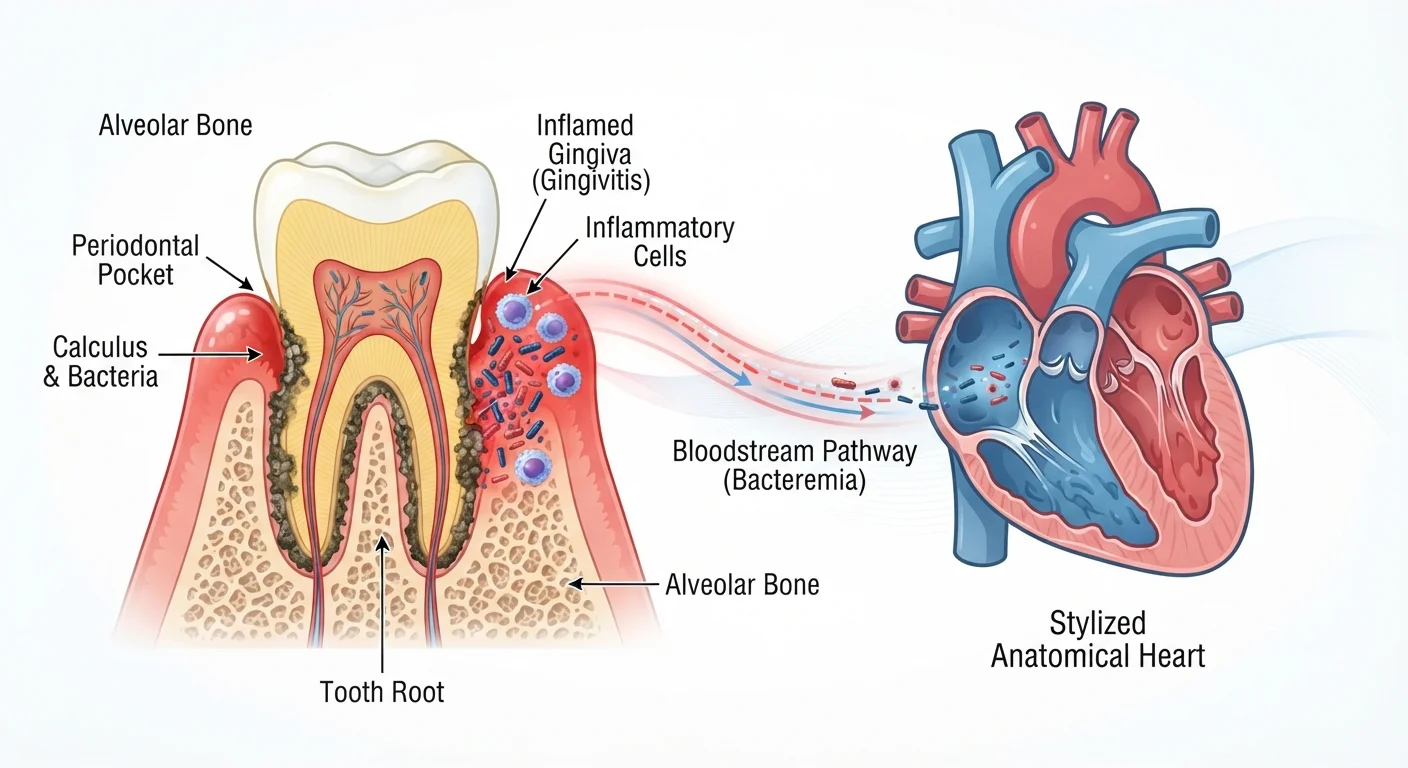
Photo: HerbHealWellness.com | Modern Guide To Wellness editorial
Key Takeaways
- Studies consistently show an association between periodontal disease and heart disease, but association is not the same as causation.
- Shared risk factors — including smoking, diabetes, and poor diet — may explain much of the observed overlap.
- Oral bacteria can enter the bloodstream, and chronic gum inflammation may contribute to systemic inflammatory burden.
- Treating gum disease is beneficial for oral health regardless of its cardiovascular implications.
- Anyone concerned about either condition should speak with a dentist and their primary care provider.
The Association: What Studies Have Found
Epidemiological research spanning several decades has consistently found that people with periodontitis — the more advanced form of gum disease — have a statistically higher likelihood of experiencing heart attacks, strokes, and other cardiovascular events compared with people who have healthy gums. This pattern has appeared across diverse populations and study designs, making it one of the more robust associations in oral-systemic medicine.
A landmark analysis published in the Journal of the American Heart Association and related systematic reviews found that individuals with periodontal disease had a modestly elevated risk of coronary artery disease. Similarly, data from large cohort studies have found associations with stroke risk, peripheral artery disease, and heart failure outcomes.
However, these findings describe association, not causation. An association means two things occur together more frequently than chance would predict — it does not mean one thing causes the other. This distinction is critical, and responsible interpretation of this research requires holding both observations in mind simultaneously. For a broader look at how oral health intersects with systemic conditions, see our article on how systemic conditions can show up in your mouth.
~47%
U.S. adults with periodontal disease
According to the U.S. Centers for Disease Control and Prevention, nearly half of American adults aged 30 and older have some form of gum disease.
20–30%
Elevated relative cardiovascular risk
Multiple meta-analyses have estimated that people with periodontitis may have a 20–30% higher relative risk of developing coronary artery disease compared with periodontally healthy individuals.
2–3x
Higher likelihood of detecting oral bacteria in arterial plaque
Studies examining atherosclerotic plaque samples have found periodontal pathogens at rates significantly higher than would be expected by chance, according to research published in peer-reviewed cardiovascular journals.
Why the Link May Exist: Proposed Mechanisms
Researchers have proposed several biological pathways that could help explain why gum disease and heart disease so frequently co-occur.
Systemic Inflammation
Periodontitis is fundamentally an inflammatory disease. When gum tissue is chronically inflamed, the body produces elevated levels of inflammatory signaling molecules — including C-reactive protein (CRP) and interleukins — that circulate in the bloodstream. These same inflammatory markers are well-established contributors to atherosclerosis, the buildup of plaques inside arterial walls that underlies most heart disease.
Bacteremia and Arterial Plaque
Everyday activities like brushing, flossing, or even chewing can cause small amounts of oral bacteria to enter the bloodstream — a phenomenon called bacteremia. In people with inflamed, fragile gum tissue, this occurs more readily. Periodontal bacteria, including Porphyromonas gingivalis, have been detected in arterial plaque samples taken from cardiovascular patients, raising questions about whether oral pathogens may contribute directly to arterial inflammation.
Shared Risk Factors
Perhaps the most important explanatory factor is that gum disease and heart disease share many of the same risk factors: cigarette smoking, poorly controlled diabetes, obesity, stress, and lower socioeconomic status all increase the likelihood of both conditions. Researchers call this confounding — when a third variable explains an observed association between two others. Many scientists believe confounding accounts for a significant portion of the gum-heart statistical link, though not necessarily all of it.
“The relationship between periodontal disease and cardiovascular disease is biologically plausible and consistently observed in population studies, but we should be careful not to overstate what the current evidence allows us to conclude about causation.”
— American Academy of Periodontology Scientific Advisory Panel, Consensus position on oral-systemic health research
What the Evidence Does — and Doesn't — Support
Despite the consistent associations seen in observational studies, the field has not yet produced the definitive proof that would establish a direct causal role for periodontal disease in causing cardiovascular events. Several points of context matter here:
- Observational studies can identify patterns but cannot rule out confounding variables or reverse causality.
- Intervention trials — where researchers treat gum disease and then measure cardiovascular outcomes — have generally shown improvements in intermediate biomarkers (such as endothelial function and CRP levels) but have not demonstrated a statistically significant reduction in hard endpoints like heart attacks or strokes.
- Both the American Heart Association and the American Academy of Periodontology have issued joint scientific statements acknowledging the association while stopping short of claiming causality.
This is not a reason to dismiss the research. Rather, it reflects the normal state of scientific progress in a complex, multifactorial area. Our article on separating myth from evidence in the oral-systemic health debate examines where other oral-health associations stand up to scrutiny and where they don't.
Simple Habits That Support Both Gum and Heart Health
Practical Implications: What This Means for You
Even if the causal question remains scientifically open, the practical guidance is clear and actionable. Periodontal disease is a serious inflammatory condition that affects quality of life, tooth retention, and overall wellbeing — independent of its cardiovascular associations. Treating and preventing it is worthwhile on its own merits.
People managing cardiovascular risk factors should be aware that gum disease is a common, often underdiagnosed condition. Routine dental visits allow for early detection and management. Likewise, patients undergoing cardiovascular care may benefit from informing their dentist about their medications and conditions, since some cardiac drugs affect gum tissue and saliva.
For those managing diabetes alongside gum disease, the connections are particularly well-documented — see our piece on oral health and diabetes: a two-way relationship for a detailed look. And if you are curious about whether treating gum disease could improve broader health markers, our article on how treating gum disease may influence broader health examines the trial evidence in depth.
This article is for general informational and educational purposes only and does not constitute medical or dental advice. Always consult a qualified healthcare professional for guidance specific to your health situation.
Frequently Asked Questions
The content on this site is for informational purposes only and is not a substitute for professional advice. Always consult a qualified professional for guidance specific to your situation.