
Oral Health and Diabetes: A Two-Way Relationship

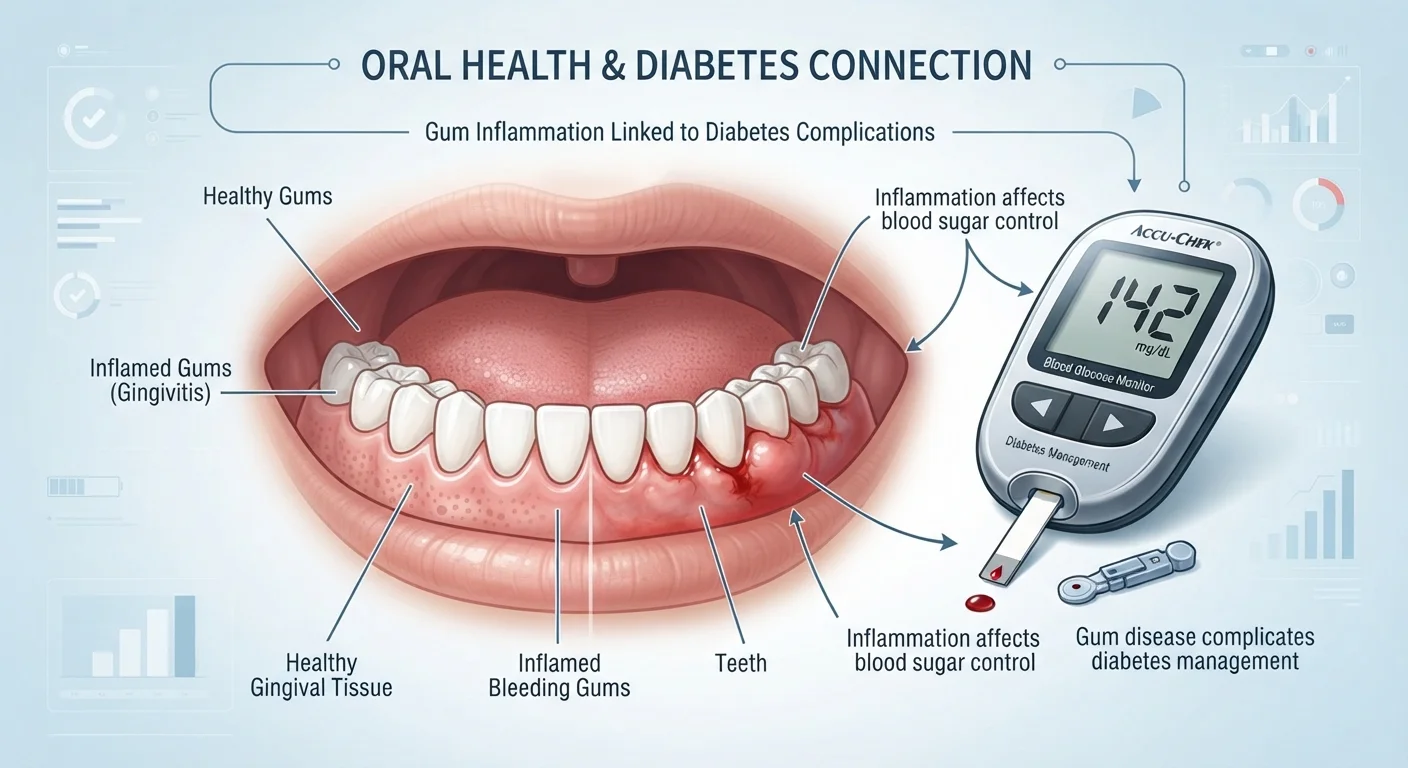
Photo: HerbHealWellness.com | Modern Guide To Wellness editorial
Key Takeaways
- People with diabetes face a significantly higher risk of developing severe gum disease.
- Gum disease inflammation may interfere with the body's ability to regulate blood sugar.
- Treating periodontal disease is an important part of comprehensive diabetes management.
- Regular dental checkups are especially critical for people living with diabetes.
- Good daily oral hygiene can support both mouth health and overall metabolic health.
The Science Behind the Connection
The relationship between diabetes and oral health is not a one-way street. Research consistently shows that these two conditions influence each other in measurable, clinically meaningful ways. Understanding the mechanisms helps explain why managing one can support the other.
Diabetes disrupts the body's immune response and impairs circulation — two systems that are essential for fighting oral infections. When blood sugar is poorly controlled, elevated glucose levels in saliva can fuel the growth of harmful bacteria in the mouth. This creates an environment where periodontal disease (gum disease) can develop faster and progress more severely than it would in someone without diabetes.
In the other direction, gum disease triggers a chronic inflammatory response. Inflammatory molecules called cytokines enter the bloodstream and may interfere with insulin signaling, making it harder for cells to absorb glucose effectively. This means active gum disease can contribute to worsening blood sugar control — a cycle that, if left unaddressed, compounds both conditions.
Diabetes and Other Oral-Systemic Links
For a broader look at how systemic diseases can first become visible in the mouth, see how systemic health conditions can show up in your mouth first.
How Diabetes Raises Gum Disease Risk
People with diabetes — both Type 1 and Type 2 — are recognized as a high-risk group for periodontal disease. Studies indicate that individuals with poorly controlled diabetes are significantly more likely to develop severe periodontitis compared to those without the condition.
~3×
Increased periodontitis risk with poorly controlled diabetes
Multiple systematic reviews indicate that individuals with poorly controlled diabetes are approximately two to three times more likely to develop severe periodontitis compared to those without diabetes.
~0.4%
Average HbA1c reduction after periodontal treatment
A pooled analysis of multiple randomized controlled trials found that professional periodontal treatment was associated with a modest average reduction of approximately 0.4% in HbA1c levels in people with Type 2 diabetes.
1 in 5
Adults with severe periodontitis who may have undiagnosed diabetes
Research published in dental and medical literature suggests a notable proportion of patients presenting with severe gum disease may have undiagnosed or prediabetic conditions, underscoring the screening potential of dental visits.
Several mechanisms drive this elevated risk:
- Impaired immune defense: High blood glucose reduces the effectiveness of white blood cells, the body's primary defense against bacterial infection in the gums.
- Reduced blood flow: Diabetes damages small blood vessels (microangiopathy), limiting the delivery of oxygen and nutrients to gum tissue and slowing healing after infection or dental procedures.
- Altered oral microbiome: Elevated glucose in saliva can selectively encourage the growth of bacteria associated with periodontal disease.
- Dry mouth: Diabetes-related reduction in saliva (xerostomia) removes a natural defense against tooth decay and gum infections, further increasing vulnerability.
Periodontal disease is now widely considered the sixth major complication of diabetes, alongside better-known complications such as neuropathy, nephropathy, and retinopathy. Learn how elevated blood sugar affects other parts of the body — including the eyes — in our article on diabetic retinopathy and blood sugar.
How Gum Disease May Worsen Blood Sugar Control
The effect flows in reverse too. Periodontal disease is a chronic bacterial infection that keeps the immune system in a prolonged state of low-grade inflammation. This systemic inflammation is believed to interfere with insulin receptor signaling, reducing the body's ability to use insulin effectively — a state known as insulin resistance.
Several clinical trials have examined whether treating gum disease improves HbA1c levels (the standard three-month average blood sugar marker). While many studies report modest improvements — typically a reduction of around 0.4% in HbA1c — results are not uniform across all trials. Researchers and clinicians agree that the evidence is promising but not yet definitive. Periodontal treatment is best understood as a supportive component of diabetes care, not a substitute for prescribed medical management.
For a detailed look at what the research shows — and its limitations — see how treating gum disease may influence broader health.
“Periodontal disease should be considered the sixth complication of diabetes. The bidirectional relationship means that dentists and physicians need to work together to manage patients effectively.”
— Harold Löe, Pioneering periodontist and former Director of the National Institute of Dental and Craniofacial Research
Practical Steps for People with Diabetes
Managing the oral-diabetes connection requires coordinated care involving both dental and medical professionals. Here are evidence-informed approaches that dental guidelines broadly support:
Tell Your Dentist About Your Diabetes
- Communicate with your care team: Inform your dentist about your diabetes diagnosis and current blood sugar control. Share your HbA1c results before procedures if possible, as this affects healing risk.
- Maintain consistent oral hygiene: Brush twice daily with a fluoride toothpaste and floss at least once per day. Explore daily oral hygiene fundamentals for practical guidance.
- Schedule regular dental visits: People with diabetes may benefit from more frequent professional cleanings and exams. Your dental team will recommend a schedule based on your individual situation.
- Watch for warning signs: Bleeding gums, persistent bad breath, gum recession, or tooth sensitivity are all reasons to contact your dentist promptly.
- Control blood sugar: Working with your medical team to maintain target blood sugar levels directly reduces your risk of developing or worsening periodontal disease.
People managing other chronic illnesses alongside diabetes may find additional relevant guidance in keeping your mouth healthy when you have a chronic illness.
This article is for general informational purposes only and does not constitute medical or dental advice. Always consult a qualified healthcare professional regarding your personal health situation.
Frequently Asked Questions
The content on this site is for informational purposes only and is not a substitute for professional advice. Always consult a qualified professional for guidance specific to your situation.