
Diabetic Retinopathy: How Elevated Blood Sugar Affects the Eyes

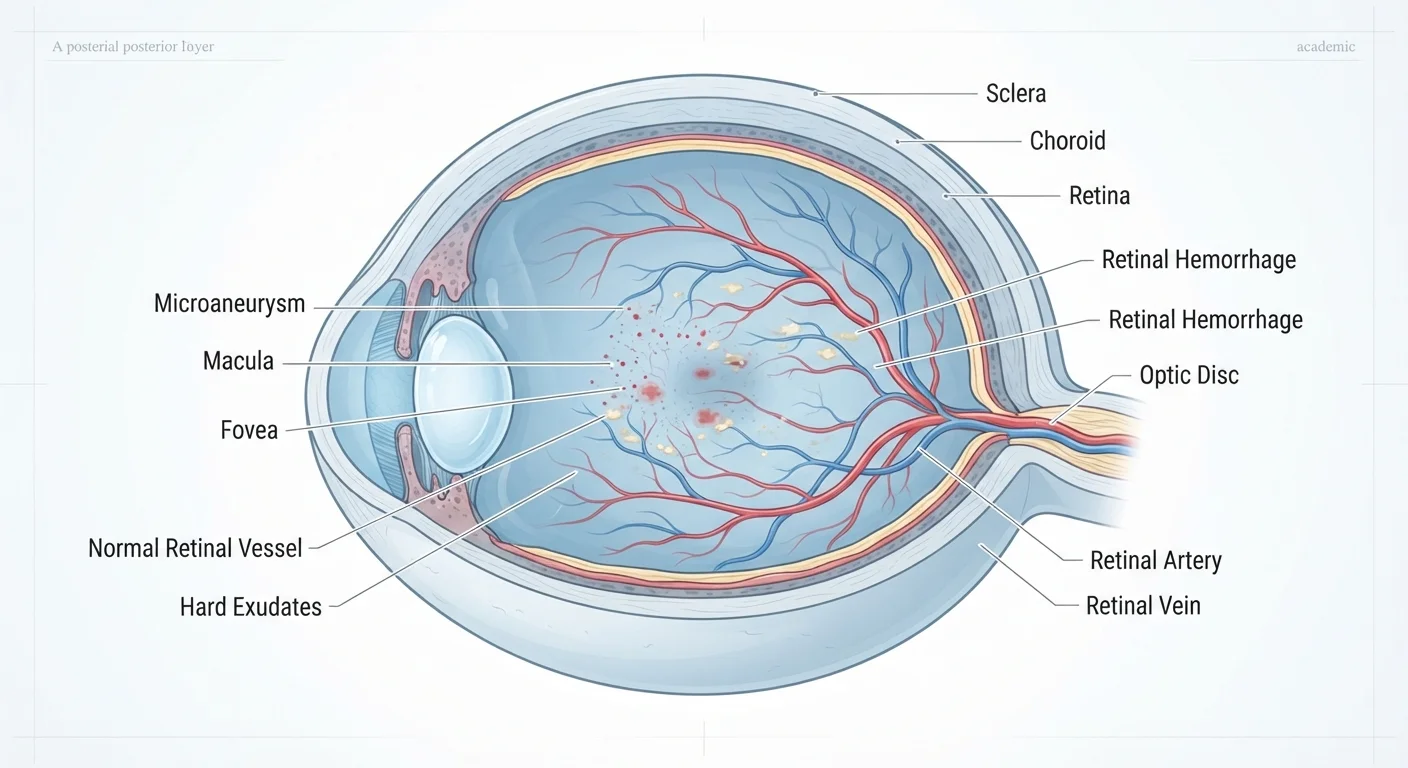
Photo: HerbHealWellness.com | Modern Guide To Wellness editorial
Key Takeaways
- Diabetic retinopathy often causes no symptoms until significant damage has already occurred.
- Both Type 1 and Type 2 diabetes increase the risk, with duration of disease being a major factor.
- Regular dilated eye exams are the primary tool for early detection and preventing vision loss.
- Controlling blood sugar, blood pressure, and cholesterol can slow the disease's progression.
- Advanced stages may be treatable with laser therapy, injections, or surgery, but early detection yields the best outcomes.
How High Blood Sugar Harms the Retina
The retina is a thin layer of tissue lining the back of the eye that converts light into electrical signals sent to the brain. It depends on a dense network of tiny blood vessels to function. When blood glucose levels remain elevated over time, those vessels sustain cumulative damage at the cellular level.
Excess sugar causes the walls of retinal capillaries to weaken and become more permeable. Small bulges called microaneurysms form on vessel walls and can leak fluid or blood into the surrounding retinal tissue. This early-stage process — non-proliferative diabetic retinopathy (NPDR) — may produce no noticeable symptoms even as changes accumulate.
As damage progresses, the retina may become deprived of oxygen and nutrients, triggering the growth of fragile new blood vessels. This advanced stage, called proliferative diabetic retinopathy (PDR), carries serious risks: the new vessels bleed easily, and scar tissue can pull on the retina, potentially causing a retinal detachment. A related complication, diabetic macular edema (DME), occurs when fluid collects in the macula — the central region of the retina responsible for sharp, detailed vision — and is a leading cause of vision impairment in people with diabetes.
Diabetic Macular Edema Can Occur at Any Stage
Risk Factors and Who Is Most Vulnerable
Anyone with diabetes can develop retinopathy, but several factors increase the likelihood and accelerate progression:
- Duration of diabetes: The longer a person has diabetes, the higher their cumulative risk. After 20 years of diabetes, a significant proportion of patients show some degree of retinopathy.
- Poor glycemic control: Consistently high HbA1c levels are directly associated with faster disease progression.
- High blood pressure: Hypertension compounds vascular stress on the retina.
- High cholesterol: Elevated lipids contribute to retinal vascular damage and hard exudate deposits.
- Pregnancy: Retinopathy can worsen rapidly during pregnancy in people with pre-existing diabetes. Pregnant individuals with diabetes should consult their care team about appropriate eye monitoring schedules.
- Smoking: Tobacco use impairs circulation and accelerates vascular complications throughout the body, including the eyes.
#1
Leading cause of new blindness in working-age US adults
Diabetic retinopathy is consistently cited by the CDC and National Eye Institute as the leading cause of new cases of blindness among adults aged 20–74 in the United States.
~34%
Proportion of people with diabetes affected by retinopathy
Research published in peer-reviewed ophthalmology literature estimates that approximately one in three adults with diabetes has some degree of diabetic retinopathy.
90%
Severe vision loss cases that may be preventable
The National Eye Institute has stated that up to 90% of severe vision loss from diabetic eye disease could be reduced with timely treatment and regular eye exams.
Because diabetic retinopathy shares the same underlying driver — systemic vascular disease — with other diabetes-related complications, the condition does not exist in isolation. As explored in our article on oral health and diabetes, uncontrolled blood sugar creates a cascade of effects across multiple organ systems.
Why Early Detection Is Critical
One of the most medically significant aspects of diabetic retinopathy is how quietly it progresses. As detailed in our overview of silent vision loss, serious eye diseases can advance substantially before a person notices any change in their sight. By the time blurring, floaters, or dark areas appear, retinal damage may already be extensive.
A comprehensive dilated eye exam remains the gold standard for detection. During this exam, eye drops widen the pupil so the clinician can directly examine the retina for microaneurysms, hemorrhages, exudates, swelling, and new vessel growth. Imaging tools such as optical coherence tomography (OCT) and fundus photography complement the exam by capturing detailed cross-sections of retinal layers.
It's worth noting that a dilated eye exam can also reveal broader systemic health information. Our article on what eye doctors can infer beyond your prescription explains how optometrists and ophthalmologists often spot early signs of diabetes, hypertension, and other conditions through retinal findings alone.
Build Your Exam Habit Before Symptoms Appear
Management and Treatment Options
Treatment depends on the stage and severity of the disease. In early NPDR, the primary intervention is optimizing systemic control — blood glucose, blood pressure, and cholesterol — which can meaningfully slow progression. Regular monitoring allows clinicians to act before vision is threatened.
For more advanced disease, several evidence-based treatments are available:
- Anti-VEGF injections: Medications injected into the eye block vascular endothelial growth factor (VEGF), a protein that drives abnormal vessel growth. These are a mainstay treatment for PDR and diabetic macular edema.
- Laser photocoagulation: Targeted laser treatment seals leaking vessels and can reduce the stimulus for abnormal vessel growth. Panretinal photocoagulation (PRP) is used for proliferative disease.
- Vitrectomy: A surgical procedure to remove vitreous gel and blood from inside the eye, used when there is significant bleeding or tractional retinal detachment.
For a broader perspective on how diabetic eye disease is monitored over time, see our guide on eye care for people with diabetes. While diabetic retinopathy involves abnormal blood vessel changes, conditions like age-related macular degeneration share some structural overlap but involve distinct mechanisms and risk profiles.
Routine exams are foundational to protecting vision long-term — resources in the Eye Exam & Prevention hub provide further guidance on building preventive eye care habits.
This article is for informational and educational purposes only and does not constitute medical advice. Always consult a qualified healthcare professional regarding your individual health concerns, symptoms, or treatment options.
Frequently Asked Questions
The content on this site is for informational purposes only and is not a substitute for professional advice. Always consult a qualified professional for guidance specific to your situation.