
Periodontal Disease: A Plain-Language Guide for Anyone Starting to Worry

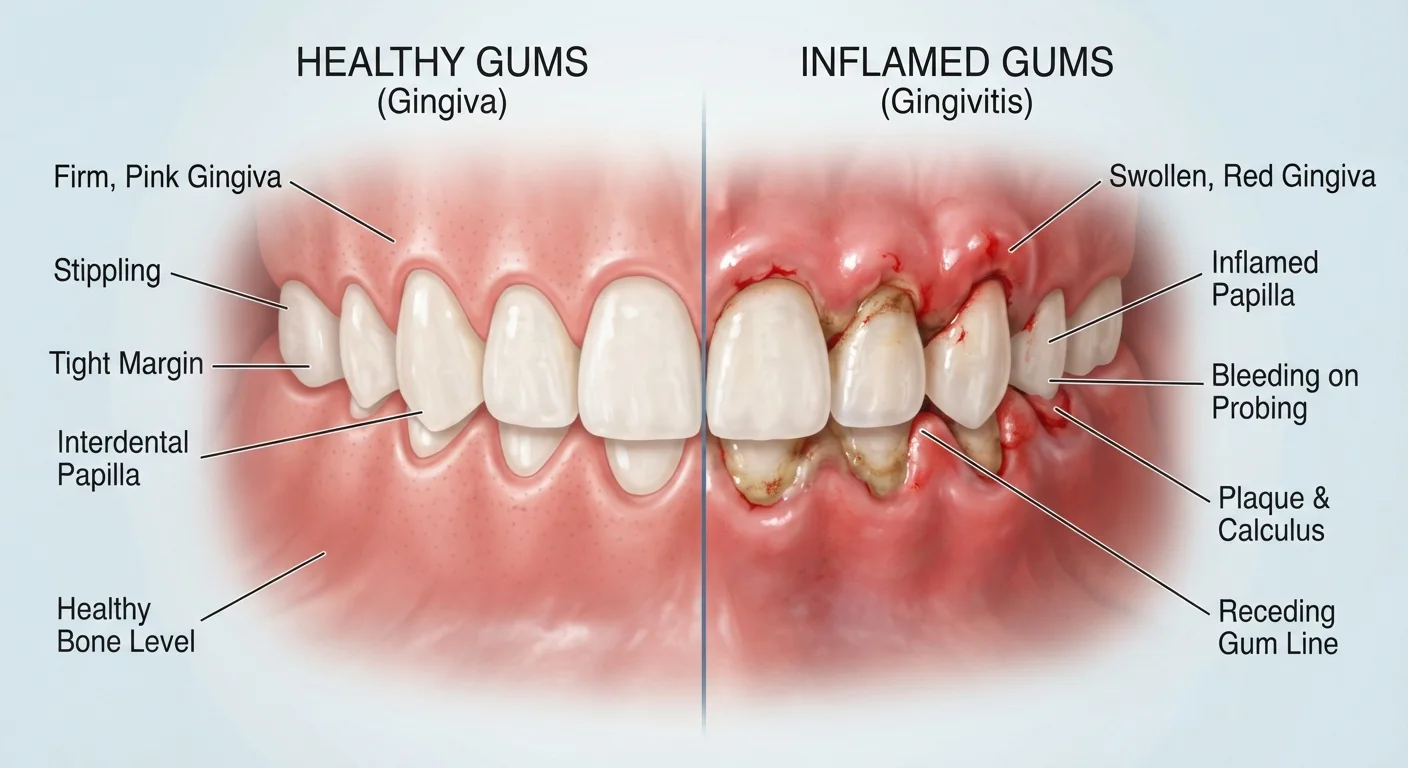
Photo: HerbHealWellness.com | Modern Guide To Wellness editorial
Key Takeaways
- Periodontal disease is a bacterial infection of the structures supporting the teeth, not just a cosmetic problem.
- It progresses silently — many people have significant disease before they notice symptoms.
- Research links chronic gum disease to cardiovascular disease, diabetes, and other systemic conditions.
- Early-stage gum disease (gingivitis) is reversible with professional care and improved home hygiene.
- Advanced disease requires professional treatment; it does not resolve on its own.
- Consistent brushing, flossing, and regular dental check-ups remain the most effective prevention.
What Is Periodontal Disease?
Periodontal disease — commonly called gum disease — is a bacterial infection that attacks the tissues holding your teeth in place: the gums, the periodontal ligament, and the underlying jawbone. The word periodontal simply means "around the tooth."
It exists on a spectrum. Gingivitis is the earliest, mildest form — inflammation of the gum tissue that is still fully reversible. Left unaddressed, gingivitis can advance to periodontitis, a chronic infection that progressively destroys the bone and connective tissue supporting each tooth.
According to the U.S. Centers for Disease Control and Prevention, nearly half of American adults aged 30 and older have some form of periodontal disease, making it one of the most prevalent chronic conditions in the country. Despite this, it is widely under-recognized — partly because it often develops with few obvious symptoms.
Plaque
A soft, sticky film of bacteria that forms continuously on tooth surfaces. Regular brushing and flossing disrupt it; if left in place, it hardens into calculus.
Calculus (Tartar)
Hardened dental plaque that has mineralized onto tooth surfaces. It can only be removed with professional dental instruments.
Gingivitis
The mildest, earliest form of gum disease — inflammation of the gum tissue only. It is fully reversible with improved hygiene and professional cleaning.
Periodontitis
An advanced stage of gum disease in which the infection has spread below the gumline, destroying bone and connective tissue that anchor the teeth.
Periodontal Pocket
A deepened gap that forms between the gum and the tooth surface as gum disease progresses. Deeper pockets harbor more bacteria and are harder to clean.
Scaling and Root Planing
A non-surgical deep-cleaning procedure that removes bacteria and deposits from tooth roots below the gumline to help the gums reattach and heal.
How Gum Disease Develops
The process begins with dental plaque — a sticky, colorless film of bacteria that constantly forms on tooth surfaces. When plaque is not removed by daily brushing and flossing, it accumulates along and below the gumline. Within days, the bacteria in plaque trigger an immune response: gums become inflamed, red, and prone to bleeding. This is gingivitis.
If plaque is allowed to harden, it becomes calculus (tartar), which can only be removed by a dental professional. The bacteria in calculus release toxins that deepen the inflammatory response, causing the gum tissue to pull away from the teeth and form periodontal pockets — spaces where more bacteria thrive, protected from brushing. Over time, the body's own immune response, trying to fight the infection, contributes to the destruction of surrounding bone.
Several factors accelerate this progression, including smoking, uncontrolled diabetes, certain medications, hormonal changes (particularly during pregnancy), and a family history of gum disease.
Warning Signs to Watch For
One of the most dangerous aspects of periodontal disease is how quietly it develops. Many people feel no pain until significant damage has already occurred. Even so, there are signals worth knowing:
- Gums that bleed during brushing or flossing
- Persistent bad breath that does not resolve with brushing
- Gums that appear red, swollen, or pulled away from the teeth
- Teeth that look longer than before (a sign of gum recession)
- Loose or shifting teeth
- Changes in the way your teeth fit together when you bite
Bleeding Gums Are Not Normal
Because symptoms can be subtle, a dentist's examination — including probing the depth of the spaces between gums and teeth — is the only reliable way to detect and stage periodontal disease. Self-assessment alone is not sufficient. Visit Common Dental Conditions to explore other conditions that may present similarly.
The Mouth-Body Connection
Periodontal disease is no longer viewed solely as a dental problem. Researchers have documented strong associations between chronic gum disease and several serious systemic conditions, including cardiovascular disease, type 2 diabetes, adverse pregnancy outcomes, and respiratory disease.
The leading hypothesis involves two pathways: bacteria from the mouth entering the bloodstream through inflamed gum tissue, and the chronic low-grade inflammation generated by the infection driving systemic inflammatory processes. Neither mechanism is fully proven, and causality has not been definitively established for most associations — but the evidence is consistent enough to have changed how many clinicians approach care.
For a deeper look at the science, see The Mouth-Body Connection. For a focused examination of the cardiovascular evidence, Gum Disease and Heart Disease: What the Research Actually Says offers an honest review of the trials to date.
What Treatment Looks Like
Treatment depends on disease severity. For gingivitis, a professional cleaning to remove plaque and calculus — combined with improved home care — is typically sufficient to restore gum health. For periodontitis, the cornerstone of treatment is scaling and root planing, sometimes called a "deep cleaning." A dental hygienist or periodontist removes bacterial deposits from both above and below the gumline and smooths root surfaces to discourage future bacterial attachment.
More advanced cases may require surgical intervention to reduce pocket depths, regenerate lost bone, or graft gum tissue. In some situations, locally applied antimicrobials or systemic antibiotics are used as an adjunct — always under professional guidance.
After Treatment: Maintenance Is Key
Importantly, treating periodontal disease does not undo bone loss that has already occurred, but it can halt further progression. Some research suggests periodontal treatment may also improve markers like blood sugar control in people with diabetes — explored in detail in Local Treatment, Global Effect.
This article is for general informational purposes only and does not constitute medical or dental advice. Always consult a qualified dental professional for evaluation and treatment of any oral health concern.
Prevention and Daily Habits
The fundamentals of gum disease prevention are straightforward, even if consistent execution requires effort:
- Brush twice daily for at least two minutes, using a fluoride toothpaste and a soft-bristled toothbrush angled toward the gumline.
- Floss once daily to remove plaque from between teeth and just below the gumline — areas a toothbrush cannot reach.
- Attend regular dental check-ups, typically every six months, though your dentist may recommend more frequent visits if you have a history of gum disease.
- Avoid tobacco in all forms, which significantly increases risk and impairs healing.
- Manage systemic conditions such as diabetes in partnership with your healthcare team, as poorly controlled blood sugar accelerates periodontal damage.
For a full breakdown of evidence-based daily routines, visit our Daily Oral Hygiene. Building these habits consistently remains the single most effective strategy available to any individual for preventing periodontal disease.
Special Populations and Gum Disease Risk
Frequently Asked Questions
The content on this site is for informational purposes only and is not a substitute for professional advice. Always consult a qualified professional for guidance specific to your situation.